All Shows

Feb/6 · It’s A 2000s Party: Portland
Feb/7 · Robyn Hitchcock “Live And Electric – Full Band Shows”
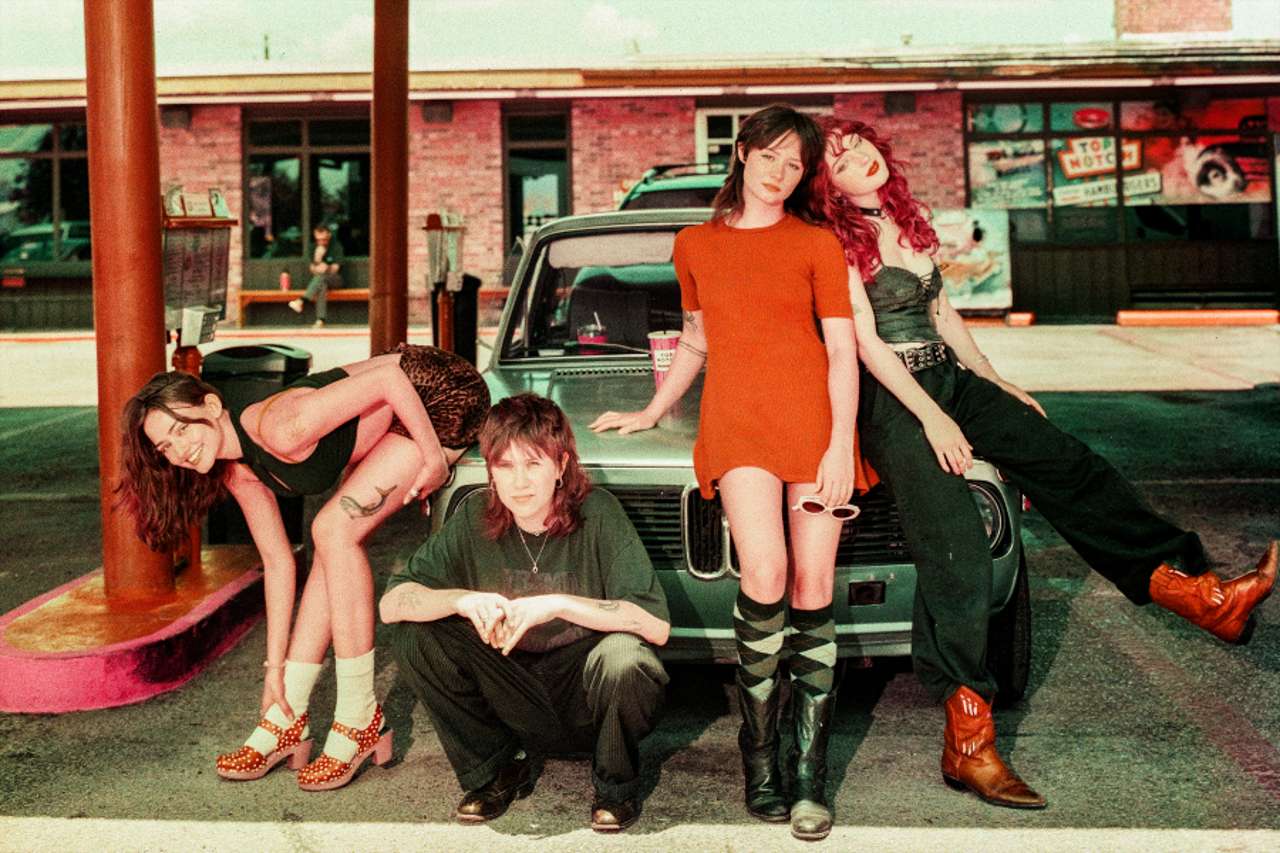
Feb/12 · shame
Feb/13 · Cherub
Feb/14 · The 2026 Portland Mardi Gras Ball
Feb/19 · BERTHA: Grateful Drag
Feb/20 · Jordan Ward Presents: THE APARTMENT TOUR
Feb/21 · Magic City Hippies – Winter Tour 2026
Feb/23 · Puma Blue
Feb/24 · An evening with Kathleen Edwards
Feb/26 · clipping.
Feb/28 · EARLYBIRDS CLUB
Mar/2 · BENEE
Mar/4 · Monolink
Mar/5 · Mindchatter: Giving Up On Words Tour
Mar/6 · MOVED TO THE CRYSTAL BALLROOM kwn: tour 2026
Mar/14 · yung kai: stay with the ocean, i’ll find you tour
Mar/20 · Donny Benet
Mar/22 · Elefante – 30th Anniversary Tour
Mar/26 · Eli
Mar/27 · Tophouse
Mar/28 · Sarah Kinsley
Mar/29 · THE EARLY NOVEMBER & HELLOGOODBYE: 20 Years Young
Mar/30 · Ruel – Kicking My Feet Tour
Mar/31 · Yellow Days: Rock And A Hard Place Tour
Apr/1 · COBRAH – TORN TOUR
Apr/2 · Mind Enterprises
Apr/3 · HOLYWATR
Apr/4 · Vandelux
Apr/7 · Lexa Gates
Apr/10 · FCUKERS
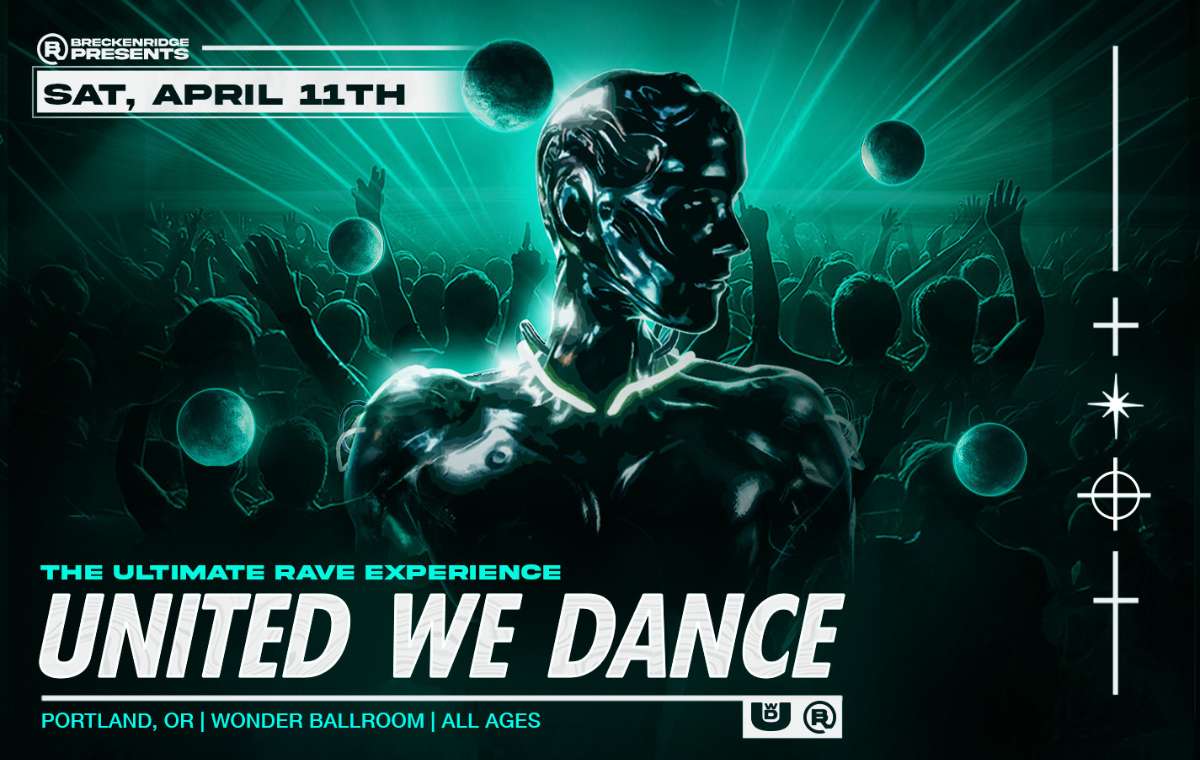
Apr/11 · United We Dance: The Ultimate Rave Experience
Apr/15 · THURSDAY presents FULL CITY DEVOLUCION
Apr/21 · Die Spitz
Apr/24 · Langhorne Slim: The Dreamin’ Kind Tour
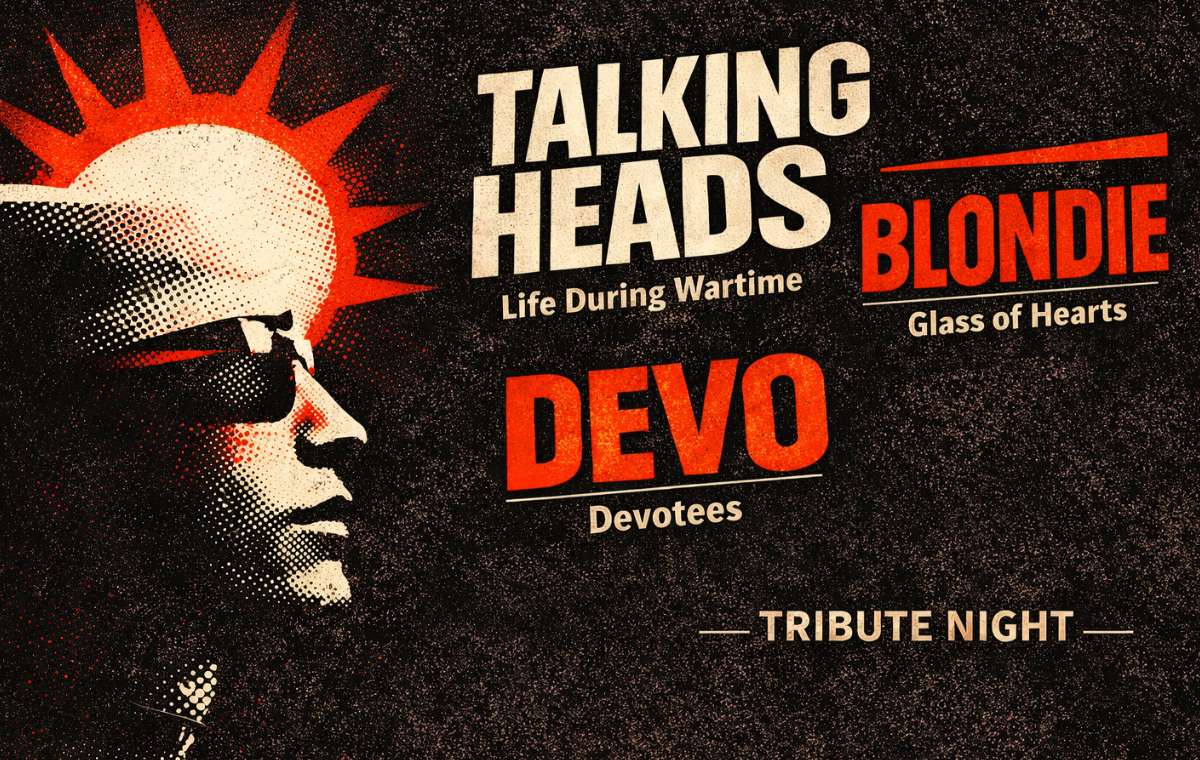
Apr/25 · Talking Heads, Blondie & Devo Tribute Night
Apr/27 · The Brook & The Bluff: The Werewolf Tour
Apr/28 · Patrick Watson – Uh Oh Tour
Apr/29 · Claire Rosinkranz – My Lover Tour
Apr/30 · JENSEN MCRAE – God Has A Hitman Tour
May/1 · The Red Pears and Together Pangea
May/2 · José González – Against The Dying Of The Light Tour
May/5 · Joy Crookes
May/8 · Powfu Presents: The Lofi Library Tour
May/17 · Dry Cleaning
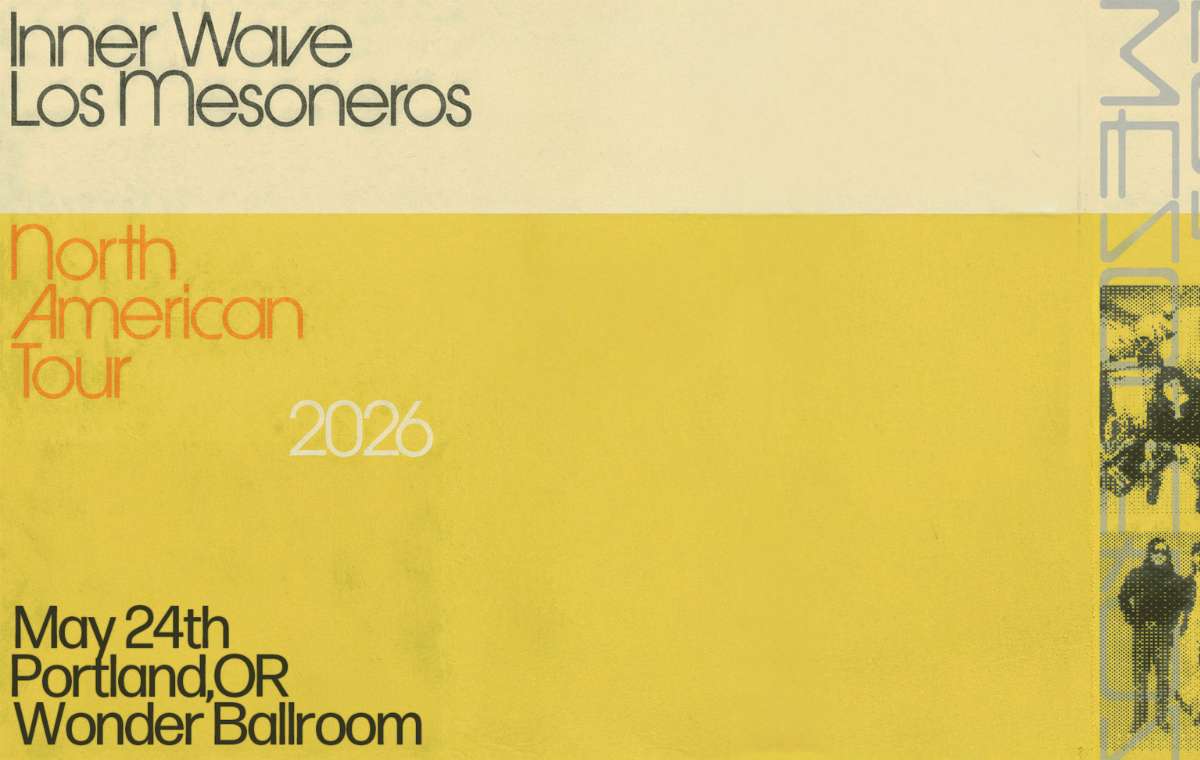
May/24 · Inner Wave & Los Mesoneros – North America Tour ’26
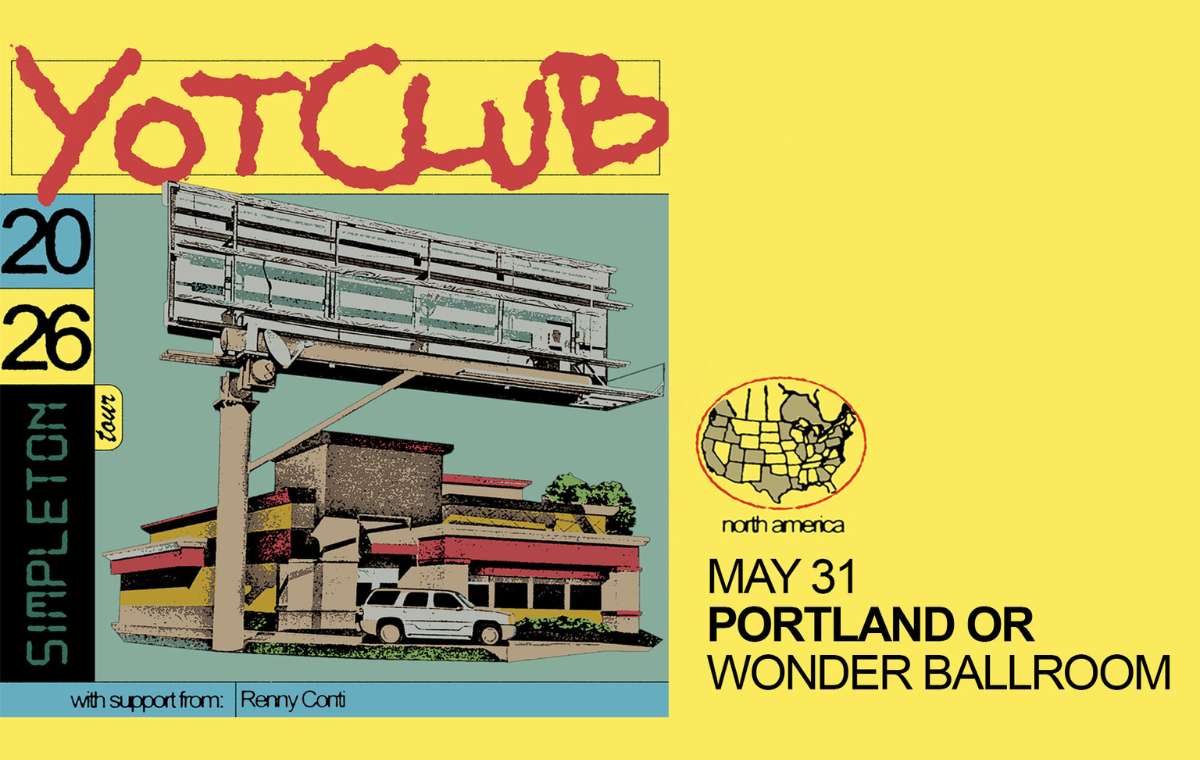
May/31 · Yot Club – Simpleton Tour
Jun/18 · The Crane Wives – ACT II
Jun/19 · The Crane Wives – ACT II
Jun/27 · Searows – Death in the Business of Whaling
Jun/28 · Searows – Death in the Business of Whaling
Aug/25 · Diggy Graves – The No Vacancy Tour
Sep/26 · deca joins
Jan/31 · *POSTPONED until TBD* The Residents – Eskimo Live! Tour

All Shows

Upcoming Events

Monqui Presents

Tuesday, May 5
Doors : 7 pm, Show : 8 pm
all ages
$34 to $56.25
Monqui Presents

Friday, February 6
Show : 8 pm
all ages
$22.50 to $39.25

About Searows:

Some music engulfs you like a freezing wave — so totalizing that you lose track of where you end and where the experience passing through you begins. Death in the Business of Whaling, the new album from Oregon-based songwriter Alec Duckart, a.k.a. Searows, is one of those records that soaks you to the bone.

A bold evolution from the indie-folk of Duckart’s earlier releases, Whaling steers toward the megalithic expanses of shoegaze, drone, and Undersea-era Antlers, folding an array of new sounds into Searows’ organic palette. It’s an arresting document of a young artist coming into his own, and a probing meditation on life, death, embodiment, and the tangled threads that connect all three.

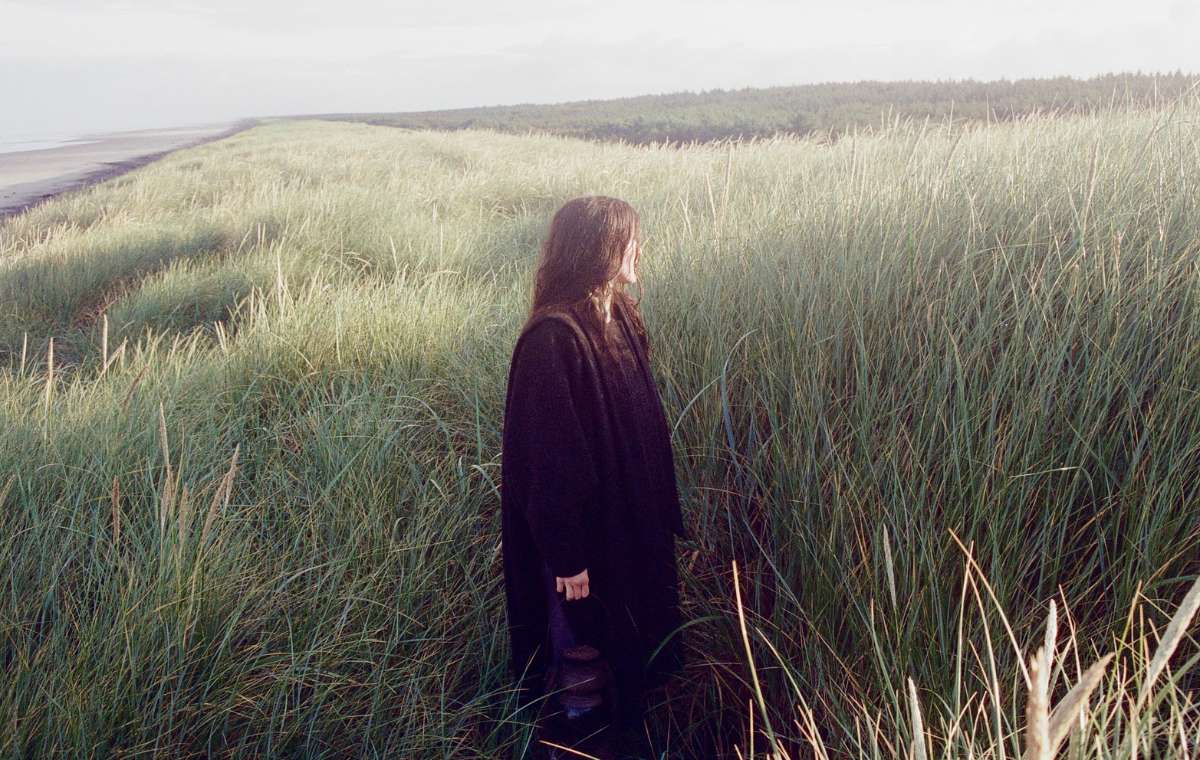
A lifelong denizen of the Pacific Northwest, Duckart makes music deeply inflected by his surroundings — the dramatic coastline with massive rock formations rearing from the waves, the persistent gloom, the lush overgrowth of abundant forests. He began writing his first songs on guitar in middle school, and at age 16 started uploading his music to SoundCloud and Bandcamp.

Once Duckart began sharing videos on TikTok, he quickly gathered a cult following drawn to his timeless, old-world sensibilities and sensitive lyricism. Albums and EPs like 2022’s Guard Dog and 2023’s End of the World established him as a compelling storyteller, leading him to share stages with Gracie Abrams and Ethel Cain. Whaling breaches into newfound cinematic intensity — a collection of songs that converge like weather systems over choppy grey waters.

Duckart started writing the songs on Whaling in 2023. Even before he had a full sense of the album’s sound, he found himself energized by approaching his lyrics in a newly abstract way. Rather than painting autobiographical pictures, he turned to fiction to circle more nebulous emotions and ideas.

“I started letting myself write about whatever I was interested in without worrying about whether it conveyed something personal in an obvious way,” he says. The songs found their anchors in recurring images: the unknowable vastness of the ocean, the biblical Leviathan, Jonah lost in the belly of the whale. Duckart used these stories to plumb the mysterious bridge between life and death, wondering how those two states of being might blur together.

The album’s title comes from Herman Melville’s Moby-Dick:
“Yes, there is death in this business of whaling — a speechlessly quick chaotic bundling of a man into Eternity. But what then? Methinks we have hugely mistaken this matter of Life and Death. … Methinks my body is but the lees of my better being.”

Duckart came across the passage while flipping through books in search of a title. “What I got from that paragraph is that you aren’t just your body and your physical self,” he says. “I was thinking of death and life as part of the same process that continues through itself.”

To record the album, Duckart traveled to Washington to work with producer Trevor Spencer (Father John Misty, Mary Lattimore, Beach House) at Way Out Studios. It marked the first time he’d recorded a full album outside his home studio. Working collaboratively with Spencer helped him build the songs to the scale their subject matter demanded.

Staying in an Airbnb overlooking the Sammamish River, Duckart found that the change in scenery helped usher in the album’s dramatic shifts in sound. Leaving mixing duties to Spencer — and unable to access works in progress once he left the studio each day — Duckart felt some of his perfectionist tendencies loosen.

“If I’m not mixing the music myself, there are so many other creative elements I can focus on,” he says. “It was definitely scary to give up that control, but it ended up being so much better for my creative process.”

The music that emerged from these sessions approaches like a colossus in fog — partially visible, partially obscured, and staggering in scale. Opener “Belly of the Whale” sends banjo chords darting through the drone of a bowed upright bass as Duckart’s vocals cut through with whispered urgency. “Hunter” bares its teeth with crashing drums and heavy guitars; the gentler “Junie” drifts through clouds of enveloping reverb; and “Dearly Missed” oscillates between palm-muted chords and unsheathed distortion as Duckart sings of someone driving off a bridge into a river, never to be seen again.

Images crystallize and dissolve, alternating between the concrete and the dissociative, until the album settles into the darkening sky of closer “Geese,” where Duckart’s voice and guitar flicker through a thinning Wurlitzer haze — as if calling someone back from the brink of oblivion.

Each song on Death in the Business of Whaling shivers with the urgency of the untranslatable — emotions felt far more powerfully than they can ever be articulated. “I feel like I am never able to explain my thoughts in a way that justifies them,” Duckart says. “Music is really the one way I feel I can communicate well.”

Sometimes the most immediate way to share a feeling is to plunge in and see what surfaces. Death in the Business of Whaling invites listeners to immerse themselves with all the conviction of an artist who believes in the transformative power of the depths. When you come up for air, you’ll be different.


Monqui Presents

Saturday, February 7
Doors : 7 pm, Show : 8 pm
ages 21 +
$27 to $56.25

About Searows:

Some music engulfs you like a freezing wave — so totalizing that you lose track of where you end and where the experience passing through you begins. Death in the Business of Whaling, the new album from Oregon-based songwriter Alec Duckart, a.k.a. Searows, is one of those records that soaks you to the bone.
A bold evolution from the indie-folk of Duckart’s earlier releases, Whaling steers toward the megalithic expanses of shoegaze, drone, and Undersea-era Antlers, folding an array of new sounds into Searows’ organic palette. It’s an arresting document of a young artist coming into his own, and a probing meditation on life, death, embodiment, and the tangled threads that connect all three.

A lifelong denizen of the Pacific Northwest, Duckart makes music deeply inflected by his surroundings — the dramatic coastline with massive rock formations rearing from the waves, the persistent gloom, the lush overgrowth of abundant forests. He began writing his first songs on guitar in middle school, and at age 16 started uploading his music to SoundCloud and Bandcamp.

Once Duckart began sharing videos on TikTok, he quickly gathered a cult following drawn to his timeless, old-world sensibilities and sensitive lyricism. Albums and EPs like 2022’s Guard Dog and 2023’s End of the World established him as a compelling storyteller, leading him to share stages with Gracie Abrams and Ethel Cain. Whaling breaches into newfound cinematic intensity — a collection of songs that converge like weather systems over choppy grey waters.

Duckart started writing the songs on Whaling in 2023. Even before he had a full sense of the album’s sound, he found himself energized by approaching his lyrics in a newly abstract way. Rather than painting autobiographical pictures, he turned to fiction to circle more nebulous emotions and ideas.

“I started letting myself write about whatever I was interested in without worrying about whether it conveyed something personal in an obvious way,” he says. The songs found their anchors in recurring images: the unknowable vastness of the ocean, the biblical Leviathan, Jonah lost in the belly of the whale. Duckart used these stories to plumb the mysterious bridge between life and death, wondering how those two states of being might blur together.

The album’s title comes from Herman Melville’s Moby-Dick:
“Yes, there is death in this business of whaling — a speechlessly quick chaotic bundling of a man into Eternity. But what then? Methinks we have hugely mistaken this matter of Life and Death. … Methinks my body is but the lees of my better being.”

Duckart came across the passage while flipping through books in search of a title. “What I got from that paragraph is that you aren’t just your body and your physical self,” he says. “I was thinking of death and life as part of the same process that continues through itself.”

To record the album, Duckart traveled to Washington to work with producer Trevor Spencer (Father John Misty, Mary Lattimore, Beach House) at Way Out Studios. It marked the first time he’d recorded a full album outside his home studio. Working collaboratively with Spencer helped him build the songs to the scale their subject matter demanded.

Staying in an Airbnb overlooking the Sammamish River, Duckart found that the change in scenery helped usher in the album’s dramatic shifts in sound. Leaving mixing duties to Spencer — and unable to access works in progress once he left the studio each day — Duckart felt some of his perfectionist tendencies loosen.

“If I’m not mixing the music myself, there are so many other creative elements I can focus on,” he says. “It was definitely scary to give up that control, but it ended up being so much better for my creative process.”

The music that emerged from these sessions approaches like a colossus in fog — partially visible, partially obscured, and staggering in scale. Opener “Belly of the Whale” sends banjo chords darting through the drone of a bowed upright bass as Duckart’s vocals cut through with whispered urgency. “Hunter” bares its teeth with crashing drums and heavy guitars; the gentler “Junie” drifts through clouds of enveloping reverb; and “Dearly Missed” oscillates between palm-muted chords and unsheathed distortion as Duckart sings of someone driving off a bridge into a river, never to be seen again.

Images crystallize and dissolve, alternating between the concrete and the dissociative, until the album settles into the darkening sky of closer “Geese,” where Duckart’s voice and guitar flicker through a thinning Wurlitzer haze — as if calling someone back from the brink of oblivion.

Each song on Death in the Business of Whaling shivers with the urgency of the untranslatable — emotions felt far more powerfully than they can ever be articulated. “I feel like I am never able to explain my thoughts in a way that justifies them,” Duckart says. “Music is really the one way I feel I can communicate well.”

Sometimes the most immediate way to share a feeling is to plunge in and see what surfaces. Death in the Business of Whaling invites listeners to immerse themselves with all the conviction of an artist who believes in the transformative power of the depths. When you come up for air, you’ll be different.


Monqui Presents

With guest The Sophs

Thursday, February 12
Doors : 7 pm, Show : 8 pm
all ages
$13.75 to $50.50

About Searows:

Some music engulfs you like a freezing wave — so totalizing that you lose track of where you end and where the experience passing through you begins. Death in the Business of Whaling, the new album from Oregon-based songwriter Alec Duckart, a.k.a. Searows, is one of those records that soaks you to the bone.

A bold evolution from the indie-folk of Duckart’s earlier releases, Whaling steers toward the megalithic expanses of shoegaze, drone, and Undersea-era Antlers, folding an array of new sounds into Searows’ organic palette. It’s an arresting document of a young artist coming into his own, and a probing meditation on life, death, embodiment, and the tangled threads that connect all three.

A lifelong denizen of the Pacific Northwest, Duckart makes music deeply inflected by his surroundings — the dramatic coastline with massive rock formations rearing from the waves, the persistent gloom, the lush overgrowth of abundant forests. He began writing his first songs on guitar in middle school, and at age 16 started uploading his music to SoundCloud and Bandcamp.

Once Duckart began sharing videos on TikTok, he quickly gathered a cult following drawn to his timeless, old-world sensibilities and sensitive lyricism. Albums and EPs like 2022’s Guard Dog and 2023’s End of the World established him as a compelling storyteller, leading him to share stages with Gracie Abrams and Ethel Cain. Whaling breaches into newfound cinematic intensity — a collection of songs that converge like weather systems over choppy grey waters.

Duckart started writing the songs on Whaling in 2023. Even before he had a full sense of the album’s sound, he found himself energized by approaching his lyrics in a newly abstract way. Rather than painting autobiographical pictures, he turned to fiction to circle more nebulous emotions and ideas.

“I started letting myself write about whatever I was interested in without worrying about whether it conveyed something personal in an obvious way,” he says. The songs found their anchors in recurring images: the unknowable vastness of the ocean, the biblical Leviathan, Jonah lost in the belly of the whale. Duckart used these stories to plumb the mysterious bridge between life and death, wondering how those two states of being might blur together.

The album’s title comes from Herman Melville’s Moby-Dick:
“Yes, there is death in this business of whaling — a speechlessly quick chaotic bundling of a man into Eternity. But what then? Methinks we have hugely mistaken this matter of Life and Death. … Methinks my body is but the lees of my better being.”

Duckart came across the passage while flipping through books in search of a title. “What I got from that paragraph is that you aren’t just your body and your physical self,” he says. “I was thinking of death and life as part of the same process that continues through itself.”

To record the album, Duckart traveled to Washington to work with producer Trevor Spencer (Father John Misty, Mary Lattimore, Beach House) at Way Out Studios. It marked the first time he’d recorded a full album outside his home studio. Working collaboratively with Spencer helped him build the songs to the scale their subject matter demanded.

Staying in an Airbnb overlooking the Sammamish River, Duckart found that the change in scenery helped usher in the album’s dramatic shifts in sound. Leaving mixing duties to Spencer — and unable to access works in progress once he left the studio each day — Duckart felt some of his perfectionist tendencies loosen.

“If I’m not mixing the music myself, there are so many other creative elements I can focus on,” he says. “It was definitely scary to give up that control, but it ended up being so much better for my creative process.”

The music that emerged from these sessions approaches like a colossus in fog — partially visible, partially obscured, and staggering in scale. Opener “Belly of the Whale” sends banjo chords darting through the drone of a bowed upright bass as Duckart’s vocals cut through with whispered urgency. “Hunter” bares its teeth with crashing drums and heavy guitars; the gentler “Junie” drifts through clouds of enveloping reverb; and “Dearly Missed” oscillates between palm-muted chords and unsheathed distortion as Duckart sings of someone driving off a bridge into a river, never to be seen again.

Images crystallize and dissolve, alternating between the concrete and the dissociative, until the album settles into the darkening sky of closer “Geese,” where Duckart’s voice and guitar flicker through a thinning Wurlitzer haze — as if calling someone back from the brink of oblivion.

Each song on Death in the Business of Whaling shivers with the urgency of the untranslatable — emotions felt far more powerfully than they can ever be articulated. “I feel like I am never able to explain my thoughts in a way that justifies them,” Duckart says. “Music is really the one way I feel I can communicate well.”

Sometimes the most immediate way to share a feeling is to plunge in and see what surfaces. Death in the Business of Whaling invites listeners to immerse themselves with all the conviction of an artist who believes in the transformative power of the depths. When you come up for air, you’ll be different.


Showbox Presents

Friday, February 13
Doors : 7 pm, Show : 8 pm
all ages
$38.50

About Searows:

Some music engulfs you like a freezing wave — so totalizing that you lose track of where you end and where the experience passing through you begins. Death in the Business of Whaling, the new album from Oregon-based songwriter Alec Duckart, a.k.a. Searows, is one of those records that soaks you to the bone.

A bold evolution from the indie-folk of Duckart’s earlier releases, Whaling steers toward the megalithic expanses of shoegaze, drone, and Undersea-era Antlers, folding an array of new sounds into Searows’ organic palette. It’s an arresting document of a young artist coming into his own, and a probing meditation on life, death, embodiment, and the tangled threads that connect all three.

A lifelong denizen of the Pacific Northwest, Duckart makes music deeply inflected by his surroundings — the dramatic coastline with massive rock formations rearing from the waves, the persistent gloom, the lush overgrowth of abundant forests. He began writing his first songs on guitar in middle school, and at age 16 started uploading his music to SoundCloud and Bandcamp.

Once Duckart began sharing videos on TikTok, he quickly gathered a cult following drawn to his timeless, old-world sensibilities and sensitive lyricism. Albums and EPs like 2022’s Guard Dog and 2023’s End of the World established him as a compelling storyteller, leading him to share stages with Gracie Abrams and Ethel Cain. Whaling breaches into newfound cinematic intensity — a collection of songs that converge like weather systems over choppy grey waters.

Duckart started writing the songs on Whaling in 2023. Even before he had a full sense of the album’s sound, he found himself energized by approaching his lyrics in a newly abstract way. Rather than painting autobiographical pictures, he turned to fiction to circle more nebulous emotions and ideas.

“I started letting myself write about whatever I was interested in without worrying about whether it conveyed something personal in an obvious way,” he says. The songs found their anchors in recurring images: the unknowable vastness of the ocean, the biblical Leviathan, Jonah lost in the belly of the whale. Duckart used these stories to plumb the mysterious bridge between life and death, wondering how those two states of being might blur together.

The album’s title comes from Herman Melville’s Moby-Dick:
“Yes, there is death in this business of whaling — a speechlessly quick chaotic bundling of a man into Eternity. But what then? Methinks we have hugely mistaken this matter of Life and Death. … Methinks my body is but the lees of my better being.”

Duckart came across the passage while flipping through books in search of a title. “What I got from that paragraph is that you aren’t just your body and your physical self,” he says. “I was thinking of death and life as part of the same process that continues through itself.”

To record the album, Duckart traveled to Washington to work with producer Trevor Spencer (Father John Misty, Mary Lattimore, Beach House) at Way Out Studios. It marked the first time he’d recorded a full album outside his home studio. Working collaboratively with Spencer helped him build the songs to the scale their subject matter demanded.

Staying in an Airbnb overlooking the Sammamish River, Duckart found that the change in scenery helped usher in the album’s dramatic shifts in sound. Leaving mixing duties to Spencer — and unable to access works in progress once he left the studio each day — Duckart felt some of his perfectionist tendencies loosen.

“If I’m not mixing the music myself, there are so many other creative elements I can focus on,” he says. “It was definitely scary to give up that control, but it ended up being so much better for my creative process.”

The music that emerged from these sessions approaches like a colossus in fog — partially visible, partially obscured, and staggering in scale. Opener “Belly of the Whale” sends banjo chords darting through the drone of a bowed upright bass as Duckart’s vocals cut through with whispered urgency. “Hunter” bares its teeth with crashing drums and heavy guitars; the gentler “Junie” drifts through clouds of enveloping reverb; and “Dearly Missed” oscillates between palm-muted chords and unsheathed distortion as Duckart sings of someone driving off a bridge into a river, never to be seen again.

Images crystallize and dissolve, alternating between the concrete and the dissociative, until the album settles into the darkening sky of closer “Geese,” where Duckart’s voice and guitar flicker through a thinning Wurlitzer haze — as if calling someone back from the brink of oblivion.

Each song on Death in the Business of Whaling shivers with the urgency of the untranslatable — emotions felt far more powerfully than they can ever be articulated. “I feel like I am never able to explain my thoughts in a way that justifies them,” Duckart says. “Music is really the one way I feel I can communicate well.”

Sometimes the most immediate way to share a feeling is to plunge in and see what surfaces. Death in the Business of Whaling invites listeners to immerse themselves with all the conviction of an artist who believes in the transformative power of the depths. When you come up for air, you’ll be different.


Mysti Krewe of Nimbus Present

Saturday, February 14
Show : 7 pm
ages 21 +
$39.25

About Searows:

Some music engulfs you like a freezing wave — so totalizing that you lose track of where you end and where the experience passing through you begins. Death in the Business of Whaling, the new album from Oregon-based songwriter Alec Duckart, a.k.a. Searows, is one of those records that soaks you to the bone.

A bold evolution from the indie-folk of Duckart’s earlier releases, Whaling steers toward the megalithic expanses of shoegaze, drone, and Undersea-era Antlers, folding an array of new sounds into Searows’ organic palette. It’s an arresting document of a young artist coming into his own, and a probing meditation on life, death, embodiment, and the tangled threads that connect all three.

A lifelong denizen of the Pacific Northwest, Duckart makes music deeply inflected by his surroundings — the dramatic coastline with massive rock formations rearing from the waves, the persistent gloom, the lush overgrowth of abundant forests. He began writing his first songs on guitar in middle school, and at age 16 started uploading his music to SoundCloud and Bandcamp.

Once Duckart began sharing videos on TikTok, he quickly gathered a cult following drawn to his timeless, old-world sensibilities and sensitive lyricism. Albums and EPs like 2022’s Guard Dog and 2023’s End of the World established him as a compelling storyteller, leading him to share stages with Gracie Abrams and Ethel Cain. Whaling breaches into newfound cinematic intensity — a collection of songs that converge like weather systems over choppy grey waters.

Duckart started writing the songs on Whaling in 2023. Even before he had a full sense of the album’s sound, he found himself energized by approaching his lyrics in a newly abstract way. Rather than painting autobiographical pictures, he turned to fiction to circle more nebulous emotions and ideas.

“I started letting myself write about whatever I was interested in without worrying about whether it conveyed something personal in an obvious way,” he says. The songs found their anchors in recurring images: the unknowable vastness of the ocean, the biblical Leviathan, Jonah lost in the belly of the whale. Duckart used these stories to plumb the mysterious bridge between life and death, wondering how those two states of being might blur together.

The album’s title comes from Herman Melville’s Moby-Dick:
“Yes, there is death in this business of whaling — a speechlessly quick chaotic bundling of a man into Eternity. But what then? Methinks we have hugely mistaken this matter of Life and Death. … Methinks my body is but the lees of my better being.”

Duckart came across the passage while flipping through books in search of a title. “What I got from that paragraph is that you aren’t just your body and your physical self,” he says. “I was thinking of death and life as part of the same process that continues through itself.”

To record the album, Duckart traveled to Washington to work with producer Trevor Spencer (Father John Misty, Mary Lattimore, Beach House) at Way Out Studios. It marked the first time he’d recorded a full album outside his home studio. Working collaboratively with Spencer helped him build the songs to the scale their subject matter demanded.

Staying in an Airbnb overlooking the Sammamish River, Duckart found that the change in scenery helped usher in the album’s dramatic shifts in sound. Leaving mixing duties to Spencer — and unable to access works in progress once he left the studio each day — Duckart felt some of his perfectionist tendencies loosen.

“If I’m not mixing the music myself, there are so many other creative elements I can focus on,” he says. “It was definitely scary to give up that control, but it ended up being so much better for my creative process.”

The music that emerged from these sessions approaches like a colossus in fog — partially visible, partially obscured, and staggering in scale. Opener “Belly of the Whale” sends banjo chords darting through the drone of a bowed upright bass as Duckart’s vocals cut through with whispered urgency. “Hunter” bares its teeth with crashing drums and heavy guitars; the gentler “Junie” drifts through clouds of enveloping reverb; and “Dearly Missed” oscillates between palm-muted chords and unsheathed distortion as Duckart sings of someone driving off a bridge into a river, never to be seen again.

Images crystallize and dissolve, alternating between the concrete and the dissociative, until the album settles into the darkening sky of closer “Geese,” where Duckart’s voice and guitar flicker through a thinning Wurlitzer haze — as if calling someone back from the brink of oblivion.

Each song on Death in the Business of Whaling shivers with the urgency of the untranslatable — emotions felt far more powerfully than they can ever be articulated. “I feel like I am never able to explain my thoughts in a way that justifies them,” Duckart says. “Music is really the one way I feel I can communicate well.”

Sometimes the most immediate way to share a feeling is to plunge in and see what surfaces. Death in the Business of Whaling invites listeners to immerse themselves with all the conviction of an artist who believes in the transformative power of the depths. When you come up for air, you’ll be different.


Monqui Presents

Thursday, February 19
Doors : 7 pm, Show : 8 pm
all ages
$32.75 to $62.25

About Searows:

Some music engulfs you like a freezing wave — so totalizing that you lose track of where you end and where the experience passing through you begins. Death in the Business of Whaling, the new album from Oregon-based songwriter Alec Duckart, a.k.a. Searows, is one of those records that soaks you to the bone.

A bold evolution from the indie-folk of Duckart’s earlier releases, Whaling steers toward the megalithic expanses of shoegaze, drone, and Undersea-era Antlers, folding an array of new sounds into Searows’ organic palette. It’s an arresting document of a young artist coming into his own, and a probing meditation on life, death, embodiment, and the tangled threads that connect all three.

A lifelong denizen of the Pacific Northwest, Duckart makes music deeply inflected by his surroundings — the dramatic coastline with massive rock formations rearing from the waves, the persistent gloom, the lush overgrowth of abundant forests. He began writing his first songs on guitar in middle school, and at age 16 started uploading his music to SoundCloud and Bandcamp.

Once Duckart began sharing videos on TikTok, he quickly gathered a cult following drawn to his timeless, old-world sensibilities and sensitive lyricism. Albums and EPs like 2022’s Guard Dog and 2023’s End of the World established him as a compelling storyteller, leading him to share stages with Gracie Abrams and Ethel Cain. Whaling breaches into newfound cinematic intensity — a collection of songs that converge like weather systems over choppy grey waters.

Duckart started writing the songs on Whaling in 2023. Even before he had a full sense of the album’s sound, he found himself energized by approaching his lyrics in a newly abstract way. Rather than painting autobiographical pictures, he turned to fiction to circle more nebulous emotions and ideas.

“I started letting myself write about whatever I was interested in without worrying about whether it conveyed something personal in an obvious way,” he says. The songs found their anchors in recurring images: the unknowable vastness of the ocean, the biblical Leviathan, Jonah lost in the belly of the whale. Duckart used these stories to plumb the mysterious bridge between life and death, wondering how those two states of being might blur together.

The album’s title comes from Herman Melville’s Moby-Dick:
“Yes, there is death in this business of whaling — a speechlessly quick chaotic bundling of a man into Eternity. But what then? Methinks we have hugely mistaken this matter of Life and Death. … Methinks my body is but the lees of my better being.”

Duckart came across the passage while flipping through books in search of a title. “What I got from that paragraph is that you aren’t just your body and your physical self,” he says. “I was thinking of death and life as part of the same process that continues through itself.”

To record the album, Duckart traveled to Washington to work with producer Trevor Spencer (Father John Misty, Mary Lattimore, Beach House) at Way Out Studios. It marked the first time he’d recorded a full album outside his home studio. Working collaboratively with Spencer helped him build the songs to the scale their subject matter demanded.

Staying in an Airbnb overlooking the Sammamish River, Duckart found that the change in scenery helped usher in the album’s dramatic shifts in sound. Leaving mixing duties to Spencer — and unable to access works in progress once he left the studio each day — Duckart felt some of his perfectionist tendencies loosen.

“If I’m not mixing the music myself, there are so many other creative elements I can focus on,” he says. “It was definitely scary to give up that control, but it ended up being so much better for my creative process.”

The music that emerged from these sessions approaches like a colossus in fog — partially visible, partially obscured, and staggering in scale. Opener “Belly of the Whale” sends banjo chords darting through the drone of a bowed upright bass as Duckart’s vocals cut through with whispered urgency. “Hunter” bares its teeth with crashing drums and heavy guitars; the gentler “Junie” drifts through clouds of enveloping reverb; and “Dearly Missed” oscillates between palm-muted chords and unsheathed distortion as Duckart sings of someone driving off a bridge into a river, never to be seen again.

Images crystallize and dissolve, alternating between the concrete and the dissociative, until the album settles into the darkening sky of closer “Geese,” where Duckart’s voice and guitar flicker through a thinning Wurlitzer haze — as if calling someone back from the brink of oblivion.

Each song on Death in the Business of Whaling shivers with the urgency of the untranslatable — emotions felt far more powerfully than they can ever be articulated. “I feel like I am never able to explain my thoughts in a way that justifies them,” Duckart says. “Music is really the one way I feel I can communicate well.”

Sometimes the most immediate way to share a feeling is to plunge in and see what surfaces. Death in the Business of Whaling invites listeners to immerse themselves with all the conviction of an artist who believes in the transformative power of the depths. When you come up for air, you’ll be different.


Monqui Presents

Friday, February 20
Doors : 7 pm, Show : 8 pm
all ages
$27 to $118.37

About Searows:

Some music engulfs you like a freezing wave — so totalizing that you lose track of where you end and where the experience passing through you begins. Death in the Business of Whaling, the new album from Oregon-based songwriter Alec Duckart, a.k.a. Searows, is one of those records that soaks you to the bone.

A bold evolution from the indie-folk of Duckart’s earlier releases, Whaling steers toward the megalithic expanses of shoegaze, drone, and Undersea-era Antlers, folding an array of new sounds into Searows’ organic palette. It’s an arresting document of a young artist coming into his own, and a probing meditation on life, death, embodiment, and the tangled threads that connect all three.

A lifelong denizen of the Pacific Northwest, Duckart makes music deeply inflected by his surroundings — the dramatic coastline with massive rock formations rearing from the waves, the persistent gloom, the lush overgrowth of abundant forests. He began writing his first songs on guitar in middle school, and at age 16 started uploading his music to SoundCloud and Bandcamp.

Once Duckart began sharing videos on TikTok, he quickly gathered a cult following drawn to his timeless, old-world sensibilities and sensitive lyricism. Albums and EPs like 2022’s Guard Dog and 2023’s End of the World established him as a compelling storyteller, leading him to share stages with Gracie Abrams and Ethel Cain. Whaling breaches into newfound cinematic intensity — a collection of songs that converge like weather systems over choppy grey waters.

Duckart started writing the songs on Whaling in 2023. Even before he had a full sense of the album’s sound, he found himself energized by approaching his lyrics in a newly abstract way. Rather than painting autobiographical pictures, he turned to fiction to circle more nebulous emotions and ideas.

“I started letting myself write about whatever I was interested in without worrying about whether it conveyed something personal in an obvious way,” he says. The songs found their anchors in recurring images: the unknowable vastness of the ocean, the biblical Leviathan, Jonah lost in the belly of the whale. Duckart used these stories to plumb the mysterious bridge between life and death, wondering how those two states of being might blur together.

The album’s title comes from Herman Melville’s Moby-Dick:
“Yes, there is death in this business of whaling — a speechlessly quick chaotic bundling of a man into Eternity. But what then? Methinks we have hugely mistaken this matter of Life and Death. … Methinks my body is but the lees of my better being.”

Duckart came across the passage while flipping through books in search of a title. “What I got from that paragraph is that you aren’t just your body and your physical self,” he says. “I was thinking of death and life as part of the same process that continues through itself.”

To record the album, Duckart traveled to Washington to work with producer Trevor Spencer (Father John Misty, Mary Lattimore, Beach House) at Way Out Studios. It marked the first time he’d recorded a full album outside his home studio. Working collaboratively with Spencer helped him build the songs to the scale their subject matter demanded.

Staying in an Airbnb overlooking the Sammamish River, Duckart found that the change in scenery helped usher in the album’s dramatic shifts in sound. Leaving mixing duties to Spencer — and unable to access works in progress once he left the studio each day — Duckart felt some of his perfectionist tendencies loosen.

“If I’m not mixing the music myself, there are so many other creative elements I can focus on,” he says. “It was definitely scary to give up that control, but it ended up being so much better for my creative process.”

The music that emerged from these sessions approaches like a colossus in fog — partially visible, partially obscured, and staggering in scale. Opener “Belly of the Whale” sends banjo chords darting through the drone of a bowed upright bass as Duckart’s vocals cut through with whispered urgency. “Hunter” bares its teeth with crashing drums and heavy guitars; the gentler “Junie” drifts through clouds of enveloping reverb; and “Dearly Missed” oscillates between palm-muted chords and unsheathed distortion as Duckart sings of someone driving off a bridge into a river, never to be seen again.

Images crystallize and dissolve, alternating between the concrete and the dissociative, until the album settles into the darkening sky of closer “Geese,” where Duckart’s voice and guitar flicker through a thinning Wurlitzer haze — as if calling someone back from the brink of oblivion.

Each song on Death in the Business of Whaling shivers with the urgency of the untranslatable — emotions felt far more powerfully than they can ever be articulated. “I feel like I am never able to explain my thoughts in a way that justifies them,” Duckart says. “Music is really the one way I feel I can communicate well.”

Sometimes the most immediate way to share a feeling is to plunge in and see what surfaces. Death in the Business of Whaling invites listeners to immerse themselves with all the conviction of an artist who believes in the transformative power of the depths. When you come up for air, you’ll be different.


Monqui Presents

Saturday, February 21
Doors : 7:30 pm, Show : 8:30 pm
all ages
$29.50 to $127.93

About Searows:

Some music engulfs you like a freezing wave — so totalizing that you lose track of where you end and where the experience passing through you begins. Death in the Business of Whaling, the new album from Oregon-based songwriter Alec Duckart, a.k.a. Searows, is one of those records that soaks you to the bone.

A bold evolution from the indie-folk of Duckart’s earlier releases, Whaling steers toward the megalithic expanses of shoegaze, drone, and Undersea-era Antlers, folding an array of new sounds into Searows’ organic palette. It’s an arresting document of a young artist coming into his own, and a probing meditation on life, death, embodiment, and the tangled threads that connect all three.

A lifelong denizen of the Pacific Northwest, Duckart makes music deeply inflected by his surroundings — the dramatic coastline with massive rock formations rearing from the waves, the persistent gloom, the lush overgrowth of abundant forests. He began writing his first songs on guitar in middle school, and at age 16 started uploading his music to SoundCloud and Bandcamp.

Once Duckart began sharing videos on TikTok, he quickly gathered a cult following drawn to his timeless, old-world sensibilities and sensitive lyricism. Albums and EPs like 2022’s Guard Dog and 2023’s End of the World established him as a compelling storyteller, leading him to share stages with Gracie Abrams and Ethel Cain. Whaling breaches into newfound cinematic intensity — a collection of songs that converge like weather systems over choppy grey waters.

Duckart started writing the songs on Whaling in 2023. Even before he had a full sense of the album’s sound, he found himself energized by approaching his lyrics in a newly abstract way. Rather than painting autobiographical pictures, he turned to fiction to circle more nebulous emotions and ideas.

“I started letting myself write about whatever I was interested in without worrying about whether it conveyed something personal in an obvious way,” he says. The songs found their anchors in recurring images: the unknowable vastness of the ocean, the biblical Leviathan, Jonah lost in the belly of the whale. Duckart used these stories to plumb the mysterious bridge between life and death, wondering how those two states of being might blur together.

The album’s title comes from Herman Melville’s Moby-Dick:
“Yes, there is death in this business of whaling — a speechlessly quick chaotic bundling of a man into Eternity. But what then? Methinks we have hugely mistaken this matter of Life and Death. … Methinks my body is but the lees of my better being.”

Duckart came across the passage while flipping through books in search of a title. “What I got from that paragraph is that you aren’t just your body and your physical self,” he says. “I was thinking of death and life as part of the same process that continues through itself.”

To record the album, Duckart traveled to Washington to work with producer Trevor Spencer (Father John Misty, Mary Lattimore, Beach House) at Way Out Studios. It marked the first time he’d recorded a full album outside his home studio. Working collaboratively with Spencer helped him build the songs to the scale their subject matter demanded.

Staying in an Airbnb overlooking the Sammamish River, Duckart found that the change in scenery helped usher in the album’s dramatic shifts in sound. Leaving mixing duties to Spencer — and unable to access works in progress once he left the studio each day — Duckart felt some of his perfectionist tendencies loosen.

“If I’m not mixing the music myself, there are so many other creative elements I can focus on,” he says. “It was definitely scary to give up that control, but it ended up being so much better for my creative process.”

The music that emerged from these sessions approaches like a colossus in fog — partially visible, partially obscured, and staggering in scale. Opener “Belly of the Whale” sends banjo chords darting through the drone of a bowed upright bass as Duckart’s vocals cut through with whispered urgency. “Hunter” bares its teeth with crashing drums and heavy guitars; the gentler “Junie” drifts through clouds of enveloping reverb; and “Dearly Missed” oscillates between palm-muted chords and unsheathed distortion as Duckart sings of someone driving off a bridge into a river, never to be seen again.

Images crystallize and dissolve, alternating between the concrete and the dissociative, until the album settles into the darkening sky of closer “Geese,” where Duckart’s voice and guitar flicker through a thinning Wurlitzer haze — as if calling someone back from the brink of oblivion.

Each song on Death in the Business of Whaling shivers with the urgency of the untranslatable — emotions felt far more powerfully than they can ever be articulated. “I feel like I am never able to explain my thoughts in a way that justifies them,” Duckart says. “Music is really the one way I feel I can communicate well.”

Sometimes the most immediate way to share a feeling is to plunge in and see what surfaces. Death in the Business of Whaling invites listeners to immerse themselves with all the conviction of an artist who believes in the transformative power of the depths. When you come up for air, you’ll be different.


Monqui Presents

With guest Salami Rose Joe Louis

Monday, February 23
Doors : 7 pm, Show : 8 pm
all ages
$27 to $39.25

About Searows:

Some music engulfs you like a freezing wave — so totalizing that you lose track of where you end and where the experience passing through you begins. Death in the Business of Whaling, the new album from Oregon-based songwriter Alec Duckart, a.k.a. Searows, is one of those records that soaks you to the bone.

A bold evolution from the indie-folk of Duckart’s earlier releases, Whaling steers toward the megalithic expanses of shoegaze, drone, and Undersea-era Antlers, folding an array of new sounds into Searows’ organic palette. It’s an arresting document of a young artist coming into his own, and a probing meditation on life, death, embodiment, and the tangled threads that connect all three.

A lifelong denizen of the Pacific Northwest, Duckart makes music deeply inflected by his surroundings — the dramatic coastline with massive rock formations rearing from the waves, the persistent gloom, the lush overgrowth of abundant forests. He began writing his first songs on guitar in middle school, and at age 16 started uploading his music to SoundCloud and Bandcamp.

Once Duckart began sharing videos on TikTok, he quickly gathered a cult following drawn to his timeless, old-world sensibilities and sensitive lyricism. Albums and EPs like 2022’s Guard Dog and 2023’s End of the World established him as a compelling storyteller, leading him to share stages with Gracie Abrams and Ethel Cain. Whaling breaches into newfound cinematic intensity — a collection of songs that converge like weather systems over choppy grey waters.

Duckart started writing the songs on Whaling in 2023. Even before he had a full sense of the album’s sound, he found himself energized by approaching his lyrics in a newly abstract way. Rather than painting autobiographical pictures, he turned to fiction to circle more nebulous emotions and ideas.

“I started letting myself write about whatever I was interested in without worrying about whether it conveyed something personal in an obvious way,” he says. The songs found their anchors in recurring images: the unknowable vastness of the ocean, the biblical Leviathan, Jonah lost in the belly of the whale. Duckart used these stories to plumb the mysterious bridge between life and death, wondering how those two states of being might blur together.

The album’s title comes from Herman Melville’s Moby-Dick:
“Yes, there is death in this business of whaling — a speechlessly quick chaotic bundling of a man into Eternity. But what then? Methinks we have hugely mistaken this matter of Life and Death. … Methinks my body is but the lees of my better being.”

Duckart came across the passage while flipping through books in search of a title. “What I got from that paragraph is that you aren’t just your body and your physical self,” he says. “I was thinking of death and life as part of the same process that continues through itself.”

To record the album, Duckart traveled to Washington to work with producer Trevor Spencer (Father John Misty, Mary Lattimore, Beach House) at Way Out Studios. It marked the first time he’d recorded a full album outside his home studio. Working collaboratively with Spencer helped him build the songs to the scale their subject matter demanded.

Staying in an Airbnb overlooking the Sammamish River, Duckart found that the change in scenery helped usher in the album’s dramatic shifts in sound. Leaving mixing duties to Spencer — and unable to access works in progress once he left the studio each day — Duckart felt some of his perfectionist tendencies loosen.

“If I’m not mixing the music myself, there are so many other creative elements I can focus on,” he says. “It was definitely scary to give up that control, but it ended up being so much better for my creative process.”

The music that emerged from these sessions approaches like a colossus in fog — partially visible, partially obscured, and staggering in scale. Opener “Belly of the Whale” sends banjo chords darting through the drone of a bowed upright bass as Duckart’s vocals cut through with whispered urgency. “Hunter” bares its teeth with crashing drums and heavy guitars; the gentler “Junie” drifts through clouds of enveloping reverb; and “Dearly Missed” oscillates between palm-muted chords and unsheathed distortion as Duckart sings of someone driving off a bridge into a river, never to be seen again.

Images crystallize and dissolve, alternating between the concrete and the dissociative, until the album settles into the darkening sky of closer “Geese,” where Duckart’s voice and guitar flicker through a thinning Wurlitzer haze — as if calling someone back from the brink of oblivion.

Each song on Death in the Business of Whaling shivers with the urgency of the untranslatable — emotions felt far more powerfully than they can ever be articulated. “I feel like I am never able to explain my thoughts in a way that justifies them,” Duckart says. “Music is really the one way I feel I can communicate well.”

Sometimes the most immediate way to share a feeling is to plunge in and see what surfaces. Death in the Business of Whaling invites listeners to immerse themselves with all the conviction of an artist who believes in the transformative power of the depths. When you come up for air, you’ll be different.


Monqui Presents

Tuesday, February 24
Doors : 7 pm, Show : 8 pm
all ages
$32.25 to $61.75

About Searows:

Some music engulfs you like a freezing wave — so totalizing that you lose track of where you end and where the experience passing through you begins. Death in the Business of Whaling, the new album from Oregon-based songwriter Alec Duckart, a.k.a. Searows, is one of those records that soaks you to the bone.

A bold evolution from the indie-folk of Duckart’s earlier releases, Whaling steers toward the megalithic expanses of shoegaze, drone, and Undersea-era Antlers, folding an array of new sounds into Searows’ organic palette. It’s an arresting document of a young artist coming into his own, and a probing meditation on life, death, embodiment, and the tangled threads that connect all three.

A lifelong denizen of the Pacific Northwest, Duckart makes music deeply inflected by his surroundings — the dramatic coastline with massive rock formations rearing from the waves, the persistent gloom, the lush overgrowth of abundant forests. He began writing his first songs on guitar in middle school, and at age 16 started uploading his music to SoundCloud and Bandcamp.

Once Duckart began sharing videos on TikTok, he quickly gathered a cult following drawn to his timeless, old-world sensibilities and sensitive lyricism. Albums and EPs like 2022’s Guard Dog and 2023’s End of the World established him as a compelling storyteller, leading him to share stages with Gracie Abrams and Ethel Cain. Whaling breaches into newfound cinematic intensity — a collection of songs that converge like weather systems over choppy grey waters.

Duckart started writing the songs on Whaling in 2023. Even before he had a full sense of the album’s sound, he found himself energized by approaching his lyrics in a newly abstract way. Rather than painting autobiographical pictures, he turned to fiction to circle more nebulous emotions and ideas.

“I started letting myself write about whatever I was interested in without worrying about whether it conveyed something personal in an obvious way,” he says. The songs found their anchors in recurring images: the unknowable vastness of the ocean, the biblical Leviathan, Jonah lost in the belly of the whale. Duckart used these stories to plumb the mysterious bridge between life and death, wondering how those two states of being might blur together.

The album’s title comes from Herman Melville’s Moby-Dick:
“Yes, there is death in this business of whaling — a speechlessly quick chaotic bundling of a man into Eternity. But what then? Methinks we have hugely mistaken this matter of Life and Death. … Methinks my body is but the lees of my better being.”

Duckart came across the passage while flipping through books in search of a title. “What I got from that paragraph is that you aren’t just your body and your physical self,” he says. “I was thinking of death and life as part of the same process that continues through itself.”

To record the album, Duckart traveled to Washington to work with producer Trevor Spencer (Father John Misty, Mary Lattimore, Beach House) at Way Out Studios. It marked the first time he’d recorded a full album outside his home studio. Working collaboratively with Spencer helped him build the songs to the scale their subject matter demanded.

Staying in an Airbnb overlooking the Sammamish River, Duckart found that the change in scenery helped usher in the album’s dramatic shifts in sound. Leaving mixing duties to Spencer — and unable to access works in progress once he left the studio each day — Duckart felt some of his perfectionist tendencies loosen.

“If I’m not mixing the music myself, there are so many other creative elements I can focus on,” he says. “It was definitely scary to give up that control, but it ended up being so much better for my creative process.”

The music that emerged from these sessions approaches like a colossus in fog — partially visible, partially obscured, and staggering in scale. Opener “Belly of the Whale” sends banjo chords darting through the drone of a bowed upright bass as Duckart’s vocals cut through with whispered urgency. “Hunter” bares its teeth with crashing drums and heavy guitars; the gentler “Junie” drifts through clouds of enveloping reverb; and “Dearly Missed” oscillates between palm-muted chords and unsheathed distortion as Duckart sings of someone driving off a bridge into a river, never to be seen again.

Images crystallize and dissolve, alternating between the concrete and the dissociative, until the album settles into the darkening sky of closer “Geese,” where Duckart’s voice and guitar flicker through a thinning Wurlitzer haze — as if calling someone back from the brink of oblivion.

Each song on Death in the Business of Whaling shivers with the urgency of the untranslatable — emotions felt far more powerfully than they can ever be articulated. “I feel like I am never able to explain my thoughts in a way that justifies them,” Duckart says. “Music is really the one way I feel I can communicate well.”

Sometimes the most immediate way to share a feeling is to plunge in and see what surfaces. Death in the Business of Whaling invites listeners to immerse themselves with all the conviction of an artist who believes in the transformative power of the depths. When you come up for air, you’ll be different.


Monqui Presents

With Open Mike Eagle and Cooling Prongs

Thursday, February 26
Doors : 7 pm, Show : 8 pm
all ages
$27 to $34

About Searows:

Some music engulfs you like a freezing wave — so totalizing that you lose track of where you end and where the experience passing through you begins. Death in the Business of Whaling, the new album from Oregon-based songwriter Alec Duckart, a.k.a. Searows, is one of those records that soaks you to the bone.

A bold evolution from the indie-folk of Duckart’s earlier releases, Whaling steers toward the megalithic expanses of shoegaze, drone, and Undersea-era Antlers, folding an array of new sounds into Searows’ organic palette. It’s an arresting document of a young artist coming into his own, and a probing meditation on life, death, embodiment, and the tangled threads that connect all three.

A lifelong denizen of the Pacific Northwest, Duckart makes music deeply inflected by his surroundings — the dramatic coastline with massive rock formations rearing from the waves, the persistent gloom, the lush overgrowth of abundant forests. He began writing his first songs on guitar in middle school, and at age 16 started uploading his music to SoundCloud and Bandcamp.

Once Duckart began sharing videos on TikTok, he quickly gathered a cult following drawn to his timeless, old-world sensibilities and sensitive lyricism. Albums and EPs like 2022’s Guard Dog and 2023’s End of the World established him as a compelling storyteller, leading him to share stages with Gracie Abrams and Ethel Cain. Whaling breaches into newfound cinematic intensity — a collection of songs that converge like weather systems over choppy grey waters.

Duckart started writing the songs on Whaling in 2023. Even before he had a full sense of the album’s sound, he found himself energized by approaching his lyrics in a newly abstract way. Rather than painting autobiographical pictures, he turned to fiction to circle more nebulous emotions and ideas.

“I started letting myself write about whatever I was interested in without worrying about whether it conveyed something personal in an obvious way,” he says. The songs found their anchors in recurring images: the unknowable vastness of the ocean, the biblical Leviathan, Jonah lost in the belly of the whale. Duckart used these stories to plumb the mysterious bridge between life and death, wondering how those two states of being might blur together.

The album’s title comes from Herman Melville’s Moby-Dick:
“Yes, there is death in this business of whaling — a speechlessly quick chaotic bundling of a man into Eternity. But what then? Methinks we have hugely mistaken this matter of Life and Death. … Methinks my body is but the lees of my better being.”

Duckart came across the passage while flipping through books in search of a title. “What I got from that paragraph is that you aren’t just your body and your physical self,” he says. “I was thinking of death and life as part of the same process that continues through itself.”

To record the album, Duckart traveled to Washington to work with producer Trevor Spencer (Father John Misty, Mary Lattimore, Beach House) at Way Out Studios. It marked the first time he’d recorded a full album outside his home studio. Working collaboratively with Spencer helped him build the songs to the scale their subject matter demanded.

Staying in an Airbnb overlooking the Sammamish River, Duckart found that the change in scenery helped usher in the album’s dramatic shifts in sound. Leaving mixing duties to Spencer — and unable to access works in progress once he left the studio each day — Duckart felt some of his perfectionist tendencies loosen.

“If I’m not mixing the music myself, there are so many other creative elements I can focus on,” he says. “It was definitely scary to give up that control, but it ended up being so much better for my creative process.”

The music that emerged from these sessions approaches like a colossus in fog — partially visible, partially obscured, and staggering in scale. Opener “Belly of the Whale” sends banjo chords darting through the drone of a bowed upright bass as Duckart’s vocals cut through with whispered urgency. “Hunter” bares its teeth with crashing drums and heavy guitars; the gentler “Junie” drifts through clouds of enveloping reverb; and “Dearly Missed” oscillates between palm-muted chords and unsheathed distortion as Duckart sings of someone driving off a bridge into a river, never to be seen again.

Images crystallize and dissolve, alternating between the concrete and the dissociative, until the album settles into the darkening sky of closer “Geese,” where Duckart’s voice and guitar flicker through a thinning Wurlitzer haze — as if calling someone back from the brink of oblivion.

Each song on Death in the Business of Whaling shivers with the urgency of the untranslatable — emotions felt far more powerfully than they can ever be articulated. “I feel like I am never able to explain my thoughts in a way that justifies them,” Duckart says. “Music is really the one way I feel I can communicate well.”

Sometimes the most immediate way to share a feeling is to plunge in and see what surfaces. Death in the Business of Whaling invites listeners to immerse themselves with all the conviction of an artist who believes in the transformative power of the depths. When you come up for air, you’ll be different.


Monqui Presents

Saturday, February 28
Show : 6 pm
ages 21 +
$39.25

About Searows:

Some music engulfs you like a freezing wave — so totalizing that you lose track of where you end and where the experience passing through you begins. Death in the Business of Whaling, the new album from Oregon-based songwriter Alec Duckart, a.k.a. Searows, is one of those records that soaks you to the bone.

A bold evolution from the indie-folk of Duckart’s earlier releases, Whaling steers toward the megalithic expanses of shoegaze, drone, and Undersea-era Antlers, folding an array of new sounds into Searows’ organic palette. It’s an arresting document of a young artist coming into his own, and a probing meditation on life, death, embodiment, and the tangled threads that connect all three.

A lifelong denizen of the Pacific Northwest, Duckart makes music deeply inflected by his surroundings — the dramatic coastline with massive rock formations rearing from the waves, the persistent gloom, the lush overgrowth of abundant forests. He began writing his first songs on guitar in middle school, and at age 16 started uploading his music to SoundCloud and Bandcamp.

Once Duckart began sharing videos on TikTok, he quickly gathered a cult following drawn to his timeless, old-world sensibilities and sensitive lyricism. Albums and EPs like 2022’s Guard Dog and 2023’s End of the World established him as a compelling storyteller, leading him to share stages with Gracie Abrams and Ethel Cain. Whaling breaches into newfound cinematic intensity — a collection of songs that converge like weather systems over choppy grey waters.

Duckart started writing the songs on Whaling in 2023. Even before he had a full sense of the album’s sound, he found himself energized by approaching his lyrics in a newly abstract way. Rather than painting autobiographical pictures, he turned to fiction to circle more nebulous emotions and ideas.

“I started letting myself write about whatever I was interested in without worrying about whether it conveyed something personal in an obvious way,” he says. The songs found their anchors in recurring images: the unknowable vastness of the ocean, the biblical Leviathan, Jonah lost in the belly of the whale. Duckart used these stories to plumb the mysterious bridge between life and death, wondering how those two states of being might blur together.

The album’s title comes from Herman Melville’s Moby-Dick:
“Yes, there is death in this business of whaling — a speechlessly quick chaotic bundling of a man into Eternity. But what then? Methinks we have hugely mistaken this matter of Life and Death. … Methinks my body is but the lees of my better being.”

Duckart came across the passage while flipping through books in search of a title. “What I got from that paragraph is that you aren’t just your body and your physical self,” he says. “I was thinking of death and life as part of the same process that continues through itself.”

To record the album, Duckart traveled to Washington to work with producer Trevor Spencer (Father John Misty, Mary Lattimore, Beach House) at Way Out Studios. It marked the first time he’d recorded a full album outside his home studio. Working collaboratively with Spencer helped him build the songs to the scale their subject matter demanded.

Staying in an Airbnb overlooking the Sammamish River, Duckart found that the change in scenery helped usher in the album’s dramatic shifts in sound. Leaving mixing duties to Spencer — and unable to access works in progress once he left the studio each day — Duckart felt some of his perfectionist tendencies loosen.

“If I’m not mixing the music myself, there are so many other creative elements I can focus on,” he says. “It was definitely scary to give up that control, but it ended up being so much better for my creative process.”

The music that emerged from these sessions approaches like a colossus in fog — partially visible, partially obscured, and staggering in scale. Opener “Belly of the Whale” sends banjo chords darting through the drone of a bowed upright bass as Duckart’s vocals cut through with whispered urgency. “Hunter” bares its teeth with crashing drums and heavy guitars; the gentler “Junie” drifts through clouds of enveloping reverb; and “Dearly Missed” oscillates between palm-muted chords and unsheathed distortion as Duckart sings of someone driving off a bridge into a river, never to be seen again.

Images crystallize and dissolve, alternating between the concrete and the dissociative, until the album settles into the darkening sky of closer “Geese,” where Duckart’s voice and guitar flicker through a thinning Wurlitzer haze — as if calling someone back from the brink of oblivion.

Each song on Death in the Business of Whaling shivers with the urgency of the untranslatable — emotions felt far more powerfully than they can ever be articulated. “I feel like I am never able to explain my thoughts in a way that justifies them,” Duckart says. “Music is really the one way I feel I can communicate well.”

Sometimes the most immediate way to share a feeling is to plunge in and see what surfaces. Death in the Business of Whaling invites listeners to immerse themselves with all the conviction of an artist who believes in the transformative power of the depths. When you come up for air, you’ll be different.


Monqui Presents

Monday, March 2
Doors : 7 pm, Show : 8 pm
all ages
$27 to $158.14

About Searows:

Some music engulfs you like a freezing wave — so totalizing that you lose track of where you end and where the experience passing through you begins. Death in the Business of Whaling, the new album from Oregon-based songwriter Alec Duckart, a.k.a. Searows, is one of those records that soaks you to the bone.

A bold evolution from the indie-folk of Duckart’s earlier releases, Whaling steers toward the megalithic expanses of shoegaze, drone, and Undersea-era Antlers, folding an array of new sounds into Searows’ organic palette. It’s an arresting document of a young artist coming into his own, and a probing meditation on life, death, embodiment, and the tangled threads that connect all three.

A lifelong denizen of the Pacific Northwest, Duckart makes music deeply inflected by his surroundings — the dramatic coastline with massive rock formations rearing from the waves, the persistent gloom, the lush overgrowth of abundant forests. He began writing his first songs on guitar in middle school, and at age 16 started uploading his music to SoundCloud and Bandcamp.

Once Duckart began sharing videos on TikTok, he quickly gathered a cult following drawn to his timeless, old-world sensibilities and sensitive lyricism. Albums and EPs like 2022’s Guard Dog and 2023’s End of the World established him as a compelling storyteller, leading him to share stages with Gracie Abrams and Ethel Cain. Whaling breaches into newfound cinematic intensity — a collection of songs that converge like weather systems over choppy grey waters.

Duckart started writing the songs on Whaling in 2023. Even before he had a full sense of the album’s sound, he found himself energized by approaching his lyrics in a newly abstract way. Rather than painting autobiographical pictures, he turned to fiction to circle more nebulous emotions and ideas.

“I started letting myself write about whatever I was interested in without worrying about whether it conveyed something personal in an obvious way,” he says. The songs found their anchors in recurring images: the unknowable vastness of the ocean, the biblical Leviathan, Jonah lost in the belly of the whale. Duckart used these stories to plumb the mysterious bridge between life and death, wondering how those two states of being might blur together.

The album’s title comes from Herman Melville’s Moby-Dick:
“Yes, there is death in this business of whaling — a speechlessly quick chaotic bundling of a man into Eternity. But what then? Methinks we have hugely mistaken this matter of Life and Death. … Methinks my body is but the lees of my better being.”

Duckart came across the passage while flipping through books in search of a title. “What I got from that paragraph is that you aren’t just your body and your physical self,” he says. “I was thinking of death and life as part of the same process that continues through itself.”

To record the album, Duckart traveled to Washington to work with producer Trevor Spencer (Father John Misty, Mary Lattimore, Beach House) at Way Out Studios. It marked the first time he’d recorded a full album outside his home studio. Working collaboratively with Spencer helped him build the songs to the scale their subject matter demanded.

Staying in an Airbnb overlooking the Sammamish River, Duckart found that the change in scenery helped usher in the album’s dramatic shifts in sound. Leaving mixing duties to Spencer — and unable to access works in progress once he left the studio each day — Duckart felt some of his perfectionist tendencies loosen.

“If I’m not mixing the music myself, there are so many other creative elements I can focus on,” he says. “It was definitely scary to give up that control, but it ended up being so much better for my creative process.”

The music that emerged from these sessions approaches like a colossus in fog — partially visible, partially obscured, and staggering in scale. Opener “Belly of the Whale” sends banjo chords darting through the drone of a bowed upright bass as Duckart’s vocals cut through with whispered urgency. “Hunter” bares its teeth with crashing drums and heavy guitars; the gentler “Junie” drifts through clouds of enveloping reverb; and “Dearly Missed” oscillates between palm-muted chords and unsheathed distortion as Duckart sings of someone driving off a bridge into a river, never to be seen again.

Images crystallize and dissolve, alternating between the concrete and the dissociative, until the album settles into the darkening sky of closer “Geese,” where Duckart’s voice and guitar flicker through a thinning Wurlitzer haze — as if calling someone back from the brink of oblivion.

Each song on Death in the Business of Whaling shivers with the urgency of the untranslatable — emotions felt far more powerfully than they can ever be articulated. “I feel like I am never able to explain my thoughts in a way that justifies them,” Duckart says. “Music is really the one way I feel I can communicate well.”

Sometimes the most immediate way to share a feeling is to plunge in and see what surfaces. Death in the Business of Whaling invites listeners to immerse themselves with all the conviction of an artist who believes in the transformative power of the depths. When you come up for air, you’ll be different.


Monqui Presents

With special guest Roderic

Wednesday, March 4
Doors : 7 pm, Show : 8 pm
ages 21 +
$40 to $67.25

About Searows:

Some music engulfs you like a freezing wave — so totalizing that you lose track of where you end and where the experience passing through you begins. Death in the Business of Whaling, the new album from Oregon-based songwriter Alec Duckart, a.k.a. Searows, is one of those records that soaks you to the bone.

A bold evolution from the indie-folk of Duckart’s earlier releases, Whaling steers toward the megalithic expanses of shoegaze, drone, and Undersea-era Antlers, folding an array of new sounds into Searows’ organic palette. It’s an arresting document of a young artist coming into his own, and a probing meditation on life, death, embodiment, and the tangled threads that connect all three.

A lifelong denizen of the Pacific Northwest, Duckart makes music deeply inflected by his surroundings — the dramatic coastline with massive rock formations rearing from the waves, the persistent gloom, the lush overgrowth of abundant forests. He began writing his first songs on guitar in middle school, and at age 16 started uploading his music to SoundCloud and Bandcamp.

Once Duckart began sharing videos on TikTok, he quickly gathered a cult following drawn to his timeless, old-world sensibilities and sensitive lyricism. Albums and EPs like 2022’s Guard Dog and 2023’s End of the World established him as a compelling storyteller, leading him to share stages with Gracie Abrams and Ethel Cain. Whaling breaches into newfound cinematic intensity — a collection of songs that converge like weather systems over choppy grey waters.

Duckart started writing the songs on Whaling in 2023. Even before he had a full sense of the album’s sound, he found himself energized by approaching his lyrics in a newly abstract way. Rather than painting autobiographical pictures, he turned to fiction to circle more nebulous emotions and ideas.

“I started letting myself write about whatever I was interested in without worrying about whether it conveyed something personal in an obvious way,” he says. The songs found their anchors in recurring images: the unknowable vastness of the ocean, the biblical Leviathan, Jonah lost in the belly of the whale. Duckart used these stories to plumb the mysterious bridge between life and death, wondering how those two states of being might blur together.

The album’s title comes from Herman Melville’s Moby-Dick:
“Yes, there is death in this business of whaling — a speechlessly quick chaotic bundling of a man into Eternity. But what then? Methinks we have hugely mistaken this matter of Life and Death. … Methinks my body is but the lees of my better being.”

Duckart came across the passage while flipping through books in search of a title. “What I got from that paragraph is that you aren’t just your body and your physical self,” he says. “I was thinking of death and life as part of the same process that continues through itself.”

To record the album, Duckart traveled to Washington to work with producer Trevor Spencer (Father John Misty, Mary Lattimore, Beach House) at Way Out Studios. It marked the first time he’d recorded a full album outside his home studio. Working collaboratively with Spencer helped him build the songs to the scale their subject matter demanded.

Staying in an Airbnb overlooking the Sammamish River, Duckart found that the change in scenery helped usher in the album’s dramatic shifts in sound. Leaving mixing duties to Spencer — and unable to access works in progress once he left the studio each day — Duckart felt some of his perfectionist tendencies loosen.

“If I’m not mixing the music myself, there are so many other creative elements I can focus on,” he says. “It was definitely scary to give up that control, but it ended up being so much better for my creative process.”

The music that emerged from these sessions approaches like a colossus in fog — partially visible, partially obscured, and staggering in scale. Opener “Belly of the Whale” sends banjo chords darting through the drone of a bowed upright bass as Duckart’s vocals cut through with whispered urgency. “Hunter” bares its teeth with crashing drums and heavy guitars; the gentler “Junie” drifts through clouds of enveloping reverb; and “Dearly Missed” oscillates between palm-muted chords and unsheathed distortion as Duckart sings of someone driving off a bridge into a river, never to be seen again.

Images crystallize and dissolve, alternating between the concrete and the dissociative, until the album settles into the darkening sky of closer “Geese,” where Duckart’s voice and guitar flicker through a thinning Wurlitzer haze — as if calling someone back from the brink of oblivion.

Each song on Death in the Business of Whaling shivers with the urgency of the untranslatable — emotions felt far more powerfully than they can ever be articulated. “I feel like I am never able to explain my thoughts in a way that justifies them,” Duckart says. “Music is really the one way I feel I can communicate well.”

Sometimes the most immediate way to share a feeling is to plunge in and see what surfaces. Death in the Business of Whaling invites listeners to immerse themselves with all the conviction of an artist who believes in the transformative power of the depths. When you come up for air, you’ll be different.


Monqui Presents

Support From NASAYA

Thursday, March 5
Doors : 7 pm, Show : 8 pm
all ages
$27 to $50.50

About Searows:

Some music engulfs you like a freezing wave — so totalizing that you lose track of where you end and where the experience passing through you begins. Death in the Business of Whaling, the new album from Oregon-based songwriter Alec Duckart, a.k.a. Searows, is one of those records that soaks you to the bone.

A bold evolution from the indie-folk of Duckart’s earlier releases, Whaling steers toward the megalithic expanses of shoegaze, drone, and Undersea-era Antlers, folding an array of new sounds into Searows’ organic palette. It’s an arresting document of a young artist coming into his own, and a probing meditation on life, death, embodiment, and the tangled threads that connect all three.

A lifelong denizen of the Pacific Northwest, Duckart makes music deeply inflected by his surroundings — the dramatic coastline with massive rock formations rearing from the waves, the persistent gloom, the lush overgrowth of abundant forests. He began writing his first songs on guitar in middle school, and at age 16 started uploading his music to SoundCloud and Bandcamp.

Once Duckart began sharing videos on TikTok, he quickly gathered a cult following drawn to his timeless, old-world sensibilities and sensitive lyricism. Albums and EPs like 2022’s Guard Dog and 2023’s End of the World established him as a compelling storyteller, leading him to share stages with Gracie Abrams and Ethel Cain. Whaling breaches into newfound cinematic intensity — a collection of songs that converge like weather systems over choppy grey waters.

Duckart started writing the songs on Whaling in 2023. Even before he had a full sense of the album’s sound, he found himself energized by approaching his lyrics in a newly abstract way. Rather than painting autobiographical pictures, he turned to fiction to circle more nebulous emotions and ideas.

“I started letting myself write about whatever I was interested in without worrying about whether it conveyed something personal in an obvious way,” he says. The songs found their anchors in recurring images: the unknowable vastness of the ocean, the biblical Leviathan, Jonah lost in the belly of the whale. Duckart used these stories to plumb the mysterious bridge between life and death, wondering how those two states of being might blur together.

The album’s title comes from Herman Melville’s Moby-Dick:
“Yes, there is death in this business of whaling — a speechlessly quick chaotic bundling of a man into Eternity. But what then? Methinks we have hugely mistaken this matter of Life and Death. … Methinks my body is but the lees of my better being.”

Duckart came across the passage while flipping through books in search of a title. “What I got from that paragraph is that you aren’t just your body and your physical self,” he says. “I was thinking of death and life as part of the same process that continues through itself.”

To record the album, Duckart traveled to Washington to work with producer Trevor Spencer (Father John Misty, Mary Lattimore, Beach House) at Way Out Studios. It marked the first time he’d recorded a full album outside his home studio. Working collaboratively with Spencer helped him build the songs to the scale their subject matter demanded.

Staying in an Airbnb overlooking the Sammamish River, Duckart found that the change in scenery helped usher in the album’s dramatic shifts in sound. Leaving mixing duties to Spencer — and unable to access works in progress once he left the studio each day — Duckart felt some of his perfectionist tendencies loosen.

“If I’m not mixing the music myself, there are so many other creative elements I can focus on,” he says. “It was definitely scary to give up that control, but it ended up being so much better for my creative process.”

The music that emerged from these sessions approaches like a colossus in fog — partially visible, partially obscured, and staggering in scale. Opener “Belly of the Whale” sends banjo chords darting through the drone of a bowed upright bass as Duckart’s vocals cut through with whispered urgency. “Hunter” bares its teeth with crashing drums and heavy guitars; the gentler “Junie” drifts through clouds of enveloping reverb; and “Dearly Missed” oscillates between palm-muted chords and unsheathed distortion as Duckart sings of someone driving off a bridge into a river, never to be seen again.

Images crystallize and dissolve, alternating between the concrete and the dissociative, until the album settles into the darkening sky of closer “Geese,” where Duckart’s voice and guitar flicker through a thinning Wurlitzer haze — as if calling someone back from the brink of oblivion.

Each song on Death in the Business of Whaling shivers with the urgency of the untranslatable — emotions felt far more powerfully than they can ever be articulated. “I feel like I am never able to explain my thoughts in a way that justifies them,” Duckart says. “Music is really the one way I feel I can communicate well.”

Sometimes the most immediate way to share a feeling is to plunge in and see what surfaces. Death in the Business of Whaling invites listeners to immerse themselves with all the conviction of an artist who believes in the transformative power of the depths. When you come up for air, you’ll be different.


Monqui Presents

Friday, March 6
Doors : 6:30 pm, Show : 8 pm
all ages

About Searows:

Some music engulfs you like a freezing wave — so totalizing that you lose track of where you end and where the experience passing through you begins. Death in the Business of Whaling, the new album from Oregon-based songwriter Alec Duckart, a.k.a. Searows, is one of those records that soaks you to the bone.

A bold evolution from the indie-folk of Duckart’s earlier releases, Whaling steers toward the megalithic expanses of shoegaze, drone, and Undersea-era Antlers, folding an array of new sounds into Searows’ organic palette. It’s an arresting document of a young artist coming into his own, and a probing meditation on life, death, embodiment, and the tangled threads that connect all three.

A lifelong denizen of the Pacific Northwest, Duckart makes music deeply inflected by his surroundings — the dramatic coastline with massive rock formations rearing from the waves, the persistent gloom, the lush overgrowth of abundant forests. He began writing his first songs on guitar in middle school, and at age 16 started uploading his music to SoundCloud and Bandcamp.

Once Duckart began sharing videos on TikTok, he quickly gathered a cult following drawn to his timeless, old-world sensibilities and sensitive lyricism. Albums and EPs like 2022’s Guard Dog and 2023’s End of the World established him as a compelling storyteller, leading him to share stages with Gracie Abrams and Ethel Cain. Whaling breaches into newfound cinematic intensity — a collection of songs that converge like weather systems over choppy grey waters.

Duckart started writing the songs on Whaling in 2023. Even before he had a full sense of the album’s sound, he found himself energized by approaching his lyrics in a newly abstract way. Rather than painting autobiographical pictures, he turned to fiction to circle more nebulous emotions and ideas.

“I started letting myself write about whatever I was interested in without worrying about whether it conveyed something personal in an obvious way,” he says. The songs found their anchors in recurring images: the unknowable vastness of the ocean, the biblical Leviathan, Jonah lost in the belly of the whale. Duckart used these stories to plumb the mysterious bridge between life and death, wondering how those two states of being might blur together.

The album’s title comes from Herman Melville’s Moby-Dick:
“Yes, there is death in this business of whaling — a speechlessly quick chaotic bundling of a man into Eternity. But what then? Methinks we have hugely mistaken this matter of Life and Death. … Methinks my body is but the lees of my better being.”

Duckart came across the passage while flipping through books in search of a title. “What I got from that paragraph is that you aren’t just your body and your physical self,” he says. “I was thinking of death and life as part of the same process that continues through itself.”

To record the album, Duckart traveled to Washington to work with producer Trevor Spencer (Father John Misty, Mary Lattimore, Beach House) at Way Out Studios. It marked the first time he’d recorded a full album outside his home studio. Working collaboratively with Spencer helped him build the songs to the scale their subject matter demanded.

Staying in an Airbnb overlooking the Sammamish River, Duckart found that the change in scenery helped usher in the album’s dramatic shifts in sound. Leaving mixing duties to Spencer — and unable to access works in progress once he left the studio each day — Duckart felt some of his perfectionist tendencies loosen.

“If I’m not mixing the music myself, there are so many other creative elements I can focus on,” he says. “It was definitely scary to give up that control, but it ended up being so much better for my creative process.”

The music that emerged from these sessions approaches like a colossus in fog — partially visible, partially obscured, and staggering in scale. Opener “Belly of the Whale” sends banjo chords darting through the drone of a bowed upright bass as Duckart’s vocals cut through with whispered urgency. “Hunter” bares its teeth with crashing drums and heavy guitars; the gentler “Junie” drifts through clouds of enveloping reverb; and “Dearly Missed” oscillates between palm-muted chords and unsheathed distortion as Duckart sings of someone driving off a bridge into a river, never to be seen again.

Images crystallize and dissolve, alternating between the concrete and the dissociative, until the album settles into the darkening sky of closer “Geese,” where Duckart’s voice and guitar flicker through a thinning Wurlitzer haze — as if calling someone back from the brink of oblivion.

Each song on Death in the Business of Whaling shivers with the urgency of the untranslatable — emotions felt far more powerfully than they can ever be articulated. “I feel like I am never able to explain my thoughts in a way that justifies them,” Duckart says. “Music is really the one way I feel I can communicate well.”

Sometimes the most immediate way to share a feeling is to plunge in and see what surfaces. Death in the Business of Whaling invites listeners to immerse themselves with all the conviction of an artist who believes in the transformative power of the depths. When you come up for air, you’ll be different.


Monqui Presents

Saturday, March 14
Doors : 7 pm, Show : 8 pm
all ages
$26.50 to $45

About Searows:

Some music engulfs you like a freezing wave — so totalizing that you lose track of where you end and where the experience passing through you begins. Death in the Business of Whaling, the new album from Oregon-based songwriter Alec Duckart, a.k.a. Searows, is one of those records that soaks you to the bone.

A bold evolution from the indie-folk of Duckart’s earlier releases, Whaling steers toward the megalithic expanses of shoegaze, drone, and Undersea-era Antlers, folding an array of new sounds into Searows’ organic palette. It’s an arresting document of a young artist coming into his own, and a probing meditation on life, death, embodiment, and the tangled threads that connect all three.

A lifelong denizen of the Pacific Northwest, Duckart makes music deeply inflected by his surroundings — the dramatic coastline with massive rock formations rearing from the waves, the persistent gloom, the lush overgrowth of abundant forests. He began writing his first songs on guitar in middle school, and at age 16 started uploading his music to SoundCloud and Bandcamp.

Once Duckart began sharing videos on TikTok, he quickly gathered a cult following drawn to his timeless, old-world sensibilities and sensitive lyricism. Albums and EPs like 2022’s Guard Dog and 2023’s End of the World established him as a compelling storyteller, leading him to share stages with Gracie Abrams and Ethel Cain. Whaling breaches into newfound cinematic intensity — a collection of songs that converge like weather systems over choppy grey waters.

Duckart started writing the songs on Whaling in 2023. Even before he had a full sense of the album’s sound, he found himself energized by approaching his lyrics in a newly abstract way. Rather than painting autobiographical pictures, he turned to fiction to circle more nebulous emotions and ideas.

“I started letting myself write about whatever I was interested in without worrying about whether it conveyed something personal in an obvious way,” he says. The songs found their anchors in recurring images: the unknowable vastness of the ocean, the biblical Leviathan, Jonah lost in the belly of the whale. Duckart used these stories to plumb the mysterious bridge between life and death, wondering how those two states of being might blur together.

The album’s title comes from Herman Melville’s Moby-Dick:
“Yes, there is death in this business of whaling — a speechlessly quick chaotic bundling of a man into Eternity. But what then? Methinks we have hugely mistaken this matter of Life and Death. … Methinks my body is but the lees of my better being.”

Duckart came across the passage while flipping through books in search of a title. “What I got from that paragraph is that you aren’t just your body and your physical self,” he says. “I was thinking of death and life as part of the same process that continues through itself.”

To record the album, Duckart traveled to Washington to work with producer Trevor Spencer (Father John Misty, Mary Lattimore, Beach House) at Way Out Studios. It marked the first time he’d recorded a full album outside his home studio. Working collaboratively with Spencer helped him build the songs to the scale their subject matter demanded.

Staying in an Airbnb overlooking the Sammamish River, Duckart found that the change in scenery helped usher in the album’s dramatic shifts in sound. Leaving mixing duties to Spencer — and unable to access works in progress once he left the studio each day — Duckart felt some of his perfectionist tendencies loosen.

“If I’m not mixing the music myself, there are so many other creative elements I can focus on,” he says. “It was definitely scary to give up that control, but it ended up being so much better for my creative process.”

The music that emerged from these sessions approaches like a colossus in fog — partially visible, partially obscured, and staggering in scale. Opener “Belly of the Whale” sends banjo chords darting through the drone of a bowed upright bass as Duckart’s vocals cut through with whispered urgency. “Hunter” bares its teeth with crashing drums and heavy guitars; the gentler “Junie” drifts through clouds of enveloping reverb; and “Dearly Missed” oscillates between palm-muted chords and unsheathed distortion as Duckart sings of someone driving off a bridge into a river, never to be seen again.

Images crystallize and dissolve, alternating between the concrete and the dissociative, until the album settles into the darkening sky of closer “Geese,” where Duckart’s voice and guitar flicker through a thinning Wurlitzer haze — as if calling someone back from the brink of oblivion.

Each song on Death in the Business of Whaling shivers with the urgency of the untranslatable — emotions felt far more powerfully than they can ever be articulated. “I feel like I am never able to explain my thoughts in a way that justifies them,” Duckart says. “Music is really the one way I feel I can communicate well.”

Sometimes the most immediate way to share a feeling is to plunge in and see what surfaces. Death in the Business of Whaling invites listeners to immerse themselves with all the conviction of an artist who believes in the transformative power of the depths. When you come up for air, you’ll be different.


Monqui Presents

Friday, March 20
Doors : 7 pm, Show : 8 pm
all ages
$27 to $50

About Searows:

Some music engulfs you like a freezing wave — so totalizing that you lose track of where you end and where the experience passing through you begins. Death in the Business of Whaling, the new album from Oregon-based songwriter Alec Duckart, a.k.a. Searows, is one of those records that soaks you to the bone.

A bold evolution from the indie-folk of Duckart’s earlier releases, Whaling steers toward the megalithic expanses of shoegaze, drone, and Undersea-era Antlers, folding an array of new sounds into Searows’ organic palette. It’s an arresting document of a young artist coming into his own, and a probing meditation on life, death, embodiment, and the tangled threads that connect all three.

A lifelong denizen of the Pacific Northwest, Duckart makes music deeply inflected by his surroundings — the dramatic coastline with massive rock formations rearing from the waves, the persistent gloom, the lush overgrowth of abundant forests. He began writing his first songs on guitar in middle school, and at age 16 started uploading his music to SoundCloud and Bandcamp.

Once Duckart began sharing videos on TikTok, he quickly gathered a cult following drawn to his timeless, old-world sensibilities and sensitive lyricism. Albums and EPs like 2022’s Guard Dog and 2023’s End of the World established him as a compelling storyteller, leading him to share stages with Gracie Abrams and Ethel Cain. Whaling breaches into newfound cinematic intensity — a collection of songs that converge like weather systems over choppy grey waters.

Duckart started writing the songs on Whaling in 2023. Even before he had a full sense of the album’s sound, he found himself energized by approaching his lyrics in a newly abstract way. Rather than painting autobiographical pictures, he turned to fiction to circle more nebulous emotions and ideas.

“I started letting myself write about whatever I was interested in without worrying about whether it conveyed something personal in an obvious way,” he says. The songs found their anchors in recurring images: the unknowable vastness of the ocean, the biblical Leviathan, Jonah lost in the belly of the whale. Duckart used these stories to plumb the mysterious bridge between life and death, wondering how those two states of being might blur together.

The album’s title comes from Herman Melville’s Moby-Dick:
“Yes, there is death in this business of whaling — a speechlessly quick chaotic bundling of a man into Eternity. But what then? Methinks we have hugely mistaken this matter of Life and Death. … Methinks my body is but the lees of my better being.”

Duckart came across the passage while flipping through books in search of a title. “What I got from that paragraph is that you aren’t just your body and your physical self,” he says. “I was thinking of death and life as part of the same process that continues through itself.”

To record the album, Duckart traveled to Washington to work with producer Trevor Spencer (Father John Misty, Mary Lattimore, Beach House) at Way Out Studios. It marked the first time he’d recorded a full album outside his home studio. Working collaboratively with Spencer helped him build the songs to the scale their subject matter demanded.

Staying in an Airbnb overlooking the Sammamish River, Duckart found that the change in scenery helped usher in the album’s dramatic shifts in sound. Leaving mixing duties to Spencer — and unable to access works in progress once he left the studio each day — Duckart felt some of his perfectionist tendencies loosen.

“If I’m not mixing the music myself, there are so many other creative elements I can focus on,” he says. “It was definitely scary to give up that control, but it ended up being so much better for my creative process.”

The music that emerged from these sessions approaches like a colossus in fog — partially visible, partially obscured, and staggering in scale. Opener “Belly of the Whale” sends banjo chords darting through the drone of a bowed upright bass as Duckart’s vocals cut through with whispered urgency. “Hunter” bares its teeth with crashing drums and heavy guitars; the gentler “Junie” drifts through clouds of enveloping reverb; and “Dearly Missed” oscillates between palm-muted chords and unsheathed distortion as Duckart sings of someone driving off a bridge into a river, never to be seen again.

Images crystallize and dissolve, alternating between the concrete and the dissociative, until the album settles into the darkening sky of closer “Geese,” where Duckart’s voice and guitar flicker through a thinning Wurlitzer haze — as if calling someone back from the brink of oblivion.

Each song on Death in the Business of Whaling shivers with the urgency of the untranslatable — emotions felt far more powerfully than they can ever be articulated. “I feel like I am never able to explain my thoughts in a way that justifies them,” Duckart says. “Music is really the one way I feel I can communicate well.”

Sometimes the most immediate way to share a feeling is to plunge in and see what surfaces. Death in the Business of Whaling invites listeners to immerse themselves with all the conviction of an artist who believes in the transformative power of the depths. When you come up for air, you’ll be different.


Medioticket Presents

Sunday, March 22
Doors : 8 pm, Show : 9 pm
all ages
$27 to $94.75

About Searows:

Some music engulfs you like a freezing wave — so totalizing that you lose track of where you end and where the experience passing through you begins. Death in the Business of Whaling, the new album from Oregon-based songwriter Alec Duckart, a.k.a. Searows, is one of those records that soaks you to the bone.

A bold evolution from the indie-folk of Duckart’s earlier releases, Whaling steers toward the megalithic expanses of shoegaze, drone, and Undersea-era Antlers, folding an array of new sounds into Searows’ organic palette. It’s an arresting document of a young artist coming into his own, and a probing meditation on life, death, embodiment, and the tangled threads that connect all three.

A lifelong denizen of the Pacific Northwest, Duckart makes music deeply inflected by his surroundings — the dramatic coastline with massive rock formations rearing from the waves, the persistent gloom, the lush overgrowth of abundant forests. He began writing his first songs on guitar in middle school, and at age 16 started uploading his music to SoundCloud and Bandcamp.

Once Duckart began sharing videos on TikTok, he quickly gathered a cult following drawn to his timeless, old-world sensibilities and sensitive lyricism. Albums and EPs like 2022’s Guard Dog and 2023’s End of the World established him as a compelling storyteller, leading him to share stages with Gracie Abrams and Ethel Cain. Whaling breaches into newfound cinematic intensity — a collection of songs that converge like weather systems over choppy grey waters.

Duckart started writing the songs on Whaling in 2023. Even before he had a full sense of the album’s sound, he found himself energized by approaching his lyrics in a newly abstract way. Rather than painting autobiographical pictures, he turned to fiction to circle more nebulous emotions and ideas.

“I started letting myself write about whatever I was interested in without worrying about whether it conveyed something personal in an obvious way,” he says. The songs found their anchors in recurring images: the unknowable vastness of the ocean, the biblical Leviathan, Jonah lost in the belly of the whale. Duckart used these stories to plumb the mysterious bridge between life and death, wondering how those two states of being might blur together.

The album’s title comes from Herman Melville’s Moby-Dick:
“Yes, there is death in this business of whaling — a speechlessly quick chaotic bundling of a man into Eternity. But what then? Methinks we have hugely mistaken this matter of Life and Death. … Methinks my body is but the lees of my better being.”

Duckart came across the passage while flipping through books in search of a title. “What I got from that paragraph is that you aren’t just your body and your physical self,” he says. “I was thinking of death and life as part of the same process that continues through itself.”

To record the album, Duckart traveled to Washington to work with producer Trevor Spencer (Father John Misty, Mary Lattimore, Beach House) at Way Out Studios. It marked the first time he’d recorded a full album outside his home studio. Working collaboratively with Spencer helped him build the songs to the scale their subject matter demanded.

Staying in an Airbnb overlooking the Sammamish River, Duckart found that the change in scenery helped usher in the album’s dramatic shifts in sound. Leaving mixing duties to Spencer — and unable to access works in progress once he left the studio each day — Duckart felt some of his perfectionist tendencies loosen.

“If I’m not mixing the music myself, there are so many other creative elements I can focus on,” he says. “It was definitely scary to give up that control, but it ended up being so much better for my creative process.”

The music that emerged from these sessions approaches like a colossus in fog — partially visible, partially obscured, and staggering in scale. Opener “Belly of the Whale” sends banjo chords darting through the drone of a bowed upright bass as Duckart’s vocals cut through with whispered urgency. “Hunter” bares its teeth with crashing drums and heavy guitars; the gentler “Junie” drifts through clouds of enveloping reverb; and “Dearly Missed” oscillates between palm-muted chords and unsheathed distortion as Duckart sings of someone driving off a bridge into a river, never to be seen again.

Images crystallize and dissolve, alternating between the concrete and the dissociative, until the album settles into the darkening sky of closer “Geese,” where Duckart’s voice and guitar flicker through a thinning Wurlitzer haze — as if calling someone back from the brink of oblivion.

Each song on Death in the Business of Whaling shivers with the urgency of the untranslatable — emotions felt far more powerfully than they can ever be articulated. “I feel like I am never able to explain my thoughts in a way that justifies them,” Duckart says. “Music is really the one way I feel I can communicate well.”

Sometimes the most immediate way to share a feeling is to plunge in and see what surfaces. Death in the Business of Whaling invites listeners to immerse themselves with all the conviction of an artist who believes in the transformative power of the depths. When you come up for air, you’ll be different.


Monqui Presents

Thursday, March 26
Doors : 7 pm, Show : 8 pm
all ages
$28

About Searows:

Some music engulfs you like a freezing wave — so totalizing that you lose track of where you end and where the experience passing through you begins. Death in the Business of Whaling, the new album from Oregon-based songwriter Alec Duckart, a.k.a. Searows, is one of those records that soaks you to the bone.

A bold evolution from the indie-folk of Duckart’s earlier releases, Whaling steers toward the megalithic expanses of shoegaze, drone, and Undersea-era Antlers, folding an array of new sounds into Searows’ organic palette. It’s an arresting document of a young artist coming into his own, and a probing meditation on life, death, embodiment, and the tangled threads that connect all three.

A lifelong denizen of the Pacific Northwest, Duckart makes music deeply inflected by his surroundings — the dramatic coastline with massive rock formations rearing from the waves, the persistent gloom, the lush overgrowth of abundant forests. He began writing his first songs on guitar in middle school, and at age 16 started uploading his music to SoundCloud and Bandcamp.

Once Duckart began sharing videos on TikTok, he quickly gathered a cult following drawn to his timeless, old-world sensibilities and sensitive lyricism. Albums and EPs like 2022’s Guard Dog and 2023’s End of the World established him as a compelling storyteller, leading him to share stages with Gracie Abrams and Ethel Cain. Whaling breaches into newfound cinematic intensity — a collection of songs that converge like weather systems over choppy grey waters.

Duckart started writing the songs on Whaling in 2023. Even before he had a full sense of the album’s sound, he found himself energized by approaching his lyrics in a newly abstract way. Rather than painting autobiographical pictures, he turned to fiction to circle more nebulous emotions and ideas.

“I started letting myself write about whatever I was interested in without worrying about whether it conveyed something personal in an obvious way,” he says. The songs found their anchors in recurring images: the unknowable vastness of the ocean, the biblical Leviathan, Jonah lost in the belly of the whale. Duckart used these stories to plumb the mysterious bridge between life and death, wondering how those two states of being might blur together.

The album’s title comes from Herman Melville’s Moby-Dick:
“Yes, there is death in this business of whaling — a speechlessly quick chaotic bundling of a man into Eternity. But what then? Methinks we have hugely mistaken this matter of Life and Death. … Methinks my body is but the lees of my better being.”

Duckart came across the passage while flipping through books in search of a title. “What I got from that paragraph is that you aren’t just your body and your physical self,” he says. “I was thinking of death and life as part of the same process that continues through itself.”

To record the album, Duckart traveled to Washington to work with producer Trevor Spencer (Father John Misty, Mary Lattimore, Beach House) at Way Out Studios. It marked the first time he’d recorded a full album outside his home studio. Working collaboratively with Spencer helped him build the songs to the scale their subject matter demanded.

Staying in an Airbnb overlooking the Sammamish River, Duckart found that the change in scenery helped usher in the album’s dramatic shifts in sound. Leaving mixing duties to Spencer — and unable to access works in progress once he left the studio each day — Duckart felt some of his perfectionist tendencies loosen.

“If I’m not mixing the music myself, there are so many other creative elements I can focus on,” he says. “It was definitely scary to give up that control, but it ended up being so much better for my creative process.”

The music that emerged from these sessions approaches like a colossus in fog — partially visible, partially obscured, and staggering in scale. Opener “Belly of the Whale” sends banjo chords darting through the drone of a bowed upright bass as Duckart’s vocals cut through with whispered urgency. “Hunter” bares its teeth with crashing drums and heavy guitars; the gentler “Junie” drifts through clouds of enveloping reverb; and “Dearly Missed” oscillates between palm-muted chords and unsheathed distortion as Duckart sings of someone driving off a bridge into a river, never to be seen again.

Images crystallize and dissolve, alternating between the concrete and the dissociative, until the album settles into the darkening sky of closer “Geese,” where Duckart’s voice and guitar flicker through a thinning Wurlitzer haze — as if calling someone back from the brink of oblivion.

Each song on Death in the Business of Whaling shivers with the urgency of the untranslatable — emotions felt far more powerfully than they can ever be articulated. “I feel like I am never able to explain my thoughts in a way that justifies them,” Duckart says. “Music is really the one way I feel I can communicate well.”

Sometimes the most immediate way to share a feeling is to plunge in and see what surfaces. Death in the Business of Whaling invites listeners to immerse themselves with all the conviction of an artist who believes in the transformative power of the depths. When you come up for air, you’ll be different.


Monqui Presents

Friday, March 27
Doors : 7 pm, Show : 8 pm
all ages
$30 to $104.06

About Searows:

Some music engulfs you like a freezing wave — so totalizing that you lose track of where you end and where the experience passing through you begins. Death in the Business of Whaling, the new album from Oregon-based songwriter Alec Duckart, a.k.a. Searows, is one of those records that soaks you to the bone.

A bold evolution from the indie-folk of Duckart’s earlier releases, Whaling steers toward the megalithic expanses of shoegaze, drone, and Undersea-era Antlers, folding an array of new sounds into Searows’ organic palette. It’s an arresting document of a young artist coming into his own, and a probing meditation on life, death, embodiment, and the tangled threads that connect all three.

A lifelong denizen of the Pacific Northwest, Duckart makes music deeply inflected by his surroundings — the dramatic coastline with massive rock formations rearing from the waves, the persistent gloom, the lush overgrowth of abundant forests. He began writing his first songs on guitar in middle school, and at age 16 started uploading his music to SoundCloud and Bandcamp.

Once Duckart began sharing videos on TikTok, he quickly gathered a cult following drawn to his timeless, old-world sensibilities and sensitive lyricism. Albums and EPs like 2022’s Guard Dog and 2023’s End of the World established him as a compelling storyteller, leading him to share stages with Gracie Abrams and Ethel Cain. Whaling breaches into newfound cinematic intensity — a collection of songs that converge like weather systems over choppy grey waters.

Duckart started writing the songs on Whaling in 2023. Even before he had a full sense of the album’s sound, he found himself energized by approaching his lyrics in a newly abstract way. Rather than painting autobiographical pictures, he turned to fiction to circle more nebulous emotions and ideas.

“I started letting myself write about whatever I was interested in without worrying about whether it conveyed something personal in an obvious way,” he says. The songs found their anchors in recurring images: the unknowable vastness of the ocean, the biblical Leviathan, Jonah lost in the belly of the whale. Duckart used these stories to plumb the mysterious bridge between life and death, wondering how those two states of being might blur together.

The album’s title comes from Herman Melville’s Moby-Dick:
“Yes, there is death in this business of whaling — a speechlessly quick chaotic bundling of a man into Eternity. But what then? Methinks we have hugely mistaken this matter of Life and Death. … Methinks my body is but the lees of my better being.”

Duckart came across the passage while flipping through books in search of a title. “What I got from that paragraph is that you aren’t just your body and your physical self,” he says. “I was thinking of death and life as part of the same process that continues through itself.”

To record the album, Duckart traveled to Washington to work with producer Trevor Spencer (Father John Misty, Mary Lattimore, Beach House) at Way Out Studios. It marked the first time he’d recorded a full album outside his home studio. Working collaboratively with Spencer helped him build the songs to the scale their subject matter demanded.

Staying in an Airbnb overlooking the Sammamish River, Duckart found that the change in scenery helped usher in the album’s dramatic shifts in sound. Leaving mixing duties to Spencer — and unable to access works in progress once he left the studio each day — Duckart felt some of his perfectionist tendencies loosen.

“If I’m not mixing the music myself, there are so many other creative elements I can focus on,” he says. “It was definitely scary to give up that control, but it ended up being so much better for my creative process.”

The music that emerged from these sessions approaches like a colossus in fog — partially visible, partially obscured, and staggering in scale. Opener “Belly of the Whale” sends banjo chords darting through the drone of a bowed upright bass as Duckart’s vocals cut through with whispered urgency. “Hunter” bares its teeth with crashing drums and heavy guitars; the gentler “Junie” drifts through clouds of enveloping reverb; and “Dearly Missed” oscillates between palm-muted chords and unsheathed distortion as Duckart sings of someone driving off a bridge into a river, never to be seen again.

Images crystallize and dissolve, alternating between the concrete and the dissociative, until the album settles into the darkening sky of closer “Geese,” where Duckart’s voice and guitar flicker through a thinning Wurlitzer haze — as if calling someone back from the brink of oblivion.

Each song on Death in the Business of Whaling shivers with the urgency of the untranslatable — emotions felt far more powerfully than they can ever be articulated. “I feel like I am never able to explain my thoughts in a way that justifies them,” Duckart says. “Music is really the one way I feel I can communicate well.”

Sometimes the most immediate way to share a feeling is to plunge in and see what surfaces. Death in the Business of Whaling invites listeners to immerse themselves with all the conviction of an artist who believes in the transformative power of the depths. When you come up for air, you’ll be different.


Monqui Presents

with girlpuppy

Saturday, March 28
Doors : 7 pm, Show : 8 pm
all ages
$29 to $89.79

About Searows:

Some music engulfs you like a freezing wave — so totalizing that you lose track of where you end and where the experience passing through you begins. Death in the Business of Whaling, the new album from Oregon-based songwriter Alec Duckart, a.k.a. Searows, is one of those records that soaks you to the bone.

A bold evolution from the indie-folk of Duckart’s earlier releases, Whaling steers toward the megalithic expanses of shoegaze, drone, and Undersea-era Antlers, folding an array of new sounds into Searows’ organic palette. It’s an arresting document of a young artist coming into his own, and a probing meditation on life, death, embodiment, and the tangled threads that connect all three.

A lifelong denizen of the Pacific Northwest, Duckart makes music deeply inflected by his surroundings — the dramatic coastline with massive rock formations rearing from the waves, the persistent gloom, the lush overgrowth of abundant forests. He began writing his first songs on guitar in middle school, and at age 16 started uploading his music to SoundCloud and Bandcamp.

Once Duckart began sharing videos on TikTok, he quickly gathered a cult following drawn to his timeless, old-world sensibilities and sensitive lyricism. Albums and EPs like 2022’s Guard Dog and 2023’s End of the World established him as a compelling storyteller, leading him to share stages with Gracie Abrams and Ethel Cain. Whaling breaches into newfound cinematic intensity — a collection of songs that converge like weather systems over choppy grey waters.

Duckart started writing the songs on Whaling in 2023. Even before he had a full sense of the album’s sound, he found himself energized by approaching his lyrics in a newly abstract way. Rather than painting autobiographical pictures, he turned to fiction to circle more nebulous emotions and ideas.

“I started letting myself write about whatever I was interested in without worrying about whether it conveyed something personal in an obvious way,” he says. The songs found their anchors in recurring images: the unknowable vastness of the ocean, the biblical Leviathan, Jonah lost in the belly of the whale. Duckart used these stories to plumb the mysterious bridge between life and death, wondering how those two states of being might blur together.

The album’s title comes from Herman Melville’s Moby-Dick:
“Yes, there is death in this business of whaling — a speechlessly quick chaotic bundling of a man into Eternity. But what then? Methinks we have hugely mistaken this matter of Life and Death. … Methinks my body is but the lees of my better being.”

Duckart came across the passage while flipping through books in search of a title. “What I got from that paragraph is that you aren’t just your body and your physical self,” he says. “I was thinking of death and life as part of the same process that continues through itself.”

To record the album, Duckart traveled to Washington to work with producer Trevor Spencer (Father John Misty, Mary Lattimore, Beach House) at Way Out Studios. It marked the first time he’d recorded a full album outside his home studio. Working collaboratively with Spencer helped him build the songs to the scale their subject matter demanded.

Staying in an Airbnb overlooking the Sammamish River, Duckart found that the change in scenery helped usher in the album’s dramatic shifts in sound. Leaving mixing duties to Spencer — and unable to access works in progress once he left the studio each day — Duckart felt some of his perfectionist tendencies loosen.

“If I’m not mixing the music myself, there are so many other creative elements I can focus on,” he says. “It was definitely scary to give up that control, but it ended up being so much better for my creative process.”

The music that emerged from these sessions approaches like a colossus in fog — partially visible, partially obscured, and staggering in scale. Opener “Belly of the Whale” sends banjo chords darting through the drone of a bowed upright bass as Duckart’s vocals cut through with whispered urgency. “Hunter” bares its teeth with crashing drums and heavy guitars; the gentler “Junie” drifts through clouds of enveloping reverb; and “Dearly Missed” oscillates between palm-muted chords and unsheathed distortion as Duckart sings of someone driving off a bridge into a river, never to be seen again.

Images crystallize and dissolve, alternating between the concrete and the dissociative, until the album settles into the darkening sky of closer “Geese,” where Duckart’s voice and guitar flicker through a thinning Wurlitzer haze — as if calling someone back from the brink of oblivion.

Each song on Death in the Business of Whaling shivers with the urgency of the untranslatable — emotions felt far more powerfully than they can ever be articulated. “I feel like I am never able to explain my thoughts in a way that justifies them,” Duckart says. “Music is really the one way I feel I can communicate well.”

Sometimes the most immediate way to share a feeling is to plunge in and see what surfaces. Death in the Business of Whaling invites listeners to immerse themselves with all the conviction of an artist who believes in the transformative power of the depths. When you come up for air, you’ll be different.


Monqui Presents

With guest The Dangerous Summer (Acoustic)

Sunday, March 29
Doors : 7 pm, Show : 8 pm
all ages
$27 to $60.75

About Searows:

Some music engulfs you like a freezing wave — so totalizing that you lose track of where you end and where the experience passing through you begins. Death in the Business of Whaling, the new album from Oregon-based songwriter Alec Duckart, a.k.a. Searows, is one of those records that soaks you to the bone.

A bold evolution from the indie-folk of Duckart’s earlier releases, Whaling steers toward the megalithic expanses of shoegaze, drone, and Undersea-era Antlers, folding an array of new sounds into Searows’ organic palette. It’s an arresting document of a young artist coming into his own, and a probing meditation on life, death, embodiment, and the tangled threads that connect all three.

A lifelong denizen of the Pacific Northwest, Duckart makes music deeply inflected by his surroundings — the dramatic coastline with massive rock formations rearing from the waves, the persistent gloom, the lush overgrowth of abundant forests. He began writing his first songs on guitar in middle school, and at age 16 started uploading his music to SoundCloud and Bandcamp.

Once Duckart began sharing videos on TikTok, he quickly gathered a cult following drawn to his timeless, old-world sensibilities and sensitive lyricism. Albums and EPs like 2022’s Guard Dog and 2023’s End of the World established him as a compelling storyteller, leading him to share stages with Gracie Abrams and Ethel Cain. Whaling breaches into newfound cinematic intensity — a collection of songs that converge like weather systems over choppy grey waters.

Duckart started writing the songs on Whaling in 2023. Even before he had a full sense of the album’s sound, he found himself energized by approaching his lyrics in a newly abstract way. Rather than painting autobiographical pictures, he turned to fiction to circle more nebulous emotions and ideas.

“I started letting myself write about whatever I was interested in without worrying about whether it conveyed something personal in an obvious way,” he says. The songs found their anchors in recurring images: the unknowable vastness of the ocean, the biblical Leviathan, Jonah lost in the belly of the whale. Duckart used these stories to plumb the mysterious bridge between life and death, wondering how those two states of being might blur together.

The album’s title comes from Herman Melville’s Moby-Dick:
“Yes, there is death in this business of whaling — a speechlessly quick chaotic bundling of a man into Eternity. But what then? Methinks we have hugely mistaken this matter of Life and Death. … Methinks my body is but the lees of my better being.”

Duckart came across the passage while flipping through books in search of a title. “What I got from that paragraph is that you aren’t just your body and your physical self,” he says. “I was thinking of death and life as part of the same process that continues through itself.”

To record the album, Duckart traveled to Washington to work with producer Trevor Spencer (Father John Misty, Mary Lattimore, Beach House) at Way Out Studios. It marked the first time he’d recorded a full album outside his home studio. Working collaboratively with Spencer helped him build the songs to the scale their subject matter demanded.

Staying in an Airbnb overlooking the Sammamish River, Duckart found that the change in scenery helped usher in the album’s dramatic shifts in sound. Leaving mixing duties to Spencer — and unable to access works in progress once he left the studio each day — Duckart felt some of his perfectionist tendencies loosen.

“If I’m not mixing the music myself, there are so many other creative elements I can focus on,” he says. “It was definitely scary to give up that control, but it ended up being so much better for my creative process.”

The music that emerged from these sessions approaches like a colossus in fog — partially visible, partially obscured, and staggering in scale. Opener “Belly of the Whale” sends banjo chords darting through the drone of a bowed upright bass as Duckart’s vocals cut through with whispered urgency. “Hunter” bares its teeth with crashing drums and heavy guitars; the gentler “Junie” drifts through clouds of enveloping reverb; and “Dearly Missed” oscillates between palm-muted chords and unsheathed distortion as Duckart sings of someone driving off a bridge into a river, never to be seen again.

Images crystallize and dissolve, alternating between the concrete and the dissociative, until the album settles into the darkening sky of closer “Geese,” where Duckart’s voice and guitar flicker through a thinning Wurlitzer haze — as if calling someone back from the brink of oblivion.

Each song on Death in the Business of Whaling shivers with the urgency of the untranslatable — emotions felt far more powerfully than they can ever be articulated. “I feel like I am never able to explain my thoughts in a way that justifies them,” Duckart says. “Music is really the one way I feel I can communicate well.”

Sometimes the most immediate way to share a feeling is to plunge in and see what surfaces. Death in the Business of Whaling invites listeners to immerse themselves with all the conviction of an artist who believes in the transformative power of the depths. When you come up for air, you’ll be different.


Monqui Presents

With Mercer Henderson and Chelsea Jordan

Monday, March 30
Doors : 7 pm, Show : 8 pm
all ages
$0 to $137.45

About Searows:

Some music engulfs you like a freezing wave — so totalizing that you lose track of where you end and where the experience passing through you begins. Death in the Business of Whaling, the new album from Oregon-based songwriter Alec Duckart, a.k.a. Searows, is one of those records that soaks you to the bone.

A bold evolution from the indie-folk of Duckart’s earlier releases, Whaling steers toward the megalithic expanses of shoegaze, drone, and Undersea-era Antlers, folding an array of new sounds into Searows’ organic palette. It’s an arresting document of a young artist coming into his own, and a probing meditation on life, death, embodiment, and the tangled threads that connect all three.

A lifelong denizen of the Pacific Northwest, Duckart makes music deeply inflected by his surroundings — the dramatic coastline with massive rock formations rearing from the waves, the persistent gloom, the lush overgrowth of abundant forests. He began writing his first songs on guitar in middle school, and at age 16 started uploading his music to SoundCloud and Bandcamp.

Once Duckart began sharing videos on TikTok, he quickly gathered a cult following drawn to his timeless, old-world sensibilities and sensitive lyricism. Albums and EPs like 2022’s Guard Dog and 2023’s End of the World established him as a compelling storyteller, leading him to share stages with Gracie Abrams and Ethel Cain. Whaling breaches into newfound cinematic intensity — a collection of songs that converge like weather systems over choppy grey waters.

Duckart started writing the songs on Whaling in 2023. Even before he had a full sense of the album’s sound, he found himself energized by approaching his lyrics in a newly abstract way. Rather than painting autobiographical pictures, he turned to fiction to circle more nebulous emotions and ideas.

“I started letting myself write about whatever I was interested in without worrying about whether it conveyed something personal in an obvious way,” he says. The songs found their anchors in recurring images: the unknowable vastness of the ocean, the biblical Leviathan, Jonah lost in the belly of the whale. Duckart used these stories to plumb the mysterious bridge between life and death, wondering how those two states of being might blur together.

The album’s title comes from Herman Melville’s Moby-Dick:
“Yes, there is death in this business of whaling — a speechlessly quick chaotic bundling of a man into Eternity. But what then? Methinks we have hugely mistaken this matter of Life and Death. … Methinks my body is but the lees of my better being.”

Duckart came across the passage while flipping through books in search of a title. “What I got from that paragraph is that you aren’t just your body and your physical self,” he says. “I was thinking of death and life as part of the same process that continues through itself.”

To record the album, Duckart traveled to Washington to work with producer Trevor Spencer (Father John Misty, Mary Lattimore, Beach House) at Way Out Studios. It marked the first time he’d recorded a full album outside his home studio. Working collaboratively with Spencer helped him build the songs to the scale their subject matter demanded.

Staying in an Airbnb overlooking the Sammamish River, Duckart found that the change in scenery helped usher in the album’s dramatic shifts in sound. Leaving mixing duties to Spencer — and unable to access works in progress once he left the studio each day — Duckart felt some of his perfectionist tendencies loosen.

“If I’m not mixing the music myself, there are so many other creative elements I can focus on,” he says. “It was definitely scary to give up that control, but it ended up being so much better for my creative process.”

The music that emerged from these sessions approaches like a colossus in fog — partially visible, partially obscured, and staggering in scale. Opener “Belly of the Whale” sends banjo chords darting through the drone of a bowed upright bass as Duckart’s vocals cut through with whispered urgency. “Hunter” bares its teeth with crashing drums and heavy guitars; the gentler “Junie” drifts through clouds of enveloping reverb; and “Dearly Missed” oscillates between palm-muted chords and unsheathed distortion as Duckart sings of someone driving off a bridge into a river, never to be seen again.

Images crystallize and dissolve, alternating between the concrete and the dissociative, until the album settles into the darkening sky of closer “Geese,” where Duckart’s voice and guitar flicker through a thinning Wurlitzer haze — as if calling someone back from the brink of oblivion.

Each song on Death in the Business of Whaling shivers with the urgency of the untranslatable — emotions felt far more powerfully than they can ever be articulated. “I feel like I am never able to explain my thoughts in a way that justifies them,” Duckart says. “Music is really the one way I feel I can communicate well.”

Sometimes the most immediate way to share a feeling is to plunge in and see what surfaces. Death in the Business of Whaling invites listeners to immerse themselves with all the conviction of an artist who believes in the transformative power of the depths. When you come up for air, you’ll be different.


Monqui Presents

Tuesday, March 31
Doors : 7 pm, Show : 8 pm
all ages
$27 to $45

About Searows:

Some music engulfs you like a freezing wave — so totalizing that you lose track of where you end and where the experience passing through you begins. Death in the Business of Whaling, the new album from Oregon-based songwriter Alec Duckart, a.k.a. Searows, is one of those records that soaks you to the bone.

A bold evolution from the indie-folk of Duckart’s earlier releases, Whaling steers toward the megalithic expanses of shoegaze, drone, and Undersea-era Antlers, folding an array of new sounds into Searows’ organic palette. It’s an arresting document of a young artist coming into his own, and a probing meditation on life, death, embodiment, and the tangled threads that connect all three.

A lifelong denizen of the Pacific Northwest, Duckart makes music deeply inflected by his surroundings — the dramatic coastline with massive rock formations rearing from the waves, the persistent gloom, the lush overgrowth of abundant forests. He began writing his first songs on guitar in middle school, and at age 16 started uploading his music to SoundCloud and Bandcamp.

Once Duckart began sharing videos on TikTok, he quickly gathered a cult following drawn to his timeless, old-world sensibilities and sensitive lyricism. Albums and EPs like 2022’s Guard Dog and 2023’s End of the World established him as a compelling storyteller, leading him to share stages with Gracie Abrams and Ethel Cain. Whaling breaches into newfound cinematic intensity — a collection of songs that converge like weather systems over choppy grey waters.

Duckart started writing the songs on Whaling in 2023. Even before he had a full sense of the album’s sound, he found himself energized by approaching his lyrics in a newly abstract way. Rather than painting autobiographical pictures, he turned to fiction to circle more nebulous emotions and ideas.

“I started letting myself write about whatever I was interested in without worrying about whether it conveyed something personal in an obvious way,” he says. The songs found their anchors in recurring images: the unknowable vastness of the ocean, the biblical Leviathan, Jonah lost in the belly of the whale. Duckart used these stories to plumb the mysterious bridge between life and death, wondering how those two states of being might blur together.

The album’s title comes from Herman Melville’s Moby-Dick:
“Yes, there is death in this business of whaling — a speechlessly quick chaotic bundling of a man into Eternity. But what then? Methinks we have hugely mistaken this matter of Life and Death. … Methinks my body is but the lees of my better being.”

Duckart came across the passage while flipping through books in search of a title. “What I got from that paragraph is that you aren’t just your body and your physical self,” he says. “I was thinking of death and life as part of the same process that continues through itself.”

To record the album, Duckart traveled to Washington to work with producer Trevor Spencer (Father John Misty, Mary Lattimore, Beach House) at Way Out Studios. It marked the first time he’d recorded a full album outside his home studio. Working collaboratively with Spencer helped him build the songs to the scale their subject matter demanded.

Staying in an Airbnb overlooking the Sammamish River, Duckart found that the change in scenery helped usher in the album’s dramatic shifts in sound. Leaving mixing duties to Spencer — and unable to access works in progress once he left the studio each day — Duckart felt some of his perfectionist tendencies loosen.

“If I’m not mixing the music myself, there are so many other creative elements I can focus on,” he says. “It was definitely scary to give up that control, but it ended up being so much better for my creative process.”

The music that emerged from these sessions approaches like a colossus in fog — partially visible, partially obscured, and staggering in scale. Opener “Belly of the Whale” sends banjo chords darting through the drone of a bowed upright bass as Duckart’s vocals cut through with whispered urgency. “Hunter” bares its teeth with crashing drums and heavy guitars; the gentler “Junie” drifts through clouds of enveloping reverb; and “Dearly Missed” oscillates between palm-muted chords and unsheathed distortion as Duckart sings of someone driving off a bridge into a river, never to be seen again.

Images crystallize and dissolve, alternating between the concrete and the dissociative, until the album settles into the darkening sky of closer “Geese,” where Duckart’s voice and guitar flicker through a thinning Wurlitzer haze — as if calling someone back from the brink of oblivion.

Each song on Death in the Business of Whaling shivers with the urgency of the untranslatable — emotions felt far more powerfully than they can ever be articulated. “I feel like I am never able to explain my thoughts in a way that justifies them,” Duckart says. “Music is really the one way I feel I can communicate well.”

Sometimes the most immediate way to share a feeling is to plunge in and see what surfaces. Death in the Business of Whaling invites listeners to immerse themselves with all the conviction of an artist who believes in the transformative power of the depths. When you come up for air, you’ll be different.


Showbox Presents

Wednesday, April 1
Doors : 7 pm, Show : 8 pm
all ages
$41.25 to $127.25

About Searows:

Some music engulfs you like a freezing wave — so totalizing that you lose track of where you end and where the experience passing through you begins. Death in the Business of Whaling, the new album from Oregon-based songwriter Alec Duckart, a.k.a. Searows, is one of those records that soaks you to the bone.

A bold evolution from the indie-folk of Duckart’s earlier releases, Whaling steers toward the megalithic expanses of shoegaze, drone, and Undersea-era Antlers, folding an array of new sounds into Searows’ organic palette. It’s an arresting document of a young artist coming into his own, and a probing meditation on life, death, embodiment, and the tangled threads that connect all three.

A lifelong denizen of the Pacific Northwest, Duckart makes music deeply inflected by his surroundings — the dramatic coastline with massive rock formations rearing from the waves, the persistent gloom, the lush overgrowth of abundant forests. He began writing his first songs on guitar in middle school, and at age 16 started uploading his music to SoundCloud and Bandcamp.

Once Duckart began sharing videos on TikTok, he quickly gathered a cult following drawn to his timeless, old-world sensibilities and sensitive lyricism. Albums and EPs like 2022’s Guard Dog and 2023’s End of the World established him as a compelling storyteller, leading him to share stages with Gracie Abrams and Ethel Cain. Whaling breaches into newfound cinematic intensity — a collection of songs that converge like weather systems over choppy grey waters.

Duckart started writing the songs on Whaling in 2023. Even before he had a full sense of the album’s sound, he found himself energized by approaching his lyrics in a newly abstract way. Rather than painting autobiographical pictures, he turned to fiction to circle more nebulous emotions and ideas.

“I started letting myself write about whatever I was interested in without worrying about whether it conveyed something personal in an obvious way,” he says. The songs found their anchors in recurring images: the unknowable vastness of the ocean, the biblical Leviathan, Jonah lost in the belly of the whale. Duckart used these stories to plumb the mysterious bridge between life and death, wondering how those two states of being might blur together.

The album’s title comes from Herman Melville’s Moby-Dick:
“Yes, there is death in this business of whaling — a speechlessly quick chaotic bundling of a man into Eternity. But what then? Methinks we have hugely mistaken this matter of Life and Death. … Methinks my body is but the lees of my better being.”

Duckart came across the passage while flipping through books in search of a title. “What I got from that paragraph is that you aren’t just your body and your physical self,” he says. “I was thinking of death and life as part of the same process that continues through itself.”

To record the album, Duckart traveled to Washington to work with producer Trevor Spencer (Father John Misty, Mary Lattimore, Beach House) at Way Out Studios. It marked the first time he’d recorded a full album outside his home studio. Working collaboratively with Spencer helped him build the songs to the scale their subject matter demanded.

Staying in an Airbnb overlooking the Sammamish River, Duckart found that the change in scenery helped usher in the album’s dramatic shifts in sound. Leaving mixing duties to Spencer — and unable to access works in progress once he left the studio each day — Duckart felt some of his perfectionist tendencies loosen.

“If I’m not mixing the music myself, there are so many other creative elements I can focus on,” he says. “It was definitely scary to give up that control, but it ended up being so much better for my creative process.”

The music that emerged from these sessions approaches like a colossus in fog — partially visible, partially obscured, and staggering in scale. Opener “Belly of the Whale” sends banjo chords darting through the drone of a bowed upright bass as Duckart’s vocals cut through with whispered urgency. “Hunter” bares its teeth with crashing drums and heavy guitars; the gentler “Junie” drifts through clouds of enveloping reverb; and “Dearly Missed” oscillates between palm-muted chords and unsheathed distortion as Duckart sings of someone driving off a bridge into a river, never to be seen again.

Images crystallize and dissolve, alternating between the concrete and the dissociative, until the album settles into the darkening sky of closer “Geese,” where Duckart’s voice and guitar flicker through a thinning Wurlitzer haze — as if calling someone back from the brink of oblivion.

Each song on Death in the Business of Whaling shivers with the urgency of the untranslatable — emotions felt far more powerfully than they can ever be articulated. “I feel like I am never able to explain my thoughts in a way that justifies them,” Duckart says. “Music is really the one way I feel I can communicate well.”

Sometimes the most immediate way to share a feeling is to plunge in and see what surfaces. Death in the Business of Whaling invites listeners to immerse themselves with all the conviction of an artist who believes in the transformative power of the depths. When you come up for air, you’ll be different.


Monqui Presents

Thursday, April 2
Doors : 7 pm, Show : 8 pm
all ages
$24 to $39.25

About Searows:

Some music engulfs you like a freezing wave — so totalizing that you lose track of where you end and where the experience passing through you begins. Death in the Business of Whaling, the new album from Oregon-based songwriter Alec Duckart, a.k.a. Searows, is one of those records that soaks you to the bone.

A bold evolution from the indie-folk of Duckart’s earlier releases, Whaling steers toward the megalithic expanses of shoegaze, drone, and Undersea-era Antlers, folding an array of new sounds into Searows’ organic palette. It’s an arresting document of a young artist coming into his own, and a probing meditation on life, death, embodiment, and the tangled threads that connect all three.

A lifelong denizen of the Pacific Northwest, Duckart makes music deeply inflected by his surroundings — the dramatic coastline with massive rock formations rearing from the waves, the persistent gloom, the lush overgrowth of abundant forests. He began writing his first songs on guitar in middle school, and at age 16 started uploading his music to SoundCloud and Bandcamp.

Once Duckart began sharing videos on TikTok, he quickly gathered a cult following drawn to his timeless, old-world sensibilities and sensitive lyricism. Albums and EPs like 2022’s Guard Dog and 2023’s End of the World established him as a compelling storyteller, leading him to share stages with Gracie Abrams and Ethel Cain. Whaling breaches into newfound cinematic intensity — a collection of songs that converge like weather systems over choppy grey waters.

Duckart started writing the songs on Whaling in 2023. Even before he had a full sense of the album’s sound, he found himself energized by approaching his lyrics in a newly abstract way. Rather than painting autobiographical pictures, he turned to fiction to circle more nebulous emotions and ideas.

“I started letting myself write about whatever I was interested in without worrying about whether it conveyed something personal in an obvious way,” he says. The songs found their anchors in recurring images: the unknowable vastness of the ocean, the biblical Leviathan, Jonah lost in the belly of the whale. Duckart used these stories to plumb the mysterious bridge between life and death, wondering how those two states of being might blur together.

The album’s title comes from Herman Melville’s Moby-Dick:
“Yes, there is death in this business of whaling — a speechlessly quick chaotic bundling of a man into Eternity. But what then? Methinks we have hugely mistaken this matter of Life and Death. … Methinks my body is but the lees of my better being.”

Duckart came across the passage while flipping through books in search of a title. “What I got from that paragraph is that you aren’t just your body and your physical self,” he says. “I was thinking of death and life as part of the same process that continues through itself.”

To record the album, Duckart traveled to Washington to work with producer Trevor Spencer (Father John Misty, Mary Lattimore, Beach House) at Way Out Studios. It marked the first time he’d recorded a full album outside his home studio. Working collaboratively with Spencer helped him build the songs to the scale their subject matter demanded.

Staying in an Airbnb overlooking the Sammamish River, Duckart found that the change in scenery helped usher in the album’s dramatic shifts in sound. Leaving mixing duties to Spencer — and unable to access works in progress once he left the studio each day — Duckart felt some of his perfectionist tendencies loosen.

“If I’m not mixing the music myself, there are so many other creative elements I can focus on,” he says. “It was definitely scary to give up that control, but it ended up being so much better for my creative process.”

The music that emerged from these sessions approaches like a colossus in fog — partially visible, partially obscured, and staggering in scale. Opener “Belly of the Whale” sends banjo chords darting through the drone of a bowed upright bass as Duckart’s vocals cut through with whispered urgency. “Hunter” bares its teeth with crashing drums and heavy guitars; the gentler “Junie” drifts through clouds of enveloping reverb; and “Dearly Missed” oscillates between palm-muted chords and unsheathed distortion as Duckart sings of someone driving off a bridge into a river, never to be seen again.

Images crystallize and dissolve, alternating between the concrete and the dissociative, until the album settles into the darkening sky of closer “Geese,” where Duckart’s voice and guitar flicker through a thinning Wurlitzer haze — as if calling someone back from the brink of oblivion.

Each song on Death in the Business of Whaling shivers with the urgency of the untranslatable — emotions felt far more powerfully than they can ever be articulated. “I feel like I am never able to explain my thoughts in a way that justifies them,” Duckart says. “Music is really the one way I feel I can communicate well.”

Sometimes the most immediate way to share a feeling is to plunge in and see what surfaces. Death in the Business of Whaling invites listeners to immerse themselves with all the conviction of an artist who believes in the transformative power of the depths. When you come up for air, you’ll be different.


Monqui Presents

Friday, April 3
Doors : 7 pm, Show : 8 pm
all ages
$30.50 to $38.75

About Searows:

Some music engulfs you like a freezing wave — so totalizing that you lose track of where you end and where the experience passing through you begins. Death in the Business of Whaling, the new album from Oregon-based songwriter Alec Duckart, a.k.a. Searows, is one of those records that soaks you to the bone.

A bold evolution from the indie-folk of Duckart’s earlier releases, Whaling steers toward the megalithic expanses of shoegaze, drone, and Undersea-era Antlers, folding an array of new sounds into Searows’ organic palette. It’s an arresting document of a young artist coming into his own, and a probing meditation on life, death, embodiment, and the tangled threads that connect all three.

A lifelong denizen of the Pacific Northwest, Duckart makes music deeply inflected by his surroundings — the dramatic coastline with massive rock formations rearing from the waves, the persistent gloom, the lush overgrowth of abundant forests. He began writing his first songs on guitar in middle school, and at age 16 started uploading his music to SoundCloud and Bandcamp.

Once Duckart began sharing videos on TikTok, he quickly gathered a cult following drawn to his timeless, old-world sensibilities and sensitive lyricism. Albums and EPs like 2022’s Guard Dog and 2023’s End of the World established him as a compelling storyteller, leading him to share stages with Gracie Abrams and Ethel Cain. Whaling breaches into newfound cinematic intensity — a collection of songs that converge like weather systems over choppy grey waters.

Duckart started writing the songs on Whaling in 2023. Even before he had a full sense of the album’s sound, he found himself energized by approaching his lyrics in a newly abstract way. Rather than painting autobiographical pictures, he turned to fiction to circle more nebulous emotions and ideas.

“I started letting myself write about whatever I was interested in without worrying about whether it conveyed something personal in an obvious way,” he says. The songs found their anchors in recurring images: the unknowable vastness of the ocean, the biblical Leviathan, Jonah lost in the belly of the whale. Duckart used these stories to plumb the mysterious bridge between life and death, wondering how those two states of being might blur together.

The album’s title comes from Herman Melville’s Moby-Dick:
“Yes, there is death in this business of whaling — a speechlessly quick chaotic bundling of a man into Eternity. But what then? Methinks we have hugely mistaken this matter of Life and Death. … Methinks my body is but the lees of my better being.”

Duckart came across the passage while flipping through books in search of a title. “What I got from that paragraph is that you aren’t just your body and your physical self,” he says. “I was thinking of death and life as part of the same process that continues through itself.”

To record the album, Duckart traveled to Washington to work with producer Trevor Spencer (Father John Misty, Mary Lattimore, Beach House) at Way Out Studios. It marked the first time he’d recorded a full album outside his home studio. Working collaboratively with Spencer helped him build the songs to the scale their subject matter demanded.

Staying in an Airbnb overlooking the Sammamish River, Duckart found that the change in scenery helped usher in the album’s dramatic shifts in sound. Leaving mixing duties to Spencer — and unable to access works in progress once he left the studio each day — Duckart felt some of his perfectionist tendencies loosen.

“If I’m not mixing the music myself, there are so many other creative elements I can focus on,” he says. “It was definitely scary to give up that control, but it ended up being so much better for my creative process.”

The music that emerged from these sessions approaches like a colossus in fog — partially visible, partially obscured, and staggering in scale. Opener “Belly of the Whale” sends banjo chords darting through the drone of a bowed upright bass as Duckart’s vocals cut through with whispered urgency. “Hunter” bares its teeth with crashing drums and heavy guitars; the gentler “Junie” drifts through clouds of enveloping reverb; and “Dearly Missed” oscillates between palm-muted chords and unsheathed distortion as Duckart sings of someone driving off a bridge into a river, never to be seen again.

Images crystallize and dissolve, alternating between the concrete and the dissociative, until the album settles into the darkening sky of closer “Geese,” where Duckart’s voice and guitar flicker through a thinning Wurlitzer haze — as if calling someone back from the brink of oblivion.

Each song on Death in the Business of Whaling shivers with the urgency of the untranslatable — emotions felt far more powerfully than they can ever be articulated. “I feel like I am never able to explain my thoughts in a way that justifies them,” Duckart says. “Music is really the one way I feel I can communicate well.”

Sometimes the most immediate way to share a feeling is to plunge in and see what surfaces. Death in the Business of Whaling invites listeners to immerse themselves with all the conviction of an artist who believes in the transformative power of the depths. When you come up for air, you’ll be different.


Showbox Presents

Saturday, April 4
Doors : 8 pm, Show : 8 pm
ages 21 +
$41.25

About Searows:

Some music engulfs you like a freezing wave — so totalizing that you lose track of where you end and where the experience passing through you begins. Death in the Business of Whaling, the new album from Oregon-based songwriter Alec Duckart, a.k.a. Searows, is one of those records that soaks you to the bone.

A bold evolution from the indie-folk of Duckart’s earlier releases, Whaling steers toward the megalithic expanses of shoegaze, drone, and Undersea-era Antlers, folding an array of new sounds into Searows’ organic palette. It’s an arresting document of a young artist coming into his own, and a probing meditation on life, death, embodiment, and the tangled threads that connect all three.

A lifelong denizen of the Pacific Northwest, Duckart makes music deeply inflected by his surroundings — the dramatic coastline with massive rock formations rearing from the waves, the persistent gloom, the lush overgrowth of abundant forests. He began writing his first songs on guitar in middle school, and at age 16 started uploading his music to SoundCloud and Bandcamp.

Once Duckart began sharing videos on TikTok, he quickly gathered a cult following drawn to his timeless, old-world sensibilities and sensitive lyricism. Albums and EPs like 2022’s Guard Dog and 2023’s End of the World established him as a compelling storyteller, leading him to share stages with Gracie Abrams and Ethel Cain. Whaling breaches into newfound cinematic intensity — a collection of songs that converge like weather systems over choppy grey waters.

Duckart started writing the songs on Whaling in 2023. Even before he had a full sense of the album’s sound, he found himself energized by approaching his lyrics in a newly abstract way. Rather than painting autobiographical pictures, he turned to fiction to circle more nebulous emotions and ideas.

“I started letting myself write about whatever I was interested in without worrying about whether it conveyed something personal in an obvious way,” he says. The songs found their anchors in recurring images: the unknowable vastness of the ocean, the biblical Leviathan, Jonah lost in the belly of the whale. Duckart used these stories to plumb the mysterious bridge between life and death, wondering how those two states of being might blur together.

The album’s title comes from Herman Melville’s Moby-Dick:
“Yes, there is death in this business of whaling — a speechlessly quick chaotic bundling of a man into Eternity. But what then? Methinks we have hugely mistaken this matter of Life and Death. … Methinks my body is but the lees of my better being.”

Duckart came across the passage while flipping through books in search of a title. “What I got from that paragraph is that you aren’t just your body and your physical self,” he says. “I was thinking of death and life as part of the same process that continues through itself.”

To record the album, Duckart traveled to Washington to work with producer Trevor Spencer (Father John Misty, Mary Lattimore, Beach House) at Way Out Studios. It marked the first time he’d recorded a full album outside his home studio. Working collaboratively with Spencer helped him build the songs to the scale their subject matter demanded.

Staying in an Airbnb overlooking the Sammamish River, Duckart found that the change in scenery helped usher in the album’s dramatic shifts in sound. Leaving mixing duties to Spencer — and unable to access works in progress once he left the studio each day — Duckart felt some of his perfectionist tendencies loosen.

“If I’m not mixing the music myself, there are so many other creative elements I can focus on,” he says. “It was definitely scary to give up that control, but it ended up being so much better for my creative process.”

The music that emerged from these sessions approaches like a colossus in fog — partially visible, partially obscured, and staggering in scale. Opener “Belly of the Whale” sends banjo chords darting through the drone of a bowed upright bass as Duckart’s vocals cut through with whispered urgency. “Hunter” bares its teeth with crashing drums and heavy guitars; the gentler “Junie” drifts through clouds of enveloping reverb; and “Dearly Missed” oscillates between palm-muted chords and unsheathed distortion as Duckart sings of someone driving off a bridge into a river, never to be seen again.

Images crystallize and dissolve, alternating between the concrete and the dissociative, until the album settles into the darkening sky of closer “Geese,” where Duckart’s voice and guitar flicker through a thinning Wurlitzer haze — as if calling someone back from the brink of oblivion.

Each song on Death in the Business of Whaling shivers with the urgency of the untranslatable — emotions felt far more powerfully than they can ever be articulated. “I feel like I am never able to explain my thoughts in a way that justifies them,” Duckart says. “Music is really the one way I feel I can communicate well.”

Sometimes the most immediate way to share a feeling is to plunge in and see what surfaces. Death in the Business of Whaling invites listeners to immerse themselves with all the conviction of an artist who believes in the transformative power of the depths. When you come up for air, you’ll be different.


Outback Presents

Tuesday, April 7
Doors : 7 pm, Show : 8 pm
all ages
$35 to $126.25

About Searows:

Some music engulfs you like a freezing wave — so totalizing that you lose track of where you end and where the experience passing through you begins. Death in the Business of Whaling, the new album from Oregon-based songwriter Alec Duckart, a.k.a. Searows, is one of those records that soaks you to the bone.

A bold evolution from the indie-folk of Duckart’s earlier releases, Whaling steers toward the megalithic expanses of shoegaze, drone, and Undersea-era Antlers, folding an array of new sounds into Searows’ organic palette. It’s an arresting document of a young artist coming into his own, and a probing meditation on life, death, embodiment, and the tangled threads that connect all three.

A lifelong denizen of the Pacific Northwest, Duckart makes music deeply inflected by his surroundings — the dramatic coastline with massive rock formations rearing from the waves, the persistent gloom, the lush overgrowth of abundant forests. He began writing his first songs on guitar in middle school, and at age 16 started uploading his music to SoundCloud and Bandcamp.

Once Duckart began sharing videos on TikTok, he quickly gathered a cult following drawn to his timeless, old-world sensibilities and sensitive lyricism. Albums and EPs like 2022’s Guard Dog and 2023’s End of the World established him as a compelling storyteller, leading him to share stages with Gracie Abrams and Ethel Cain. Whaling breaches into newfound cinematic intensity — a collection of songs that converge like weather systems over choppy grey waters.

Duckart started writing the songs on Whaling in 2023. Even before he had a full sense of the album’s sound, he found himself energized by approaching his lyrics in a newly abstract way. Rather than painting autobiographical pictures, he turned to fiction to circle more nebulous emotions and ideas.

“I started letting myself write about whatever I was interested in without worrying about whether it conveyed something personal in an obvious way,” he says. The songs found their anchors in recurring images: the unknowable vastness of the ocean, the biblical Leviathan, Jonah lost in the belly of the whale. Duckart used these stories to plumb the mysterious bridge between life and death, wondering how those two states of being might blur together.

The album’s title comes from Herman Melville’s Moby-Dick:
“Yes, there is death in this business of whaling — a speechlessly quick chaotic bundling of a man into Eternity. But what then? Methinks we have hugely mistaken this matter of Life and Death. … Methinks my body is but the lees of my better being.”

Duckart came across the passage while flipping through books in search of a title. “What I got from that paragraph is that you aren’t just your body and your physical self,” he says. “I was thinking of death and life as part of the same process that continues through itself.”

To record the album, Duckart traveled to Washington to work with producer Trevor Spencer (Father John Misty, Mary Lattimore, Beach House) at Way Out Studios. It marked the first time he’d recorded a full album outside his home studio. Working collaboratively with Spencer helped him build the songs to the scale their subject matter demanded.

Staying in an Airbnb overlooking the Sammamish River, Duckart found that the change in scenery helped usher in the album’s dramatic shifts in sound. Leaving mixing duties to Spencer — and unable to access works in progress once he left the studio each day — Duckart felt some of his perfectionist tendencies loosen.

“If I’m not mixing the music myself, there are so many other creative elements I can focus on,” he says. “It was definitely scary to give up that control, but it ended up being so much better for my creative process.”

The music that emerged from these sessions approaches like a colossus in fog — partially visible, partially obscured, and staggering in scale. Opener “Belly of the Whale” sends banjo chords darting through the drone of a bowed upright bass as Duckart’s vocals cut through with whispered urgency. “Hunter” bares its teeth with crashing drums and heavy guitars; the gentler “Junie” drifts through clouds of enveloping reverb; and “Dearly Missed” oscillates between palm-muted chords and unsheathed distortion as Duckart sings of someone driving off a bridge into a river, never to be seen again.

Images crystallize and dissolve, alternating between the concrete and the dissociative, until the album settles into the darkening sky of closer “Geese,” where Duckart’s voice and guitar flicker through a thinning Wurlitzer haze — as if calling someone back from the brink of oblivion.

Each song on Death in the Business of Whaling shivers with the urgency of the untranslatable — emotions felt far more powerfully than they can ever be articulated. “I feel like I am never able to explain my thoughts in a way that justifies them,” Duckart says. “Music is really the one way I feel I can communicate well.”

Sometimes the most immediate way to share a feeling is to plunge in and see what surfaces. Death in the Business of Whaling invites listeners to immerse themselves with all the conviction of an artist who believes in the transformative power of the depths. When you come up for air, you’ll be different.


Monqui Presents

with RIP Magic

Friday, April 10
Doors : 7 pm, Show : 8 pm
all ages
$34 to $56.25

About Searows:

Some music engulfs you like a freezing wave — so totalizing that you lose track of where you end and where the experience passing through you begins. Death in the Business of Whaling, the new album from Oregon-based songwriter Alec Duckart, a.k.a. Searows, is one of those records that soaks you to the bone.

A bold evolution from the indie-folk of Duckart’s earlier releases, Whaling steers toward the megalithic expanses of shoegaze, drone, and Undersea-era Antlers, folding an array of new sounds into Searows’ organic palette. It’s an arresting document of a young artist coming into his own, and a probing meditation on life, death, embodiment, and the tangled threads that connect all three.

A lifelong denizen of the Pacific Northwest, Duckart makes music deeply inflected by his surroundings — the dramatic coastline with massive rock formations rearing from the waves, the persistent gloom, the lush overgrowth of abundant forests. He began writing his first songs on guitar in middle school, and at age 16 started uploading his music to SoundCloud and Bandcamp.

Once Duckart began sharing videos on TikTok, he quickly gathered a cult following drawn to his timeless, old-world sensibilities and sensitive lyricism. Albums and EPs like 2022’s Guard Dog and 2023’s End of the World established him as a compelling storyteller, leading him to share stages with Gracie Abrams and Ethel Cain. Whaling breaches into newfound cinematic intensity — a collection of songs that converge like weather systems over choppy grey waters.

Duckart started writing the songs on Whaling in 2023. Even before he had a full sense of the album’s sound, he found himself energized by approaching his lyrics in a newly abstract way. Rather than painting autobiographical pictures, he turned to fiction to circle more nebulous emotions and ideas.

“I started letting myself write about whatever I was interested in without worrying about whether it conveyed something personal in an obvious way,” he says. The songs found their anchors in recurring images: the unknowable vastness of the ocean, the biblical Leviathan, Jonah lost in the belly of the whale. Duckart used these stories to plumb the mysterious bridge between life and death, wondering how those two states of being might blur together.

The album’s title comes from Herman Melville’s Moby-Dick:
“Yes, there is death in this business of whaling — a speechlessly quick chaotic bundling of a man into Eternity. But what then? Methinks we have hugely mistaken this matter of Life and Death. … Methinks my body is but the lees of my better being.”

Duckart came across the passage while flipping through books in search of a title. “What I got from that paragraph is that you aren’t just your body and your physical self,” he says. “I was thinking of death and life as part of the same process that continues through itself.”

To record the album, Duckart traveled to Washington to work with producer Trevor Spencer (Father John Misty, Mary Lattimore, Beach House) at Way Out Studios. It marked the first time he’d recorded a full album outside his home studio. Working collaboratively with Spencer helped him build the songs to the scale their subject matter demanded.

Staying in an Airbnb overlooking the Sammamish River, Duckart found that the change in scenery helped usher in the album’s dramatic shifts in sound. Leaving mixing duties to Spencer — and unable to access works in progress once he left the studio each day — Duckart felt some of his perfectionist tendencies loosen.

“If I’m not mixing the music myself, there are so many other creative elements I can focus on,” he says. “It was definitely scary to give up that control, but it ended up being so much better for my creative process.”

The music that emerged from these sessions approaches like a colossus in fog — partially visible, partially obscured, and staggering in scale. Opener “Belly of the Whale” sends banjo chords darting through the drone of a bowed upright bass as Duckart’s vocals cut through with whispered urgency. “Hunter” bares its teeth with crashing drums and heavy guitars; the gentler “Junie” drifts through clouds of enveloping reverb; and “Dearly Missed” oscillates between palm-muted chords and unsheathed distortion as Duckart sings of someone driving off a bridge into a river, never to be seen again.

Images crystallize and dissolve, alternating between the concrete and the dissociative, until the album settles into the darkening sky of closer “Geese,” where Duckart’s voice and guitar flicker through a thinning Wurlitzer haze — as if calling someone back from the brink of oblivion.

Each song on Death in the Business of Whaling shivers with the urgency of the untranslatable — emotions felt far more powerfully than they can ever be articulated. “I feel like I am never able to explain my thoughts in a way that justifies them,” Duckart says. “Music is really the one way I feel I can communicate well.”

Sometimes the most immediate way to share a feeling is to plunge in and see what surfaces. Death in the Business of Whaling invites listeners to immerse themselves with all the conviction of an artist who believes in the transformative power of the depths. When you come up for air, you’ll be different.


Monqui Presents

Saturday, April 11
Doors : 8 pm, Show : 8:30 pm
ages 18 +
$24 to $28

About Searows:

Some music engulfs you like a freezing wave — so totalizing that you lose track of where you end and where the experience passing through you begins. Death in the Business of Whaling, the new album from Oregon-based songwriter Alec Duckart, a.k.a. Searows, is one of those records that soaks you to the bone.

A bold evolution from the indie-folk of Duckart’s earlier releases, Whaling steers toward the megalithic expanses of shoegaze, drone, and Undersea-era Antlers, folding an array of new sounds into Searows’ organic palette. It’s an arresting document of a young artist coming into his own, and a probing meditation on life, death, embodiment, and the tangled threads that connect all three.

A lifelong denizen of the Pacific Northwest, Duckart makes music deeply inflected by his surroundings — the dramatic coastline with massive rock formations rearing from the waves, the persistent gloom, the lush overgrowth of abundant forests. He began writing his first songs on guitar in middle school, and at age 16 started uploading his music to SoundCloud and Bandcamp.

Once Duckart began sharing videos on TikTok, he quickly gathered a cult following drawn to his timeless, old-world sensibilities and sensitive lyricism. Albums and EPs like 2022’s Guard Dog and 2023’s End of the World established him as a compelling storyteller, leading him to share stages with Gracie Abrams and Ethel Cain. Whaling breaches into newfound cinematic intensity — a collection of songs that converge like weather systems over choppy grey waters.

Duckart started writing the songs on Whaling in 2023. Even before he had a full sense of the album’s sound, he found himself energized by approaching his lyrics in a newly abstract way. Rather than painting autobiographical pictures, he turned to fiction to circle more nebulous emotions and ideas.

“I started letting myself write about whatever I was interested in without worrying about whether it conveyed something personal in an obvious way,” he says. The songs found their anchors in recurring images: the unknowable vastness of the ocean, the biblical Leviathan, Jonah lost in the belly of the whale. Duckart used these stories to plumb the mysterious bridge between life and death, wondering how those two states of being might blur together.

The album’s title comes from Herman Melville’s Moby-Dick:
“Yes, there is death in this business of whaling — a speechlessly quick chaotic bundling of a man into Eternity. But what then? Methinks we have hugely mistaken this matter of Life and Death. … Methinks my body is but the lees of my better being.”

Duckart came across the passage while flipping through books in search of a title. “What I got from that paragraph is that you aren’t just your body and your physical self,” he says. “I was thinking of death and life as part of the same process that continues through itself.”

To record the album, Duckart traveled to Washington to work with producer Trevor Spencer (Father John Misty, Mary Lattimore, Beach House) at Way Out Studios. It marked the first time he’d recorded a full album outside his home studio. Working collaboratively with Spencer helped him build the songs to the scale their subject matter demanded.

Staying in an Airbnb overlooking the Sammamish River, Duckart found that the change in scenery helped usher in the album’s dramatic shifts in sound. Leaving mixing duties to Spencer — and unable to access works in progress once he left the studio each day — Duckart felt some of his perfectionist tendencies loosen.

“If I’m not mixing the music myself, there are so many other creative elements I can focus on,” he says. “It was definitely scary to give up that control, but it ended up being so much better for my creative process.”

The music that emerged from these sessions approaches like a colossus in fog — partially visible, partially obscured, and staggering in scale. Opener “Belly of the Whale” sends banjo chords darting through the drone of a bowed upright bass as Duckart’s vocals cut through with whispered urgency. “Hunter” bares its teeth with crashing drums and heavy guitars; the gentler “Junie” drifts through clouds of enveloping reverb; and “Dearly Missed” oscillates between palm-muted chords and unsheathed distortion as Duckart sings of someone driving off a bridge into a river, never to be seen again.

Images crystallize and dissolve, alternating between the concrete and the dissociative, until the album settles into the darkening sky of closer “Geese,” where Duckart’s voice and guitar flicker through a thinning Wurlitzer haze — as if calling someone back from the brink of oblivion.

Each song on Death in the Business of Whaling shivers with the urgency of the untranslatable — emotions felt far more powerfully than they can ever be articulated. “I feel like I am never able to explain my thoughts in a way that justifies them,” Duckart says. “Music is really the one way I feel I can communicate well.”

Sometimes the most immediate way to share a feeling is to plunge in and see what surfaces. Death in the Business of Whaling invites listeners to immerse themselves with all the conviction of an artist who believes in the transformative power of the depths. When you come up for air, you’ll be different.


Monqui Presents

with Chris Conley

Wednesday, April 15
Doors : 6 pm, Show : 7:15 pm
all ages
$50.50 to $67.25

About Searows:

Some music engulfs you like a freezing wave — so totalizing that you lose track of where you end and where the experience passing through you begins. Death in the Business of Whaling, the new album from Oregon-based songwriter Alec Duckart, a.k.a. Searows, is one of those records that soaks you to the bone.

A bold evolution from the indie-folk of Duckart’s earlier releases, Whaling steers toward the megalithic expanses of shoegaze, drone, and Undersea-era Antlers, folding an array of new sounds into Searows’ organic palette. It’s an arresting document of a young artist coming into his own, and a probing meditation on life, death, embodiment, and the tangled threads that connect all three.

A lifelong denizen of the Pacific Northwest, Duckart makes music deeply inflected by his surroundings — the dramatic coastline with massive rock formations rearing from the waves, the persistent gloom, the lush overgrowth of abundant forests. He began writing his first songs on guitar in middle school, and at age 16 started uploading his music to SoundCloud and Bandcamp.

Once Duckart began sharing videos on TikTok, he quickly gathered a cult following drawn to his timeless, old-world sensibilities and sensitive lyricism. Albums and EPs like 2022’s Guard Dog and 2023’s End of the World established him as a compelling storyteller, leading him to share stages with Gracie Abrams and Ethel Cain. Whaling breaches into newfound cinematic intensity — a collection of songs that converge like weather systems over choppy grey waters.

Duckart started writing the songs on Whaling in 2023. Even before he had a full sense of the album’s sound, he found himself energized by approaching his lyrics in a newly abstract way. Rather than painting autobiographical pictures, he turned to fiction to circle more nebulous emotions and ideas.

“I started letting myself write about whatever I was interested in without worrying about whether it conveyed something personal in an obvious way,” he says. The songs found their anchors in recurring images: the unknowable vastness of the ocean, the biblical Leviathan, Jonah lost in the belly of the whale. Duckart used these stories to plumb the mysterious bridge between life and death, wondering how those two states of being might blur together.

The album’s title comes from Herman Melville’s Moby-Dick:
“Yes, there is death in this business of whaling — a speechlessly quick chaotic bundling of a man into Eternity. But what then? Methinks we have hugely mistaken this matter of Life and Death. … Methinks my body is but the lees of my better being.”

Duckart came across the passage while flipping through books in search of a title. “What I got from that paragraph is that you aren’t just your body and your physical self,” he says. “I was thinking of death and life as part of the same process that continues through itself.”

To record the album, Duckart traveled to Washington to work with producer Trevor Spencer (Father John Misty, Mary Lattimore, Beach House) at Way Out Studios. It marked the first time he’d recorded a full album outside his home studio. Working collaboratively with Spencer helped him build the songs to the scale their subject matter demanded.

Staying in an Airbnb overlooking the Sammamish River, Duckart found that the change in scenery helped usher in the album’s dramatic shifts in sound. Leaving mixing duties to Spencer — and unable to access works in progress once he left the studio each day — Duckart felt some of his perfectionist tendencies loosen.

“If I’m not mixing the music myself, there are so many other creative elements I can focus on,” he says. “It was definitely scary to give up that control, but it ended up being so much better for my creative process.”

The music that emerged from these sessions approaches like a colossus in fog — partially visible, partially obscured, and staggering in scale. Opener “Belly of the Whale” sends banjo chords darting through the drone of a bowed upright bass as Duckart’s vocals cut through with whispered urgency. “Hunter” bares its teeth with crashing drums and heavy guitars; the gentler “Junie” drifts through clouds of enveloping reverb; and “Dearly Missed” oscillates between palm-muted chords and unsheathed distortion as Duckart sings of someone driving off a bridge into a river, never to be seen again.

Images crystallize and dissolve, alternating between the concrete and the dissociative, until the album settles into the darkening sky of closer “Geese,” where Duckart’s voice and guitar flicker through a thinning Wurlitzer haze — as if calling someone back from the brink of oblivion.

Each song on Death in the Business of Whaling shivers with the urgency of the untranslatable — emotions felt far more powerfully than they can ever be articulated. “I feel like I am never able to explain my thoughts in a way that justifies them,” Duckart says. “Music is really the one way I feel I can communicate well.”

Sometimes the most immediate way to share a feeling is to plunge in and see what surfaces. Death in the Business of Whaling invites listeners to immerse themselves with all the conviction of an artist who believes in the transformative power of the depths. When you come up for air, you’ll be different.


Monqui Presents

Tuesday, April 21
Doors : 7 pm, Show : 8 pm
all ages
$27 to $45

About Searows:

Some music engulfs you like a freezing wave — so totalizing that you lose track of where you end and where the experience passing through you begins. Death in the Business of Whaling, the new album from Oregon-based songwriter Alec Duckart, a.k.a. Searows, is one of those records that soaks you to the bone.

A bold evolution from the indie-folk of Duckart’s earlier releases, Whaling steers toward the megalithic expanses of shoegaze, drone, and Undersea-era Antlers, folding an array of new sounds into Searows’ organic palette. It’s an arresting document of a young artist coming into his own, and a probing meditation on life, death, embodiment, and the tangled threads that connect all three.

A lifelong denizen of the Pacific Northwest, Duckart makes music deeply inflected by his surroundings — the dramatic coastline with massive rock formations rearing from the waves, the persistent gloom, the lush overgrowth of abundant forests. He began writing his first songs on guitar in middle school, and at age 16 started uploading his music to SoundCloud and Bandcamp.

Once Duckart began sharing videos on TikTok, he quickly gathered a cult following drawn to his timeless, old-world sensibilities and sensitive lyricism. Albums and EPs like 2022’s Guard Dog and 2023’s End of the World established him as a compelling storyteller, leading him to share stages with Gracie Abrams and Ethel Cain. Whaling breaches into newfound cinematic intensity — a collection of songs that converge like weather systems over choppy grey waters.

Duckart started writing the songs on Whaling in 2023. Even before he had a full sense of the album’s sound, he found himself energized by approaching his lyrics in a newly abstract way. Rather than painting autobiographical pictures, he turned to fiction to circle more nebulous emotions and ideas.

“I started letting myself write about whatever I was interested in without worrying about whether it conveyed something personal in an obvious way,” he says. The songs found their anchors in recurring images: the unknowable vastness of the ocean, the biblical Leviathan, Jonah lost in the belly of the whale. Duckart used these stories to plumb the mysterious bridge between life and death, wondering how those two states of being might blur together.

The album’s title comes from Herman Melville’s Moby-Dick:
“Yes, there is death in this business of whaling — a speechlessly quick chaotic bundling of a man into Eternity. But what then? Methinks we have hugely mistaken this matter of Life and Death. … Methinks my body is but the lees of my better being.”

Duckart came across the passage while flipping through books in search of a title. “What I got from that paragraph is that you aren’t just your body and your physical self,” he says. “I was thinking of death and life as part of the same process that continues through itself.”

To record the album, Duckart traveled to Washington to work with producer Trevor Spencer (Father John Misty, Mary Lattimore, Beach House) at Way Out Studios. It marked the first time he’d recorded a full album outside his home studio. Working collaboratively with Spencer helped him build the songs to the scale their subject matter demanded.

Staying in an Airbnb overlooking the Sammamish River, Duckart found that the change in scenery helped usher in the album’s dramatic shifts in sound. Leaving mixing duties to Spencer — and unable to access works in progress once he left the studio each day — Duckart felt some of his perfectionist tendencies loosen.

“If I’m not mixing the music myself, there are so many other creative elements I can focus on,” he says. “It was definitely scary to give up that control, but it ended up being so much better for my creative process.”

The music that emerged from these sessions approaches like a colossus in fog — partially visible, partially obscured, and staggering in scale. Opener “Belly of the Whale” sends banjo chords darting through the drone of a bowed upright bass as Duckart’s vocals cut through with whispered urgency. “Hunter” bares its teeth with crashing drums and heavy guitars; the gentler “Junie” drifts through clouds of enveloping reverb; and “Dearly Missed” oscillates between palm-muted chords and unsheathed distortion as Duckart sings of someone driving off a bridge into a river, never to be seen again.

Images crystallize and dissolve, alternating between the concrete and the dissociative, until the album settles into the darkening sky of closer “Geese,” where Duckart’s voice and guitar flicker through a thinning Wurlitzer haze — as if calling someone back from the brink of oblivion.

Each song on Death in the Business of Whaling shivers with the urgency of the untranslatable — emotions felt far more powerfully than they can ever be articulated. “I feel like I am never able to explain my thoughts in a way that justifies them,” Duckart says. “Music is really the one way I feel I can communicate well.”

Sometimes the most immediate way to share a feeling is to plunge in and see what surfaces. Death in the Business of Whaling invites listeners to immerse themselves with all the conviction of an artist who believes in the transformative power of the depths. When you come up for air, you’ll be different.


Monqui Presents

With guest Laney Jones and the Spirits

Friday, April 24
Doors : 7 pm, Show : 8 pm
all ages
$27 to $56.25

About Searows:

Some music engulfs you like a freezing wave — so totalizing that you lose track of where you end and where the experience passing through you begins. Death in the Business of Whaling, the new album from Oregon-based songwriter Alec Duckart, a.k.a. Searows, is one of those records that soaks you to the bone.

A bold evolution from the indie-folk of Duckart’s earlier releases, Whaling steers toward the megalithic expanses of shoegaze, drone, and Undersea-era Antlers, folding an array of new sounds into Searows’ organic palette. It’s an arresting document of a young artist coming into his own, and a probing meditation on life, death, embodiment, and the tangled threads that connect all three.

A lifelong denizen of the Pacific Northwest, Duckart makes music deeply inflected by his surroundings — the dramatic coastline with massive rock formations rearing from the waves, the persistent gloom, the lush overgrowth of abundant forests. He began writing his first songs on guitar in middle school, and at age 16 started uploading his music to SoundCloud and Bandcamp.

Once Duckart began sharing videos on TikTok, he quickly gathered a cult following drawn to his timeless, old-world sensibilities and sensitive lyricism. Albums and EPs like 2022’s Guard Dog and 2023’s End of the World established him as a compelling storyteller, leading him to share stages with Gracie Abrams and Ethel Cain. Whaling breaches into newfound cinematic intensity — a collection of songs that converge like weather systems over choppy grey waters.

Duckart started writing the songs on Whaling in 2023. Even before he had a full sense of the album’s sound, he found himself energized by approaching his lyrics in a newly abstract way. Rather than painting autobiographical pictures, he turned to fiction to circle more nebulous emotions and ideas.

“I started letting myself write about whatever I was interested in without worrying about whether it conveyed something personal in an obvious way,” he says. The songs found their anchors in recurring images: the unknowable vastness of the ocean, the biblical Leviathan, Jonah lost in the belly of the whale. Duckart used these stories to plumb the mysterious bridge between life and death, wondering how those two states of being might blur together.

The album’s title comes from Herman Melville’s Moby-Dick:
“Yes, there is death in this business of whaling — a speechlessly quick chaotic bundling of a man into Eternity. But what then? Methinks we have hugely mistaken this matter of Life and Death. … Methinks my body is but the lees of my better being.”

Duckart came across the passage while flipping through books in search of a title. “What I got from that paragraph is that you aren’t just your body and your physical self,” he says. “I was thinking of death and life as part of the same process that continues through itself.”

To record the album, Duckart traveled to Washington to work with producer Trevor Spencer (Father John Misty, Mary Lattimore, Beach House) at Way Out Studios. It marked the first time he’d recorded a full album outside his home studio. Working collaboratively with Spencer helped him build the songs to the scale their subject matter demanded.

Staying in an Airbnb overlooking the Sammamish River, Duckart found that the change in scenery helped usher in the album’s dramatic shifts in sound. Leaving mixing duties to Spencer — and unable to access works in progress once he left the studio each day — Duckart felt some of his perfectionist tendencies loosen.

“If I’m not mixing the music myself, there are so many other creative elements I can focus on,” he says. “It was definitely scary to give up that control, but it ended up being so much better for my creative process.”

The music that emerged from these sessions approaches like a colossus in fog — partially visible, partially obscured, and staggering in scale. Opener “Belly of the Whale” sends banjo chords darting through the drone of a bowed upright bass as Duckart’s vocals cut through with whispered urgency. “Hunter” bares its teeth with crashing drums and heavy guitars; the gentler “Junie” drifts through clouds of enveloping reverb; and “Dearly Missed” oscillates between palm-muted chords and unsheathed distortion as Duckart sings of someone driving off a bridge into a river, never to be seen again.

Images crystallize and dissolve, alternating between the concrete and the dissociative, until the album settles into the darkening sky of closer “Geese,” where Duckart’s voice and guitar flicker through a thinning Wurlitzer haze — as if calling someone back from the brink of oblivion.

Each song on Death in the Business of Whaling shivers with the urgency of the untranslatable — emotions felt far more powerfully than they can ever be articulated. “I feel like I am never able to explain my thoughts in a way that justifies them,” Duckart says. “Music is really the one way I feel I can communicate well.”

Sometimes the most immediate way to share a feeling is to plunge in and see what surfaces. Death in the Business of Whaling invites listeners to immerse themselves with all the conviction of an artist who believes in the transformative power of the depths. When you come up for air, you’ll be different.


J-Fell Presents

Saturday, April 25
Doors : 7 pm, Show : 8 pm
all ages
$34

About Searows:

Some music engulfs you like a freezing wave — so totalizing that you lose track of where you end and where the experience passing through you begins. Death in the Business of Whaling, the new album from Oregon-based songwriter Alec Duckart, a.k.a. Searows, is one of those records that soaks you to the bone.

A bold evolution from the indie-folk of Duckart’s earlier releases, Whaling steers toward the megalithic expanses of shoegaze, drone, and Undersea-era Antlers, folding an array of new sounds into Searows’ organic palette. It’s an arresting document of a young artist coming into his own, and a probing meditation on life, death, embodiment, and the tangled threads that connect all three.

A lifelong denizen of the Pacific Northwest, Duckart makes music deeply inflected by his surroundings — the dramatic coastline with massive rock formations rearing from the waves, the persistent gloom, the lush overgrowth of abundant forests. He began writing his first songs on guitar in middle school, and at age 16 started uploading his music to SoundCloud and Bandcamp.

Once Duckart began sharing videos on TikTok, he quickly gathered a cult following drawn to his timeless, old-world sensibilities and sensitive lyricism. Albums and EPs like 2022’s Guard Dog and 2023’s End of the World established him as a compelling storyteller, leading him to share stages with Gracie Abrams and Ethel Cain. Whaling breaches into newfound cinematic intensity — a collection of songs that converge like weather systems over choppy grey waters.

Duckart started writing the songs on Whaling in 2023. Even before he had a full sense of the album’s sound, he found himself energized by approaching his lyrics in a newly abstract way. Rather than painting autobiographical pictures, he turned to fiction to circle more nebulous emotions and ideas.

“I started letting myself write about whatever I was interested in without worrying about whether it conveyed something personal in an obvious way,” he says. The songs found their anchors in recurring images: the unknowable vastness of the ocean, the biblical Leviathan, Jonah lost in the belly of the whale. Duckart used these stories to plumb the mysterious bridge between life and death, wondering how those two states of being might blur together.

The album’s title comes from Herman Melville’s Moby-Dick:
“Yes, there is death in this business of whaling — a speechlessly quick chaotic bundling of a man into Eternity. But what then? Methinks we have hugely mistaken this matter of Life and Death. … Methinks my body is but the lees of my better being.”

Duckart came across the passage while flipping through books in search of a title. “What I got from that paragraph is that you aren’t just your body and your physical self,” he says. “I was thinking of death and life as part of the same process that continues through itself.”

To record the album, Duckart traveled to Washington to work with producer Trevor Spencer (Father John Misty, Mary Lattimore, Beach House) at Way Out Studios. It marked the first time he’d recorded a full album outside his home studio. Working collaboratively with Spencer helped him build the songs to the scale their subject matter demanded.

Staying in an Airbnb overlooking the Sammamish River, Duckart found that the change in scenery helped usher in the album’s dramatic shifts in sound. Leaving mixing duties to Spencer — and unable to access works in progress once he left the studio each day — Duckart felt some of his perfectionist tendencies loosen.

“If I’m not mixing the music myself, there are so many other creative elements I can focus on,” he says. “It was definitely scary to give up that control, but it ended up being so much better for my creative process.”

The music that emerged from these sessions approaches like a colossus in fog — partially visible, partially obscured, and staggering in scale. Opener “Belly of the Whale” sends banjo chords darting through the drone of a bowed upright bass as Duckart’s vocals cut through with whispered urgency. “Hunter” bares its teeth with crashing drums and heavy guitars; the gentler “Junie” drifts through clouds of enveloping reverb; and “Dearly Missed” oscillates between palm-muted chords and unsheathed distortion as Duckart sings of someone driving off a bridge into a river, never to be seen again.

Images crystallize and dissolve, alternating between the concrete and the dissociative, until the album settles into the darkening sky of closer “Geese,” where Duckart’s voice and guitar flicker through a thinning Wurlitzer haze — as if calling someone back from the brink of oblivion.

Each song on Death in the Business of Whaling shivers with the urgency of the untranslatable — emotions felt far more powerfully than they can ever be articulated. “I feel like I am never able to explain my thoughts in a way that justifies them,” Duckart says. “Music is really the one way I feel I can communicate well.”

Sometimes the most immediate way to share a feeling is to plunge in and see what surfaces. Death in the Business of Whaling invites listeners to immerse themselves with all the conviction of an artist who believes in the transformative power of the depths. When you come up for air, you’ll be different.


Monqui Presents

With guest Ethan Tasch

Monday, April 27
Doors : 7 pm, Show : 8 pm
all ages
$27 to $167.70

About Searows:

Some music engulfs you like a freezing wave — so totalizing that you lose track of where you end and where the experience passing through you begins. Death in the Business of Whaling, the new album from Oregon-based songwriter Alec Duckart, a.k.a. Searows, is one of those records that soaks you to the bone.

A bold evolution from the indie-folk of Duckart’s earlier releases, Whaling steers toward the megalithic expanses of shoegaze, drone, and Undersea-era Antlers, folding an array of new sounds into Searows’ organic palette. It’s an arresting document of a young artist coming into his own, and a probing meditation on life, death, embodiment, and the tangled threads that connect all three.

A lifelong denizen of the Pacific Northwest, Duckart makes music deeply inflected by his surroundings — the dramatic coastline with massive rock formations rearing from the waves, the persistent gloom, the lush overgrowth of abundant forests. He began writing his first songs on guitar in middle school, and at age 16 started uploading his music to SoundCloud and Bandcamp.

Once Duckart began sharing videos on TikTok, he quickly gathered a cult following drawn to his timeless, old-world sensibilities and sensitive lyricism. Albums and EPs like 2022’s Guard Dog and 2023’s End of the World established him as a compelling storyteller, leading him to share stages with Gracie Abrams and Ethel Cain. Whaling breaches into newfound cinematic intensity — a collection of songs that converge like weather systems over choppy grey waters.

Duckart started writing the songs on Whaling in 2023. Even before he had a full sense of the album’s sound, he found himself energized by approaching his lyrics in a newly abstract way. Rather than painting autobiographical pictures, he turned to fiction to circle more nebulous emotions and ideas.

“I started letting myself write about whatever I was interested in without worrying about whether it conveyed something personal in an obvious way,” he says. The songs found their anchors in recurring images: the unknowable vastness of the ocean, the biblical Leviathan, Jonah lost in the belly of the whale. Duckart used these stories to plumb the mysterious bridge between life and death, wondering how those two states of being might blur together.

The album’s title comes from Herman Melville’s Moby-Dick:
“Yes, there is death in this business of whaling — a speechlessly quick chaotic bundling of a man into Eternity. But what then? Methinks we have hugely mistaken this matter of Life and Death. … Methinks my body is but the lees of my better being.”

Duckart came across the passage while flipping through books in search of a title. “What I got from that paragraph is that you aren’t just your body and your physical self,” he says. “I was thinking of death and life as part of the same process that continues through itself.”

To record the album, Duckart traveled to Washington to work with producer Trevor Spencer (Father John Misty, Mary Lattimore, Beach House) at Way Out Studios. It marked the first time he’d recorded a full album outside his home studio. Working collaboratively with Spencer helped him build the songs to the scale their subject matter demanded.

Staying in an Airbnb overlooking the Sammamish River, Duckart found that the change in scenery helped usher in the album’s dramatic shifts in sound. Leaving mixing duties to Spencer — and unable to access works in progress once he left the studio each day — Duckart felt some of his perfectionist tendencies loosen.

“If I’m not mixing the music myself, there are so many other creative elements I can focus on,” he says. “It was definitely scary to give up that control, but it ended up being so much better for my creative process.”

The music that emerged from these sessions approaches like a colossus in fog — partially visible, partially obscured, and staggering in scale. Opener “Belly of the Whale” sends banjo chords darting through the drone of a bowed upright bass as Duckart’s vocals cut through with whispered urgency. “Hunter” bares its teeth with crashing drums and heavy guitars; the gentler “Junie” drifts through clouds of enveloping reverb; and “Dearly Missed” oscillates between palm-muted chords and unsheathed distortion as Duckart sings of someone driving off a bridge into a river, never to be seen again.

Images crystallize and dissolve, alternating between the concrete and the dissociative, until the album settles into the darkening sky of closer “Geese,” where Duckart’s voice and guitar flicker through a thinning Wurlitzer haze — as if calling someone back from the brink of oblivion.

Each song on Death in the Business of Whaling shivers with the urgency of the untranslatable — emotions felt far more powerfully than they can ever be articulated. “I feel like I am never able to explain my thoughts in a way that justifies them,” Duckart says. “Music is really the one way I feel I can communicate well.”

Sometimes the most immediate way to share a feeling is to plunge in and see what surfaces. Death in the Business of Whaling invites listeners to immerse themselves with all the conviction of an artist who believes in the transformative power of the depths. When you come up for air, you’ll be different.


Monqui Presents

With guest La Force

Tuesday, April 28
Doors : 7 pm, Show : 8 pm
all ages
$41.50 to $68.25

About Searows:

Some music engulfs you like a freezing wave — so totalizing that you lose track of where you end and where the experience passing through you begins. Death in the Business of Whaling, the new album from Oregon-based songwriter Alec Duckart, a.k.a. Searows, is one of those records that soaks you to the bone.

A bold evolution from the indie-folk of Duckart’s earlier releases, Whaling steers toward the megalithic expanses of shoegaze, drone, and Undersea-era Antlers, folding an array of new sounds into Searows’ organic palette. It’s an arresting document of a young artist coming into his own, and a probing meditation on life, death, embodiment, and the tangled threads that connect all three.

A lifelong denizen of the Pacific Northwest, Duckart makes music deeply inflected by his surroundings — the dramatic coastline with massive rock formations rearing from the waves, the persistent gloom, the lush overgrowth of abundant forests. He began writing his first songs on guitar in middle school, and at age 16 started uploading his music to SoundCloud and Bandcamp.

Once Duckart began sharing videos on TikTok, he quickly gathered a cult following drawn to his timeless, old-world sensibilities and sensitive lyricism. Albums and EPs like 2022’s Guard Dog and 2023’s End of the World established him as a compelling storyteller, leading him to share stages with Gracie Abrams and Ethel Cain. Whaling breaches into newfound cinematic intensity — a collection of songs that converge like weather systems over choppy grey waters.

Duckart started writing the songs on Whaling in 2023. Even before he had a full sense of the album’s sound, he found himself energized by approaching his lyrics in a newly abstract way. Rather than painting autobiographical pictures, he turned to fiction to circle more nebulous emotions and ideas.

“I started letting myself write about whatever I was interested in without worrying about whether it conveyed something personal in an obvious way,” he says. The songs found their anchors in recurring images: the unknowable vastness of the ocean, the biblical Leviathan, Jonah lost in the belly of the whale. Duckart used these stories to plumb the mysterious bridge between life and death, wondering how those two states of being might blur together.

The album’s title comes from Herman Melville’s Moby-Dick:
“Yes, there is death in this business of whaling — a speechlessly quick chaotic bundling of a man into Eternity. But what then? Methinks we have hugely mistaken this matter of Life and Death. … Methinks my body is but the lees of my better being.”

Duckart came across the passage while flipping through books in search of a title. “What I got from that paragraph is that you aren’t just your body and your physical self,” he says. “I was thinking of death and life as part of the same process that continues through itself.”

To record the album, Duckart traveled to Washington to work with producer Trevor Spencer (Father John Misty, Mary Lattimore, Beach House) at Way Out Studios. It marked the first time he’d recorded a full album outside his home studio. Working collaboratively with Spencer helped him build the songs to the scale their subject matter demanded.

Staying in an Airbnb overlooking the Sammamish River, Duckart found that the change in scenery helped usher in the album’s dramatic shifts in sound. Leaving mixing duties to Spencer — and unable to access works in progress once he left the studio each day — Duckart felt some of his perfectionist tendencies loosen.

“If I’m not mixing the music myself, there are so many other creative elements I can focus on,” he says. “It was definitely scary to give up that control, but it ended up being so much better for my creative process.”

The music that emerged from these sessions approaches like a colossus in fog — partially visible, partially obscured, and staggering in scale. Opener “Belly of the Whale” sends banjo chords darting through the drone of a bowed upright bass as Duckart’s vocals cut through with whispered urgency. “Hunter” bares its teeth with crashing drums and heavy guitars; the gentler “Junie” drifts through clouds of enveloping reverb; and “Dearly Missed” oscillates between palm-muted chords and unsheathed distortion as Duckart sings of someone driving off a bridge into a river, never to be seen again.

Images crystallize and dissolve, alternating between the concrete and the dissociative, until the album settles into the darkening sky of closer “Geese,” where Duckart’s voice and guitar flicker through a thinning Wurlitzer haze — as if calling someone back from the brink of oblivion.

Each song on Death in the Business of Whaling shivers with the urgency of the untranslatable — emotions felt far more powerfully than they can ever be articulated. “I feel like I am never able to explain my thoughts in a way that justifies them,” Duckart says. “Music is really the one way I feel I can communicate well.”

Sometimes the most immediate way to share a feeling is to plunge in and see what surfaces. Death in the Business of Whaling invites listeners to immerse themselves with all the conviction of an artist who believes in the transformative power of the depths. When you come up for air, you’ll be different.


Monqui Presents

Wednesday, April 29
Doors : 7 pm, Show : 8 pm
all ages
$36.50 to $117.90

About Searows:

Some music engulfs you like a freezing wave — so totalizing that you lose track of where you end and where the experience passing through you begins. Death in the Business of Whaling, the new album from Oregon-based songwriter Alec Duckart, a.k.a. Searows, is one of those records that soaks you to the bone.

A bold evolution from the indie-folk of Duckart’s earlier releases, Whaling steers toward the megalithic expanses of shoegaze, drone, and Undersea-era Antlers, folding an array of new sounds into Searows’ organic palette. It’s an arresting document of a young artist coming into his own, and a probing meditation on life, death, embodiment, and the tangled threads that connect all three.

A lifelong denizen of the Pacific Northwest, Duckart makes music deeply inflected by his surroundings — the dramatic coastline with massive rock formations rearing from the waves, the persistent gloom, the lush overgrowth of abundant forests. He began writing his first songs on guitar in middle school, and at age 16 started uploading his music to SoundCloud and Bandcamp.

Once Duckart began sharing videos on TikTok, he quickly gathered a cult following drawn to his timeless, old-world sensibilities and sensitive lyricism. Albums and EPs like 2022’s Guard Dog and 2023’s End of the World established him as a compelling storyteller, leading him to share stages with Gracie Abrams and Ethel Cain. Whaling breaches into newfound cinematic intensity — a collection of songs that converge like weather systems over choppy grey waters.

Duckart started writing the songs on Whaling in 2023. Even before he had a full sense of the album’s sound, he found himself energized by approaching his lyrics in a newly abstract way. Rather than painting autobiographical pictures, he turned to fiction to circle more nebulous emotions and ideas.

“I started letting myself write about whatever I was interested in without worrying about whether it conveyed something personal in an obvious way,” he says. The songs found their anchors in recurring images: the unknowable vastness of the ocean, the biblical Leviathan, Jonah lost in the belly of the whale. Duckart used these stories to plumb the mysterious bridge between life and death, wondering how those two states of being might blur together.

The album’s title comes from Herman Melville’s Moby-Dick:
“Yes, there is death in this business of whaling — a speechlessly quick chaotic bundling of a man into Eternity. But what then? Methinks we have hugely mistaken this matter of Life and Death. … Methinks my body is but the lees of my better being.”

Duckart came across the passage while flipping through books in search of a title. “What I got from that paragraph is that you aren’t just your body and your physical self,” he says. “I was thinking of death and life as part of the same process that continues through itself.”

To record the album, Duckart traveled to Washington to work with producer Trevor Spencer (Father John Misty, Mary Lattimore, Beach House) at Way Out Studios. It marked the first time he’d recorded a full album outside his home studio. Working collaboratively with Spencer helped him build the songs to the scale their subject matter demanded.

Staying in an Airbnb overlooking the Sammamish River, Duckart found that the change in scenery helped usher in the album’s dramatic shifts in sound. Leaving mixing duties to Spencer — and unable to access works in progress once he left the studio each day — Duckart felt some of his perfectionist tendencies loosen.

“If I’m not mixing the music myself, there are so many other creative elements I can focus on,” he says. “It was definitely scary to give up that control, but it ended up being so much better for my creative process.”

The music that emerged from these sessions approaches like a colossus in fog — partially visible, partially obscured, and staggering in scale. Opener “Belly of the Whale” sends banjo chords darting through the drone of a bowed upright bass as Duckart’s vocals cut through with whispered urgency. “Hunter” bares its teeth with crashing drums and heavy guitars; the gentler “Junie” drifts through clouds of enveloping reverb; and “Dearly Missed” oscillates between palm-muted chords and unsheathed distortion as Duckart sings of someone driving off a bridge into a river, never to be seen again.

Images crystallize and dissolve, alternating between the concrete and the dissociative, until the album settles into the darkening sky of closer “Geese,” where Duckart’s voice and guitar flicker through a thinning Wurlitzer haze — as if calling someone back from the brink of oblivion.

Each song on Death in the Business of Whaling shivers with the urgency of the untranslatable — emotions felt far more powerfully than they can ever be articulated. “I feel like I am never able to explain my thoughts in a way that justifies them,” Duckart says. “Music is really the one way I feel I can communicate well.”

Sometimes the most immediate way to share a feeling is to plunge in and see what surfaces. Death in the Business of Whaling invites listeners to immerse themselves with all the conviction of an artist who believes in the transformative power of the depths. When you come up for air, you’ll be different.


Monqui Presents

Thursday, April 30
Doors : 7 pm, Show : 8 pm
all ages
$34 to $56.25

About Searows:

Some music engulfs you like a freezing wave — so totalizing that you lose track of where you end and where the experience passing through you begins. Death in the Business of Whaling, the new album from Oregon-based songwriter Alec Duckart, a.k.a. Searows, is one of those records that soaks you to the bone.

A bold evolution from the indie-folk of Duckart’s earlier releases, Whaling steers toward the megalithic expanses of shoegaze, drone, and Undersea-era Antlers, folding an array of new sounds into Searows’ organic palette. It’s an arresting document of a young artist coming into his own, and a probing meditation on life, death, embodiment, and the tangled threads that connect all three.

A lifelong denizen of the Pacific Northwest, Duckart makes music deeply inflected by his surroundings — the dramatic coastline with massive rock formations rearing from the waves, the persistent gloom, the lush overgrowth of abundant forests. He began writing his first songs on guitar in middle school, and at age 16 started uploading his music to SoundCloud and Bandcamp.

Once Duckart began sharing videos on TikTok, he quickly gathered a cult following drawn to his timeless, old-world sensibilities and sensitive lyricism. Albums and EPs like 2022’s Guard Dog and 2023’s End of the World established him as a compelling storyteller, leading him to share stages with Gracie Abrams and Ethel Cain. Whaling breaches into newfound cinematic intensity — a collection of songs that converge like weather systems over choppy grey waters.

Duckart started writing the songs on Whaling in 2023. Even before he had a full sense of the album’s sound, he found himself energized by approaching his lyrics in a newly abstract way. Rather than painting autobiographical pictures, he turned to fiction to circle more nebulous emotions and ideas.

“I started letting myself write about whatever I was interested in without worrying about whether it conveyed something personal in an obvious way,” he says. The songs found their anchors in recurring images: the unknowable vastness of the ocean, the biblical Leviathan, Jonah lost in the belly of the whale. Duckart used these stories to plumb the mysterious bridge between life and death, wondering how those two states of being might blur together.

The album’s title comes from Herman Melville’s Moby-Dick:
“Yes, there is death in this business of whaling — a speechlessly quick chaotic bundling of a man into Eternity. But what then? Methinks we have hugely mistaken this matter of Life and Death. … Methinks my body is but the lees of my better being.”

Duckart came across the passage while flipping through books in search of a title. “What I got from that paragraph is that you aren’t just your body and your physical self,” he says. “I was thinking of death and life as part of the same process that continues through itself.”

To record the album, Duckart traveled to Washington to work with producer Trevor Spencer (Father John Misty, Mary Lattimore, Beach House) at Way Out Studios. It marked the first time he’d recorded a full album outside his home studio. Working collaboratively with Spencer helped him build the songs to the scale their subject matter demanded.

Staying in an Airbnb overlooking the Sammamish River, Duckart found that the change in scenery helped usher in the album’s dramatic shifts in sound. Leaving mixing duties to Spencer — and unable to access works in progress once he left the studio each day — Duckart felt some of his perfectionist tendencies loosen.

“If I’m not mixing the music myself, there are so many other creative elements I can focus on,” he says. “It was definitely scary to give up that control, but it ended up being so much better for my creative process.”

The music that emerged from these sessions approaches like a colossus in fog — partially visible, partially obscured, and staggering in scale. Opener “Belly of the Whale” sends banjo chords darting through the drone of a bowed upright bass as Duckart’s vocals cut through with whispered urgency. “Hunter” bares its teeth with crashing drums and heavy guitars; the gentler “Junie” drifts through clouds of enveloping reverb; and “Dearly Missed” oscillates between palm-muted chords and unsheathed distortion as Duckart sings of someone driving off a bridge into a river, never to be seen again.

Images crystallize and dissolve, alternating between the concrete and the dissociative, until the album settles into the darkening sky of closer “Geese,” where Duckart’s voice and guitar flicker through a thinning Wurlitzer haze — as if calling someone back from the brink of oblivion.

Each song on Death in the Business of Whaling shivers with the urgency of the untranslatable — emotions felt far more powerfully than they can ever be articulated. “I feel like I am never able to explain my thoughts in a way that justifies them,” Duckart says. “Music is really the one way I feel I can communicate well.”

Sometimes the most immediate way to share a feeling is to plunge in and see what surfaces. Death in the Business of Whaling invites listeners to immerse themselves with all the conviction of an artist who believes in the transformative power of the depths. When you come up for air, you’ll be different.


Monqui Presents

Friday, May 1
Doors : 7:30 pm, Show : 8:30 pm
all ages
$34 to $45

About Searows:

Some music engulfs you like a freezing wave — so totalizing that you lose track of where you end and where the experience passing through you begins. Death in the Business of Whaling, the new album from Oregon-based songwriter Alec Duckart, a.k.a. Searows, is one of those records that soaks you to the bone.

A bold evolution from the indie-folk of Duckart’s earlier releases, Whaling steers toward the megalithic expanses of shoegaze, drone, and Undersea-era Antlers, folding an array of new sounds into Searows’ organic palette. It’s an arresting document of a young artist coming into his own, and a probing meditation on life, death, embodiment, and the tangled threads that connect all three.

A lifelong denizen of the Pacific Northwest, Duckart makes music deeply inflected by his surroundings — the dramatic coastline with massive rock formations rearing from the waves, the persistent gloom, the lush overgrowth of abundant forests. He began writing his first songs on guitar in middle school, and at age 16 started uploading his music to SoundCloud and Bandcamp.

Once Duckart began sharing videos on TikTok, he quickly gathered a cult following drawn to his timeless, old-world sensibilities and sensitive lyricism. Albums and EPs like 2022’s Guard Dog and 2023’s End of the World established him as a compelling storyteller, leading him to share stages with Gracie Abrams and Ethel Cain. Whaling breaches into newfound cinematic intensity — a collection of songs that converge like weather systems over choppy grey waters.

Duckart started writing the songs on Whaling in 2023. Even before he had a full sense of the album’s sound, he found himself energized by approaching his lyrics in a newly abstract way. Rather than painting autobiographical pictures, he turned to fiction to circle more nebulous emotions and ideas.

“I started letting myself write about whatever I was interested in without worrying about whether it conveyed something personal in an obvious way,” he says. The songs found their anchors in recurring images: the unknowable vastness of the ocean, the biblical Leviathan, Jonah lost in the belly of the whale. Duckart used these stories to plumb the mysterious bridge between life and death, wondering how those two states of being might blur together.

The album’s title comes from Herman Melville’s Moby-Dick:
“Yes, there is death in this business of whaling — a speechlessly quick chaotic bundling of a man into Eternity. But what then? Methinks we have hugely mistaken this matter of Life and Death. … Methinks my body is but the lees of my better being.”

Duckart came across the passage while flipping through books in search of a title. “What I got from that paragraph is that you aren’t just your body and your physical self,” he says. “I was thinking of death and life as part of the same process that continues through itself.”

To record the album, Duckart traveled to Washington to work with producer Trevor Spencer (Father John Misty, Mary Lattimore, Beach House) at Way Out Studios. It marked the first time he’d recorded a full album outside his home studio. Working collaboratively with Spencer helped him build the songs to the scale their subject matter demanded.

Staying in an Airbnb overlooking the Sammamish River, Duckart found that the change in scenery helped usher in the album’s dramatic shifts in sound. Leaving mixing duties to Spencer — and unable to access works in progress once he left the studio each day — Duckart felt some of his perfectionist tendencies loosen.

“If I’m not mixing the music myself, there are so many other creative elements I can focus on,” he says. “It was definitely scary to give up that control, but it ended up being so much better for my creative process.”

The music that emerged from these sessions approaches like a colossus in fog — partially visible, partially obscured, and staggering in scale. Opener “Belly of the Whale” sends banjo chords darting through the drone of a bowed upright bass as Duckart’s vocals cut through with whispered urgency. “Hunter” bares its teeth with crashing drums and heavy guitars; the gentler “Junie” drifts through clouds of enveloping reverb; and “Dearly Missed” oscillates between palm-muted chords and unsheathed distortion as Duckart sings of someone driving off a bridge into a river, never to be seen again.

Images crystallize and dissolve, alternating between the concrete and the dissociative, until the album settles into the darkening sky of closer “Geese,” where Duckart’s voice and guitar flicker through a thinning Wurlitzer haze — as if calling someone back from the brink of oblivion.

Each song on Death in the Business of Whaling shivers with the urgency of the untranslatable — emotions felt far more powerfully than they can ever be articulated. “I feel like I am never able to explain my thoughts in a way that justifies them,” Duckart says. “Music is really the one way I feel I can communicate well.”

Sometimes the most immediate way to share a feeling is to plunge in and see what surfaces. Death in the Business of Whaling invites listeners to immerse themselves with all the conviction of an artist who believes in the transformative power of the depths. When you come up for air, you’ll be different.


Monqui Presents

Saturday, May 2
Doors : 7 pm, Show : 8 pm
all ages
$56.25 to $158.68

About Searows:

Some music engulfs you like a freezing wave — so totalizing that you lose track of where you end and where the experience passing through you begins. Death in the Business of Whaling, the new album from Oregon-based songwriter Alec Duckart, a.k.a. Searows, is one of those records that soaks you to the bone.

A bold evolution from the indie-folk of Duckart’s earlier releases, Whaling steers toward the megalithic expanses of shoegaze, drone, and Undersea-era Antlers, folding an array of new sounds into Searows’ organic palette. It’s an arresting document of a young artist coming into his own, and a probing meditation on life, death, embodiment, and the tangled threads that connect all three.

A lifelong denizen of the Pacific Northwest, Duckart makes music deeply inflected by his surroundings — the dramatic coastline with massive rock formations rearing from the waves, the persistent gloom, the lush overgrowth of abundant forests. He began writing his first songs on guitar in middle school, and at age 16 started uploading his music to SoundCloud and Bandcamp.

Once Duckart began sharing videos on TikTok, he quickly gathered a cult following drawn to his timeless, old-world sensibilities and sensitive lyricism. Albums and EPs like 2022’s Guard Dog and 2023’s End of the World established him as a compelling storyteller, leading him to share stages with Gracie Abrams and Ethel Cain. Whaling breaches into newfound cinematic intensity — a collection of songs that converge like weather systems over choppy grey waters.

Duckart started writing the songs on Whaling in 2023. Even before he had a full sense of the album’s sound, he found himself energized by approaching his lyrics in a newly abstract way. Rather than painting autobiographical pictures, he turned to fiction to circle more nebulous emotions and ideas.

“I started letting myself write about whatever I was interested in without worrying about whether it conveyed something personal in an obvious way,” he says. The songs found their anchors in recurring images: the unknowable vastness of the ocean, the biblical Leviathan, Jonah lost in the belly of the whale. Duckart used these stories to plumb the mysterious bridge between life and death, wondering how those two states of being might blur together.

The album’s title comes from Herman Melville’s Moby-Dick:
“Yes, there is death in this business of whaling — a speechlessly quick chaotic bundling of a man into Eternity. But what then? Methinks we have hugely mistaken this matter of Life and Death. … Methinks my body is but the lees of my better being.”

Duckart came across the passage while flipping through books in search of a title. “What I got from that paragraph is that you aren’t just your body and your physical self,” he says. “I was thinking of death and life as part of the same process that continues through itself.”

To record the album, Duckart traveled to Washington to work with producer Trevor Spencer (Father John Misty, Mary Lattimore, Beach House) at Way Out Studios. It marked the first time he’d recorded a full album outside his home studio. Working collaboratively with Spencer helped him build the songs to the scale their subject matter demanded.

Staying in an Airbnb overlooking the Sammamish River, Duckart found that the change in scenery helped usher in the album’s dramatic shifts in sound. Leaving mixing duties to Spencer — and unable to access works in progress once he left the studio each day — Duckart felt some of his perfectionist tendencies loosen.

“If I’m not mixing the music myself, there are so many other creative elements I can focus on,” he says. “It was definitely scary to give up that control, but it ended up being so much better for my creative process.”

The music that emerged from these sessions approaches like a colossus in fog — partially visible, partially obscured, and staggering in scale. Opener “Belly of the Whale” sends banjo chords darting through the drone of a bowed upright bass as Duckart’s vocals cut through with whispered urgency. “Hunter” bares its teeth with crashing drums and heavy guitars; the gentler “Junie” drifts through clouds of enveloping reverb; and “Dearly Missed” oscillates between palm-muted chords and unsheathed distortion as Duckart sings of someone driving off a bridge into a river, never to be seen again.

Images crystallize and dissolve, alternating between the concrete and the dissociative, until the album settles into the darkening sky of closer “Geese,” where Duckart’s voice and guitar flicker through a thinning Wurlitzer haze — as if calling someone back from the brink of oblivion.

Each song on Death in the Business of Whaling shivers with the urgency of the untranslatable — emotions felt far more powerfully than they can ever be articulated. “I feel like I am never able to explain my thoughts in a way that justifies them,” Duckart says. “Music is really the one way I feel I can communicate well.”

Sometimes the most immediate way to share a feeling is to plunge in and see what surfaces. Death in the Business of Whaling invites listeners to immerse themselves with all the conviction of an artist who believes in the transformative power of the depths. When you come up for air, you’ll be different.


Monqui Presents

Tuesday, May 5
Doors : 7 pm, Show : 8 pm
all ages
$34 to $56.25

About Searows:

Some music engulfs you like a freezing wave — so totalizing that you lose track of where you end and where the experience passing through you begins. Death in the Business of Whaling, the new album from Oregon-based songwriter Alec Duckart, a.k.a. Searows, is one of those records that soaks you to the bone.

A bold evolution from the indie-folk of Duckart’s earlier releases, Whaling steers toward the megalithic expanses of shoegaze, drone, and Undersea-era Antlers, folding an array of new sounds into Searows’ organic palette. It’s an arresting document of a young artist coming into his own, and a probing meditation on life, death, embodiment, and the tangled threads that connect all three.

A lifelong denizen of the Pacific Northwest, Duckart makes music deeply inflected by his surroundings — the dramatic coastline with massive rock formations rearing from the waves, the persistent gloom, the lush overgrowth of abundant forests. He began writing his first songs on guitar in middle school, and at age 16 started uploading his music to SoundCloud and Bandcamp.

Once Duckart began sharing videos on TikTok, he quickly gathered a cult following drawn to his timeless, old-world sensibilities and sensitive lyricism. Albums and EPs like 2022’s Guard Dog and 2023’s End of the World established him as a compelling storyteller, leading him to share stages with Gracie Abrams and Ethel Cain. Whaling breaches into newfound cinematic intensity — a collection of songs that converge like weather systems over choppy grey waters.

Duckart started writing the songs on Whaling in 2023. Even before he had a full sense of the album’s sound, he found himself energized by approaching his lyrics in a newly abstract way. Rather than painting autobiographical pictures, he turned to fiction to circle more nebulous emotions and ideas.

“I started letting myself write about whatever I was interested in without worrying about whether it conveyed something personal in an obvious way,” he says. The songs found their anchors in recurring images: the unknowable vastness of the ocean, the biblical Leviathan, Jonah lost in the belly of the whale. Duckart used these stories to plumb the mysterious bridge between life and death, wondering how those two states of being might blur together.

The album’s title comes from Herman Melville’s Moby-Dick:
“Yes, there is death in this business of whaling — a speechlessly quick chaotic bundling of a man into Eternity. But what then? Methinks we have hugely mistaken this matter of Life and Death. … Methinks my body is but the lees of my better being.”

Duckart came across the passage while flipping through books in search of a title. “What I got from that paragraph is that you aren’t just your body and your physical self,” he says. “I was thinking of death and life as part of the same process that continues through itself.”

To record the album, Duckart traveled to Washington to work with producer Trevor Spencer (Father John Misty, Mary Lattimore, Beach House) at Way Out Studios. It marked the first time he’d recorded a full album outside his home studio. Working collaboratively with Spencer helped him build the songs to the scale their subject matter demanded.

Staying in an Airbnb overlooking the Sammamish River, Duckart found that the change in scenery helped usher in the album’s dramatic shifts in sound. Leaving mixing duties to Spencer — and unable to access works in progress once he left the studio each day — Duckart felt some of his perfectionist tendencies loosen.

“If I’m not mixing the music myself, there are so many other creative elements I can focus on,” he says. “It was definitely scary to give up that control, but it ended up being so much better for my creative process.”

The music that emerged from these sessions approaches like a colossus in fog — partially visible, partially obscured, and staggering in scale. Opener “Belly of the Whale” sends banjo chords darting through the drone of a bowed upright bass as Duckart’s vocals cut through with whispered urgency. “Hunter” bares its teeth with crashing drums and heavy guitars; the gentler “Junie” drifts through clouds of enveloping reverb; and “Dearly Missed” oscillates between palm-muted chords and unsheathed distortion as Duckart sings of someone driving off a bridge into a river, never to be seen again.

Images crystallize and dissolve, alternating between the concrete and the dissociative, until the album settles into the darkening sky of closer “Geese,” where Duckart’s voice and guitar flicker through a thinning Wurlitzer haze — as if calling someone back from the brink of oblivion.

Each song on Death in the Business of Whaling shivers with the urgency of the untranslatable — emotions felt far more powerfully than they can ever be articulated. “I feel like I am never able to explain my thoughts in a way that justifies them,” Duckart says. “Music is really the one way I feel I can communicate well.”

Sometimes the most immediate way to share a feeling is to plunge in and see what surfaces. Death in the Business of Whaling invites listeners to immerse themselves with all the conviction of an artist who believes in the transformative power of the depths. When you come up for air, you’ll be different.


Monqui Presents

Friday, May 8
Doors : 7 pm, Show : 8 pm
all ages
$34 to $147.51

About Searows:

Some music engulfs you like a freezing wave — so totalizing that you lose track of where you end and where the experience passing through you begins. Death in the Business of Whaling, the new album from Oregon-based songwriter Alec Duckart, a.k.a. Searows, is one of those records that soaks you to the bone.

A bold evolution from the indie-folk of Duckart’s earlier releases, Whaling steers toward the megalithic expanses of shoegaze, drone, and Undersea-era Antlers, folding an array of new sounds into Searows’ organic palette. It’s an arresting document of a young artist coming into his own, and a probing meditation on life, death, embodiment, and the tangled threads that connect all three.

A lifelong denizen of the Pacific Northwest, Duckart makes music deeply inflected by his surroundings — the dramatic coastline with massive rock formations rearing from the waves, the persistent gloom, the lush overgrowth of abundant forests. He began writing his first songs on guitar in middle school, and at age 16 started uploading his music to SoundCloud and Bandcamp.

Once Duckart began sharing videos on TikTok, he quickly gathered a cult following drawn to his timeless, old-world sensibilities and sensitive lyricism. Albums and EPs like 2022’s Guard Dog and 2023’s End of the World established him as a compelling storyteller, leading him to share stages with Gracie Abrams and Ethel Cain. Whaling breaches into newfound cinematic intensity — a collection of songs that converge like weather systems over choppy grey waters.

Duckart started writing the songs on Whaling in 2023. Even before he had a full sense of the album’s sound, he found himself energized by approaching his lyrics in a newly abstract way. Rather than painting autobiographical pictures, he turned to fiction to circle more nebulous emotions and ideas.

“I started letting myself write about whatever I was interested in without worrying about whether it conveyed something personal in an obvious way,” he says. The songs found their anchors in recurring images: the unknowable vastness of the ocean, the biblical Leviathan, Jonah lost in the belly of the whale. Duckart used these stories to plumb the mysterious bridge between life and death, wondering how those two states of being might blur together.

The album’s title comes from Herman Melville’s Moby-Dick:
“Yes, there is death in this business of whaling — a speechlessly quick chaotic bundling of a man into Eternity. But what then? Methinks we have hugely mistaken this matter of Life and Death. … Methinks my body is but the lees of my better being.”

Duckart came across the passage while flipping through books in search of a title. “What I got from that paragraph is that you aren’t just your body and your physical self,” he says. “I was thinking of death and life as part of the same process that continues through itself.”

To record the album, Duckart traveled to Washington to work with producer Trevor Spencer (Father John Misty, Mary Lattimore, Beach House) at Way Out Studios. It marked the first time he’d recorded a full album outside his home studio. Working collaboratively with Spencer helped him build the songs to the scale their subject matter demanded.

Staying in an Airbnb overlooking the Sammamish River, Duckart found that the change in scenery helped usher in the album’s dramatic shifts in sound. Leaving mixing duties to Spencer — and unable to access works in progress once he left the studio each day — Duckart felt some of his perfectionist tendencies loosen.

“If I’m not mixing the music myself, there are so many other creative elements I can focus on,” he says. “It was definitely scary to give up that control, but it ended up being so much better for my creative process.”

The music that emerged from these sessions approaches like a colossus in fog — partially visible, partially obscured, and staggering in scale. Opener “Belly of the Whale” sends banjo chords darting through the drone of a bowed upright bass as Duckart’s vocals cut through with whispered urgency. “Hunter” bares its teeth with crashing drums and heavy guitars; the gentler “Junie” drifts through clouds of enveloping reverb; and “Dearly Missed” oscillates between palm-muted chords and unsheathed distortion as Duckart sings of someone driving off a bridge into a river, never to be seen again.

Images crystallize and dissolve, alternating between the concrete and the dissociative, until the album settles into the darkening sky of closer “Geese,” where Duckart’s voice and guitar flicker through a thinning Wurlitzer haze — as if calling someone back from the brink of oblivion.

Each song on Death in the Business of Whaling shivers with the urgency of the untranslatable — emotions felt far more powerfully than they can ever be articulated. “I feel like I am never able to explain my thoughts in a way that justifies them,” Duckart says. “Music is really the one way I feel I can communicate well.”

Sometimes the most immediate way to share a feeling is to plunge in and see what surfaces. Death in the Business of Whaling invites listeners to immerse themselves with all the conviction of an artist who believes in the transformative power of the depths. When you come up for air, you’ll be different.


Monqui Presents

With guest Hotline TNT

Sunday, May 17
Doors : 7 pm, Show : 8 pm
all ages
$32.25 to $61.75

About Searows:

Some music engulfs you like a freezing wave — so totalizing that you lose track of where you end and where the experience passing through you begins. Death in the Business of Whaling, the new album from Oregon-based songwriter Alec Duckart, a.k.a. Searows, is one of those records that soaks you to the bone.

A bold evolution from the indie-folk of Duckart’s earlier releases, Whaling steers toward the megalithic expanses of shoegaze, drone, and Undersea-era Antlers, folding an array of new sounds into Searows’ organic palette. It’s an arresting document of a young artist coming into his own, and a probing meditation on life, death, embodiment, and the tangled threads that connect all three.

A lifelong denizen of the Pacific Northwest, Duckart makes music deeply inflected by his surroundings — the dramatic coastline with massive rock formations rearing from the waves, the persistent gloom, the lush overgrowth of abundant forests. He began writing his first songs on guitar in middle school, and at age 16 started uploading his music to SoundCloud and Bandcamp.

Once Duckart began sharing videos on TikTok, he quickly gathered a cult following drawn to his timeless, old-world sensibilities and sensitive lyricism. Albums and EPs like 2022’s Guard Dog and 2023’s End of the World established him as a compelling storyteller, leading him to share stages with Gracie Abrams and Ethel Cain. Whaling breaches into newfound cinematic intensity — a collection of songs that converge like weather systems over choppy grey waters.

Duckart started writing the songs on Whaling in 2023. Even before he had a full sense of the album’s sound, he found himself energized by approaching his lyrics in a newly abstract way. Rather than painting autobiographical pictures, he turned to fiction to circle more nebulous emotions and ideas.

“I started letting myself write about whatever I was interested in without worrying about whether it conveyed something personal in an obvious way,” he says. The songs found their anchors in recurring images: the unknowable vastness of the ocean, the biblical Leviathan, Jonah lost in the belly of the whale. Duckart used these stories to plumb the mysterious bridge between life and death, wondering how those two states of being might blur together.

The album’s title comes from Herman Melville’s Moby-Dick:
“Yes, there is death in this business of whaling — a speechlessly quick chaotic bundling of a man into Eternity. But what then? Methinks we have hugely mistaken this matter of Life and Death. … Methinks my body is but the lees of my better being.”

Duckart came across the passage while flipping through books in search of a title. “What I got from that paragraph is that you aren’t just your body and your physical self,” he says. “I was thinking of death and life as part of the same process that continues through itself.”

To record the album, Duckart traveled to Washington to work with producer Trevor Spencer (Father John Misty, Mary Lattimore, Beach House) at Way Out Studios. It marked the first time he’d recorded a full album outside his home studio. Working collaboratively with Spencer helped him build the songs to the scale their subject matter demanded.

Staying in an Airbnb overlooking the Sammamish River, Duckart found that the change in scenery helped usher in the album’s dramatic shifts in sound. Leaving mixing duties to Spencer — and unable to access works in progress once he left the studio each day — Duckart felt some of his perfectionist tendencies loosen.

“If I’m not mixing the music myself, there are so many other creative elements I can focus on,” he says. “It was definitely scary to give up that control, but it ended up being so much better for my creative process.”

The music that emerged from these sessions approaches like a colossus in fog — partially visible, partially obscured, and staggering in scale. Opener “Belly of the Whale” sends banjo chords darting through the drone of a bowed upright bass as Duckart’s vocals cut through with whispered urgency. “Hunter” bares its teeth with crashing drums and heavy guitars; the gentler “Junie” drifts through clouds of enveloping reverb; and “Dearly Missed” oscillates between palm-muted chords and unsheathed distortion as Duckart sings of someone driving off a bridge into a river, never to be seen again.

Images crystallize and dissolve, alternating between the concrete and the dissociative, until the album settles into the darkening sky of closer “Geese,” where Duckart’s voice and guitar flicker through a thinning Wurlitzer haze — as if calling someone back from the brink of oblivion.

Each song on Death in the Business of Whaling shivers with the urgency of the untranslatable — emotions felt far more powerfully than they can ever be articulated. “I feel like I am never able to explain my thoughts in a way that justifies them,” Duckart says. “Music is really the one way I feel I can communicate well.”

Sometimes the most immediate way to share a feeling is to plunge in and see what surfaces. Death in the Business of Whaling invites listeners to immerse themselves with all the conviction of an artist who believes in the transformative power of the depths. When you come up for air, you’ll be different.


Monqui Presents

Sunday, May 24
Doors : 7 pm, Show : 8 pm
all ages
$34 to $50.50

About Searows:

Some music engulfs you like a freezing wave — so totalizing that you lose track of where you end and where the experience passing through you begins. Death in the Business of Whaling, the new album from Oregon-based songwriter Alec Duckart, a.k.a. Searows, is one of those records that soaks you to the bone.

A bold evolution from the indie-folk of Duckart’s earlier releases, Whaling steers toward the megalithic expanses of shoegaze, drone, and Undersea-era Antlers, folding an array of new sounds into Searows’ organic palette. It’s an arresting document of a young artist coming into his own, and a probing meditation on life, death, embodiment, and the tangled threads that connect all three.

A lifelong denizen of the Pacific Northwest, Duckart makes music deeply inflected by his surroundings — the dramatic coastline with massive rock formations rearing from the waves, the persistent gloom, the lush overgrowth of abundant forests. He began writing his first songs on guitar in middle school, and at age 16 started uploading his music to SoundCloud and Bandcamp.

Once Duckart began sharing videos on TikTok, he quickly gathered a cult following drawn to his timeless, old-world sensibilities and sensitive lyricism. Albums and EPs like 2022’s Guard Dog and 2023’s End of the World established him as a compelling storyteller, leading him to share stages with Gracie Abrams and Ethel Cain. Whaling breaches into newfound cinematic intensity — a collection of songs that converge like weather systems over choppy grey waters.

Duckart started writing the songs on Whaling in 2023. Even before he had a full sense of the album’s sound, he found himself energized by approaching his lyrics in a newly abstract way. Rather than painting autobiographical pictures, he turned to fiction to circle more nebulous emotions and ideas.

“I started letting myself write about whatever I was interested in without worrying about whether it conveyed something personal in an obvious way,” he says. The songs found their anchors in recurring images: the unknowable vastness of the ocean, the biblical Leviathan, Jonah lost in the belly of the whale. Duckart used these stories to plumb the mysterious bridge between life and death, wondering how those two states of being might blur together.

The album’s title comes from Herman Melville’s Moby-Dick:
“Yes, there is death in this business of whaling — a speechlessly quick chaotic bundling of a man into Eternity. But what then? Methinks we have hugely mistaken this matter of Life and Death. … Methinks my body is but the lees of my better being.”

Duckart came across the passage while flipping through books in search of a title. “What I got from that paragraph is that you aren’t just your body and your physical self,” he says. “I was thinking of death and life as part of the same process that continues through itself.”

To record the album, Duckart traveled to Washington to work with producer Trevor Spencer (Father John Misty, Mary Lattimore, Beach House) at Way Out Studios. It marked the first time he’d recorded a full album outside his home studio. Working collaboratively with Spencer helped him build the songs to the scale their subject matter demanded.

Staying in an Airbnb overlooking the Sammamish River, Duckart found that the change in scenery helped usher in the album’s dramatic shifts in sound. Leaving mixing duties to Spencer — and unable to access works in progress once he left the studio each day — Duckart felt some of his perfectionist tendencies loosen.

“If I’m not mixing the music myself, there are so many other creative elements I can focus on,” he says. “It was definitely scary to give up that control, but it ended up being so much better for my creative process.”

The music that emerged from these sessions approaches like a colossus in fog — partially visible, partially obscured, and staggering in scale. Opener “Belly of the Whale” sends banjo chords darting through the drone of a bowed upright bass as Duckart’s vocals cut through with whispered urgency. “Hunter” bares its teeth with crashing drums and heavy guitars; the gentler “Junie” drifts through clouds of enveloping reverb; and “Dearly Missed” oscillates between palm-muted chords and unsheathed distortion as Duckart sings of someone driving off a bridge into a river, never to be seen again.

Images crystallize and dissolve, alternating between the concrete and the dissociative, until the album settles into the darkening sky of closer “Geese,” where Duckart’s voice and guitar flicker through a thinning Wurlitzer haze — as if calling someone back from the brink of oblivion.

Each song on Death in the Business of Whaling shivers with the urgency of the untranslatable — emotions felt far more powerfully than they can ever be articulated. “I feel like I am never able to explain my thoughts in a way that justifies them,” Duckart says. “Music is really the one way I feel I can communicate well.”

Sometimes the most immediate way to share a feeling is to plunge in and see what surfaces. Death in the Business of Whaling invites listeners to immerse themselves with all the conviction of an artist who believes in the transformative power of the depths. When you come up for air, you’ll be different.


Monqui Presents

with Renny Conti

Sunday, May 31
Doors : 7 pm, Show : 8 pm
all ages
$34 to $82.30

About Searows:

Some music engulfs you like a freezing wave — so totalizing that you lose track of where you end and where the experience passing through you begins. Death in the Business of Whaling, the new album from Oregon-based songwriter Alec Duckart, a.k.a. Searows, is one of those records that soaks you to the bone.

A bold evolution from the indie-folk of Duckart’s earlier releases, Whaling steers toward the megalithic expanses of shoegaze, drone, and Undersea-era Antlers, folding an array of new sounds into Searows’ organic palette. It’s an arresting document of a young artist coming into his own, and a probing meditation on life, death, embodiment, and the tangled threads that connect all three.

A lifelong denizen of the Pacific Northwest, Duckart makes music deeply inflected by his surroundings — the dramatic coastline with massive rock formations rearing from the waves, the persistent gloom, the lush overgrowth of abundant forests. He began writing his first songs on guitar in middle school, and at age 16 started uploading his music to SoundCloud and Bandcamp.

Once Duckart began sharing videos on TikTok, he quickly gathered a cult following drawn to his timeless, old-world sensibilities and sensitive lyricism. Albums and EPs like 2022’s Guard Dog and 2023’s End of the World established him as a compelling storyteller, leading him to share stages with Gracie Abrams and Ethel Cain. Whaling breaches into newfound cinematic intensity — a collection of songs that converge like weather systems over choppy grey waters.

Duckart started writing the songs on Whaling in 2023. Even before he had a full sense of the album’s sound, he found himself energized by approaching his lyrics in a newly abstract way. Rather than painting autobiographical pictures, he turned to fiction to circle more nebulous emotions and ideas.

“I started letting myself write about whatever I was interested in without worrying about whether it conveyed something personal in an obvious way,” he says. The songs found their anchors in recurring images: the unknowable vastness of the ocean, the biblical Leviathan, Jonah lost in the belly of the whale. Duckart used these stories to plumb the mysterious bridge between life and death, wondering how those two states of being might blur together.

The album’s title comes from Herman Melville’s Moby-Dick:
“Yes, there is death in this business of whaling — a speechlessly quick chaotic bundling of a man into Eternity. But what then? Methinks we have hugely mistaken this matter of Life and Death. … Methinks my body is but the lees of my better being.”

Duckart came across the passage while flipping through books in search of a title. “What I got from that paragraph is that you aren’t just your body and your physical self,” he says. “I was thinking of death and life as part of the same process that continues through itself.”

To record the album, Duckart traveled to Washington to work with producer Trevor Spencer (Father John Misty, Mary Lattimore, Beach House) at Way Out Studios. It marked the first time he’d recorded a full album outside his home studio. Working collaboratively with Spencer helped him build the songs to the scale their subject matter demanded.

Staying in an Airbnb overlooking the Sammamish River, Duckart found that the change in scenery helped usher in the album’s dramatic shifts in sound. Leaving mixing duties to Spencer — and unable to access works in progress once he left the studio each day — Duckart felt some of his perfectionist tendencies loosen.

“If I’m not mixing the music myself, there are so many other creative elements I can focus on,” he says. “It was definitely scary to give up that control, but it ended up being so much better for my creative process.”

The music that emerged from these sessions approaches like a colossus in fog — partially visible, partially obscured, and staggering in scale. Opener “Belly of the Whale” sends banjo chords darting through the drone of a bowed upright bass as Duckart’s vocals cut through with whispered urgency. “Hunter” bares its teeth with crashing drums and heavy guitars; the gentler “Junie” drifts through clouds of enveloping reverb; and “Dearly Missed” oscillates between palm-muted chords and unsheathed distortion as Duckart sings of someone driving off a bridge into a river, never to be seen again.

Images crystallize and dissolve, alternating between the concrete and the dissociative, until the album settles into the darkening sky of closer “Geese,” where Duckart’s voice and guitar flicker through a thinning Wurlitzer haze — as if calling someone back from the brink of oblivion.

Each song on Death in the Business of Whaling shivers with the urgency of the untranslatable — emotions felt far more powerfully than they can ever be articulated. “I feel like I am never able to explain my thoughts in a way that justifies them,” Duckart says. “Music is really the one way I feel I can communicate well.”

Sometimes the most immediate way to share a feeling is to plunge in and see what surfaces. Death in the Business of Whaling invites listeners to immerse themselves with all the conviction of an artist who believes in the transformative power of the depths. When you come up for air, you’ll be different.


Monqui Presents

with Yasmin Williams

Thursday, June 18
Doors : 7 pm, Show : 8 pm
all ages
$37 to $56.25

About Searows:

Some music engulfs you like a freezing wave — so totalizing that you lose track of where you end and where the experience passing through you begins. Death in the Business of Whaling, the new album from Oregon-based songwriter Alec Duckart, a.k.a. Searows, is one of those records that soaks you to the bone.

A bold evolution from the indie-folk of Duckart’s earlier releases, Whaling steers toward the megalithic expanses of shoegaze, drone, and Undersea-era Antlers, folding an array of new sounds into Searows’ organic palette. It’s an arresting document of a young artist coming into his own, and a probing meditation on life, death, embodiment, and the tangled threads that connect all three.

A lifelong denizen of the Pacific Northwest, Duckart makes music deeply inflected by his surroundings — the dramatic coastline with massive rock formations rearing from the waves, the persistent gloom, the lush overgrowth of abundant forests. He began writing his first songs on guitar in middle school, and at age 16 started uploading his music to SoundCloud and Bandcamp.

Once Duckart began sharing videos on TikTok, he quickly gathered a cult following drawn to his timeless, old-world sensibilities and sensitive lyricism. Albums and EPs like 2022’s Guard Dog and 2023’s End of the World established him as a compelling storyteller, leading him to share stages with Gracie Abrams and Ethel Cain. Whaling breaches into newfound cinematic intensity — a collection of songs that converge like weather systems over choppy grey waters.

Duckart started writing the songs on Whaling in 2023. Even before he had a full sense of the album’s sound, he found himself energized by approaching his lyrics in a newly abstract way. Rather than painting autobiographical pictures, he turned to fiction to circle more nebulous emotions and ideas.

“I started letting myself write about whatever I was interested in without worrying about whether it conveyed something personal in an obvious way,” he says. The songs found their anchors in recurring images: the unknowable vastness of the ocean, the biblical Leviathan, Jonah lost in the belly of the whale. Duckart used these stories to plumb the mysterious bridge between life and death, wondering how those two states of being might blur together.

The album’s title comes from Herman Melville’s Moby-Dick:
“Yes, there is death in this business of whaling — a speechlessly quick chaotic bundling of a man into Eternity. But what then? Methinks we have hugely mistaken this matter of Life and Death. … Methinks my body is but the lees of my better being.”

Duckart came across the passage while flipping through books in search of a title. “What I got from that paragraph is that you aren’t just your body and your physical self,” he says. “I was thinking of death and life as part of the same process that continues through itself.”

To record the album, Duckart traveled to Washington to work with producer Trevor Spencer (Father John Misty, Mary Lattimore, Beach House) at Way Out Studios. It marked the first time he’d recorded a full album outside his home studio. Working collaboratively with Spencer helped him build the songs to the scale their subject matter demanded.

Staying in an Airbnb overlooking the Sammamish River, Duckart found that the change in scenery helped usher in the album’s dramatic shifts in sound. Leaving mixing duties to Spencer — and unable to access works in progress once he left the studio each day — Duckart felt some of his perfectionist tendencies loosen.

“If I’m not mixing the music myself, there are so many other creative elements I can focus on,” he says. “It was definitely scary to give up that control, but it ended up being so much better for my creative process.”

The music that emerged from these sessions approaches like a colossus in fog — partially visible, partially obscured, and staggering in scale. Opener “Belly of the Whale” sends banjo chords darting through the drone of a bowed upright bass as Duckart’s vocals cut through with whispered urgency. “Hunter” bares its teeth with crashing drums and heavy guitars; the gentler “Junie” drifts through clouds of enveloping reverb; and “Dearly Missed” oscillates between palm-muted chords and unsheathed distortion as Duckart sings of someone driving off a bridge into a river, never to be seen again.

Images crystallize and dissolve, alternating between the concrete and the dissociative, until the album settles into the darkening sky of closer “Geese,” where Duckart’s voice and guitar flicker through a thinning Wurlitzer haze — as if calling someone back from the brink of oblivion.

Each song on Death in the Business of Whaling shivers with the urgency of the untranslatable — emotions felt far more powerfully than they can ever be articulated. “I feel like I am never able to explain my thoughts in a way that justifies them,” Duckart says. “Music is really the one way I feel I can communicate well.”

Sometimes the most immediate way to share a feeling is to plunge in and see what surfaces. Death in the Business of Whaling invites listeners to immerse themselves with all the conviction of an artist who believes in the transformative power of the depths. When you come up for air, you’ll be different.


Monqui Presents

with Yasmin Williams

Friday, June 19
Doors : 7 pm, Show : 8 pm
all ages
$37 to $56.25

About Searows:

Some music engulfs you like a freezing wave — so totalizing that you lose track of where you end and where the experience passing through you begins. Death in the Business of Whaling, the new album from Oregon-based songwriter Alec Duckart, a.k.a. Searows, is one of those records that soaks you to the bone.

A bold evolution from the indie-folk of Duckart’s earlier releases, Whaling steers toward the megalithic expanses of shoegaze, drone, and Undersea-era Antlers, folding an array of new sounds into Searows’ organic palette. It’s an arresting document of a young artist coming into his own, and a probing meditation on life, death, embodiment, and the tangled threads that connect all three.

A lifelong denizen of the Pacific Northwest, Duckart makes music deeply inflected by his surroundings — the dramatic coastline with massive rock formations rearing from the waves, the persistent gloom, the lush overgrowth of abundant forests. He began writing his first songs on guitar in middle school, and at age 16 started uploading his music to SoundCloud and Bandcamp.

Once Duckart began sharing videos on TikTok, he quickly gathered a cult following drawn to his timeless, old-world sensibilities and sensitive lyricism. Albums and EPs like 2022’s Guard Dog and 2023’s End of the World established him as a compelling storyteller, leading him to share stages with Gracie Abrams and Ethel Cain. Whaling breaches into newfound cinematic intensity — a collection of songs that converge like weather systems over choppy grey waters.

Duckart started writing the songs on Whaling in 2023. Even before he had a full sense of the album’s sound, he found himself energized by approaching his lyrics in a newly abstract way. Rather than painting autobiographical pictures, he turned to fiction to circle more nebulous emotions and ideas.

“I started letting myself write about whatever I was interested in without worrying about whether it conveyed something personal in an obvious way,” he says. The songs found their anchors in recurring images: the unknowable vastness of the ocean, the biblical Leviathan, Jonah lost in the belly of the whale. Duckart used these stories to plumb the mysterious bridge between life and death, wondering how those two states of being might blur together.

The album’s title comes from Herman Melville’s Moby-Dick:
“Yes, there is death in this business of whaling — a speechlessly quick chaotic bundling of a man into Eternity. But what then? Methinks we have hugely mistaken this matter of Life and Death. … Methinks my body is but the lees of my better being.”

Duckart came across the passage while flipping through books in search of a title. “What I got from that paragraph is that you aren’t just your body and your physical self,” he says. “I was thinking of death and life as part of the same process that continues through itself.”

To record the album, Duckart traveled to Washington to work with producer Trevor Spencer (Father John Misty, Mary Lattimore, Beach House) at Way Out Studios. It marked the first time he’d recorded a full album outside his home studio. Working collaboratively with Spencer helped him build the songs to the scale their subject matter demanded.

Staying in an Airbnb overlooking the Sammamish River, Duckart found that the change in scenery helped usher in the album’s dramatic shifts in sound. Leaving mixing duties to Spencer — and unable to access works in progress once he left the studio each day — Duckart felt some of his perfectionist tendencies loosen.

“If I’m not mixing the music myself, there are so many other creative elements I can focus on,” he says. “It was definitely scary to give up that control, but it ended up being so much better for my creative process.”

The music that emerged from these sessions approaches like a colossus in fog — partially visible, partially obscured, and staggering in scale. Opener “Belly of the Whale” sends banjo chords darting through the drone of a bowed upright bass as Duckart’s vocals cut through with whispered urgency. “Hunter” bares its teeth with crashing drums and heavy guitars; the gentler “Junie” drifts through clouds of enveloping reverb; and “Dearly Missed” oscillates between palm-muted chords and unsheathed distortion as Duckart sings of someone driving off a bridge into a river, never to be seen again.

Images crystallize and dissolve, alternating between the concrete and the dissociative, until the album settles into the darkening sky of closer “Geese,” where Duckart’s voice and guitar flicker through a thinning Wurlitzer haze — as if calling someone back from the brink of oblivion.

Each song on Death in the Business of Whaling shivers with the urgency of the untranslatable — emotions felt far more powerfully than they can ever be articulated. “I feel like I am never able to explain my thoughts in a way that justifies them,” Duckart says. “Music is really the one way I feel I can communicate well.”

Sometimes the most immediate way to share a feeling is to plunge in and see what surfaces. Death in the Business of Whaling invites listeners to immerse themselves with all the conviction of an artist who believes in the transformative power of the depths. When you come up for air, you’ll be different.


Monqui Presents

with Mori

Saturday, June 27
Doors : 7 pm, Show : 8 pm
all ages
$35 to $120.47

About Searows:

Some music engulfs you like a freezing wave — so totalizing that you lose track of where you end and where the experience passing through you begins. Death in the Business of Whaling, the new album from Oregon-based songwriter Alec Duckart, a.k.a. Searows, is one of those records that soaks you to the bone.

A bold evolution from the indie-folk of Duckart’s earlier releases, Whaling steers toward the megalithic expanses of shoegaze, drone, and Undersea-era Antlers, folding an array of new sounds into Searows’ organic palette. It’s an arresting document of a young artist coming into his own, and a probing meditation on life, death, embodiment, and the tangled threads that connect all three.

A lifelong denizen of the Pacific Northwest, Duckart makes music deeply inflected by his surroundings — the dramatic coastline with massive rock formations rearing from the waves, the persistent gloom, the lush overgrowth of abundant forests. He began writing his first songs on guitar in middle school, and at age 16 started uploading his music to SoundCloud and Bandcamp.

Once Duckart began sharing videos on TikTok, he quickly gathered a cult following drawn to his timeless, old-world sensibilities and sensitive lyricism. Albums and EPs like 2022’s Guard Dog and 2023’s End of the World established him as a compelling storyteller, leading him to share stages with Gracie Abrams and Ethel Cain. Whaling breaches into newfound cinematic intensity — a collection of songs that converge like weather systems over choppy grey waters.

Duckart started writing the songs on Whaling in 2023. Even before he had a full sense of the album’s sound, he found himself energized by approaching his lyrics in a newly abstract way. Rather than painting autobiographical pictures, he turned to fiction to circle more nebulous emotions and ideas.

“I started letting myself write about whatever I was interested in without worrying about whether it conveyed something personal in an obvious way,” he says. The songs found their anchors in recurring images: the unknowable vastness of the ocean, the biblical Leviathan, Jonah lost in the belly of the whale. Duckart used these stories to plumb the mysterious bridge between life and death, wondering how those two states of being might blur together.

The album’s title comes from Herman Melville’s Moby-Dick:
“Yes, there is death in this business of whaling — a speechlessly quick chaotic bundling of a man into Eternity. But what then? Methinks we have hugely mistaken this matter of Life and Death. … Methinks my body is but the lees of my better being.”

Duckart came across the passage while flipping through books in search of a title. “What I got from that paragraph is that you aren’t just your body and your physical self,” he says. “I was thinking of death and life as part of the same process that continues through itself.”

To record the album, Duckart traveled to Washington to work with producer Trevor Spencer (Father John Misty, Mary Lattimore, Beach House) at Way Out Studios. It marked the first time he’d recorded a full album outside his home studio. Working collaboratively with Spencer helped him build the songs to the scale their subject matter demanded.

Staying in an Airbnb overlooking the Sammamish River, Duckart found that the change in scenery helped usher in the album’s dramatic shifts in sound. Leaving mixing duties to Spencer — and unable to access works in progress once he left the studio each day — Duckart felt some of his perfectionist tendencies loosen.

“If I’m not mixing the music myself, there are so many other creative elements I can focus on,” he says. “It was definitely scary to give up that control, but it ended up being so much better for my creative process.”

The music that emerged from these sessions approaches like a colossus in fog — partially visible, partially obscured, and staggering in scale. Opener “Belly of the Whale” sends banjo chords darting through the drone of a bowed upright bass as Duckart’s vocals cut through with whispered urgency. “Hunter” bares its teeth with crashing drums and heavy guitars; the gentler “Junie” drifts through clouds of enveloping reverb; and “Dearly Missed” oscillates between palm-muted chords and unsheathed distortion as Duckart sings of someone driving off a bridge into a river, never to be seen again.

Images crystallize and dissolve, alternating between the concrete and the dissociative, until the album settles into the darkening sky of closer “Geese,” where Duckart’s voice and guitar flicker through a thinning Wurlitzer haze — as if calling someone back from the brink of oblivion.

Each song on Death in the Business of Whaling shivers with the urgency of the untranslatable — emotions felt far more powerfully than they can ever be articulated. “I feel like I am never able to explain my thoughts in a way that justifies them,” Duckart says. “Music is really the one way I feel I can communicate well.”

Sometimes the most immediate way to share a feeling is to plunge in and see what surfaces. Death in the Business of Whaling invites listeners to immerse themselves with all the conviction of an artist who believes in the transformative power of the depths. When you come up for air, you’ll be different.


Monqui Presents

with Mori

Sunday, June 28
Doors : 7 pm, Show : 8 pm
all ages
$35 to $120.47

About Searows:

Some music engulfs you like a freezing wave — so totalizing that you lose track of where you end and where the experience passing through you begins. Death in the Business of Whaling, the new album from Oregon-based songwriter Alec Duckart, a.k.a. Searows, is one of those records that soaks you to the bone.

A bold evolution from the indie-folk of Duckart’s earlier releases, Whaling steers toward the megalithic expanses of shoegaze, drone, and Undersea-era Antlers, folding an array of new sounds into Searows’ organic palette. It’s an arresting document of a young artist coming into his own, and a probing meditation on life, death, embodiment, and the tangled threads that connect all three.

A lifelong denizen of the Pacific Northwest, Duckart makes music deeply inflected by his surroundings — the dramatic coastline with massive rock formations rearing from the waves, the persistent gloom, the lush overgrowth of abundant forests. He began writing his first songs on guitar in middle school, and at age 16 started uploading his music to SoundCloud and Bandcamp.

Once Duckart began sharing videos on TikTok, he quickly gathered a cult following drawn to his timeless, old-world sensibilities and sensitive lyricism. Albums and EPs like 2022’s Guard Dog and 2023’s End of the World established him as a compelling storyteller, leading him to share stages with Gracie Abrams and Ethel Cain. Whaling breaches into newfound cinematic intensity — a collection of songs that converge like weather systems over choppy grey waters.

Duckart started writing the songs on Whaling in 2023. Even before he had a full sense of the album’s sound, he found himself energized by approaching his lyrics in a newly abstract way. Rather than painting autobiographical pictures, he turned to fiction to circle more nebulous emotions and ideas.

“I started letting myself write about whatever I was interested in without worrying about whether it conveyed something personal in an obvious way,” he says. The songs found their anchors in recurring images: the unknowable vastness of the ocean, the biblical Leviathan, Jonah lost in the belly of the whale. Duckart used these stories to plumb the mysterious bridge between life and death, wondering how those two states of being might blur together.

The album’s title comes from Herman Melville’s Moby-Dick:
“Yes, there is death in this business of whaling — a speechlessly quick chaotic bundling of a man into Eternity. But what then? Methinks we have hugely mistaken this matter of Life and Death. … Methinks my body is but the lees of my better being.”

Duckart came across the passage while flipping through books in search of a title. “What I got from that paragraph is that you aren’t just your body and your physical self,” he says. “I was thinking of death and life as part of the same process that continues through itself.”

To record the album, Duckart traveled to Washington to work with producer Trevor Spencer (Father John Misty, Mary Lattimore, Beach House) at Way Out Studios. It marked the first time he’d recorded a full album outside his home studio. Working collaboratively with Spencer helped him build the songs to the scale their subject matter demanded.

Staying in an Airbnb overlooking the Sammamish River, Duckart found that the change in scenery helped usher in the album’s dramatic shifts in sound. Leaving mixing duties to Spencer — and unable to access works in progress once he left the studio each day — Duckart felt some of his perfectionist tendencies loosen.

“If I’m not mixing the music myself, there are so many other creative elements I can focus on,” he says. “It was definitely scary to give up that control, but it ended up being so much better for my creative process.”

The music that emerged from these sessions approaches like a colossus in fog — partially visible, partially obscured, and staggering in scale. Opener “Belly of the Whale” sends banjo chords darting through the drone of a bowed upright bass as Duckart’s vocals cut through with whispered urgency. “Hunter” bares its teeth with crashing drums and heavy guitars; the gentler “Junie” drifts through clouds of enveloping reverb; and “Dearly Missed” oscillates between palm-muted chords and unsheathed distortion as Duckart sings of someone driving off a bridge into a river, never to be seen again.

Images crystallize and dissolve, alternating between the concrete and the dissociative, until the album settles into the darkening sky of closer “Geese,” where Duckart’s voice and guitar flicker through a thinning Wurlitzer haze — as if calling someone back from the brink of oblivion.

Each song on Death in the Business of Whaling shivers with the urgency of the untranslatable — emotions felt far more powerfully than they can ever be articulated. “I feel like I am never able to explain my thoughts in a way that justifies them,” Duckart says. “Music is really the one way I feel I can communicate well.”

Sometimes the most immediate way to share a feeling is to plunge in and see what surfaces. Death in the Business of Whaling invites listeners to immerse themselves with all the conviction of an artist who believes in the transformative power of the depths. When you come up for air, you’ll be different.


Showbox Presents

Tuesday, August 25
Doors : 7 pm, Show : 8 pm
all ages
$41.25 to $127.24

About Searows:

Some music engulfs you like a freezing wave — so totalizing that you lose track of where you end and where the experience passing through you begins. Death in the Business of Whaling, the new album from Oregon-based songwriter Alec Duckart, a.k.a. Searows, is one of those records that soaks you to the bone.

A bold evolution from the indie-folk of Duckart’s earlier releases, Whaling steers toward the megalithic expanses of shoegaze, drone, and Undersea-era Antlers, folding an array of new sounds into Searows’ organic palette. It’s an arresting document of a young artist coming into his own, and a probing meditation on life, death, embodiment, and the tangled threads that connect all three.

A lifelong denizen of the Pacific Northwest, Duckart makes music deeply inflected by his surroundings — the dramatic coastline with massive rock formations rearing from the waves, the persistent gloom, the lush overgrowth of abundant forests. He began writing his first songs on guitar in middle school, and at age 16 started uploading his music to SoundCloud and Bandcamp.

Once Duckart began sharing videos on TikTok, he quickly gathered a cult following drawn to his timeless, old-world sensibilities and sensitive lyricism. Albums and EPs like 2022’s Guard Dog and 2023’s End of the World established him as a compelling storyteller, leading him to share stages with Gracie Abrams and Ethel Cain. Whaling breaches into newfound cinematic intensity — a collection of songs that converge like weather systems over choppy grey waters.

Duckart started writing the songs on Whaling in 2023. Even before he had a full sense of the album’s sound, he found himself energized by approaching his lyrics in a newly abstract way. Rather than painting autobiographical pictures, he turned to fiction to circle more nebulous emotions and ideas.

“I started letting myself write about whatever I was interested in without worrying about whether it conveyed something personal in an obvious way,” he says. The songs found their anchors in recurring images: the unknowable vastness of the ocean, the biblical Leviathan, Jonah lost in the belly of the whale. Duckart used these stories to plumb the mysterious bridge between life and death, wondering how those two states of being might blur together.

The album’s title comes from Herman Melville’s Moby-Dick:
“Yes, there is death in this business of whaling — a speechlessly quick chaotic bundling of a man into Eternity. But what then? Methinks we have hugely mistaken this matter of Life and Death. … Methinks my body is but the lees of my better being.”

Duckart came across the passage while flipping through books in search of a title. “What I got from that paragraph is that you aren’t just your body and your physical self,” he says. “I was thinking of death and life as part of the same process that continues through itself.”

To record the album, Duckart traveled to Washington to work with producer Trevor Spencer (Father John Misty, Mary Lattimore, Beach House) at Way Out Studios. It marked the first time he’d recorded a full album outside his home studio. Working collaboratively with Spencer helped him build the songs to the scale their subject matter demanded.

Staying in an Airbnb overlooking the Sammamish River, Duckart found that the change in scenery helped usher in the album’s dramatic shifts in sound. Leaving mixing duties to Spencer — and unable to access works in progress once he left the studio each day — Duckart felt some of his perfectionist tendencies loosen.

“If I’m not mixing the music myself, there are so many other creative elements I can focus on,” he says. “It was definitely scary to give up that control, but it ended up being so much better for my creative process.”

The music that emerged from these sessions approaches like a colossus in fog — partially visible, partially obscured, and staggering in scale. Opener “Belly of the Whale” sends banjo chords darting through the drone of a bowed upright bass as Duckart’s vocals cut through with whispered urgency. “Hunter” bares its teeth with crashing drums and heavy guitars; the gentler “Junie” drifts through clouds of enveloping reverb; and “Dearly Missed” oscillates between palm-muted chords and unsheathed distortion as Duckart sings of someone driving off a bridge into a river, never to be seen again.

Images crystallize and dissolve, alternating between the concrete and the dissociative, until the album settles into the darkening sky of closer “Geese,” where Duckart’s voice and guitar flicker through a thinning Wurlitzer haze — as if calling someone back from the brink of oblivion.

Each song on Death in the Business of Whaling shivers with the urgency of the untranslatable — emotions felt far more powerfully than they can ever be articulated. “I feel like I am never able to explain my thoughts in a way that justifies them,” Duckart says. “Music is really the one way I feel I can communicate well.”

Sometimes the most immediate way to share a feeling is to plunge in and see what surfaces. Death in the Business of Whaling invites listeners to immerse themselves with all the conviction of an artist who believes in the transformative power of the depths. When you come up for air, you’ll be different.


Monqui Presents

Saturday, September 26
Doors : 7 pm, Show : 8 pm
all ages

About Searows:

Some music engulfs you like a freezing wave — so totalizing that you lose track of where you end and where the experience passing through you begins. Death in the Business of Whaling, the new album from Oregon-based songwriter Alec Duckart, a.k.a. Searows, is one of those records that soaks you to the bone.

A bold evolution from the indie-folk of Duckart’s earlier releases, Whaling steers toward the megalithic expanses of shoegaze, drone, and Undersea-era Antlers, folding an array of new sounds into Searows’ organic palette. It’s an arresting document of a young artist coming into his own, and a probing meditation on life, death, embodiment, and the tangled threads that connect all three.

A lifelong denizen of the Pacific Northwest, Duckart makes music deeply inflected by his surroundings — the dramatic coastline with massive rock formations rearing from the waves, the persistent gloom, the lush overgrowth of abundant forests. He began writing his first songs on guitar in middle school, and at age 16 started uploading his music to SoundCloud and Bandcamp.

Once Duckart began sharing videos on TikTok, he quickly gathered a cult following drawn to his timeless, old-world sensibilities and sensitive lyricism. Albums and EPs like 2022’s Guard Dog and 2023’s End of the World established him as a compelling storyteller, leading him to share stages with Gracie Abrams and Ethel Cain. Whaling breaches into newfound cinematic intensity — a collection of songs that converge like weather systems over choppy grey waters.

Duckart started writing the songs on Whaling in 2023. Even before he had a full sense of the album’s sound, he found himself energized by approaching his lyrics in a newly abstract way. Rather than painting autobiographical pictures, he turned to fiction to circle more nebulous emotions and ideas.

“I started letting myself write about whatever I was interested in without worrying about whether it conveyed something personal in an obvious way,” he says. The songs found their anchors in recurring images: the unknowable vastness of the ocean, the biblical Leviathan, Jonah lost in the belly of the whale. Duckart used these stories to plumb the mysterious bridge between life and death, wondering how those two states of being might blur together.

The album’s title comes from Herman Melville’s Moby-Dick:
“Yes, there is death in this business of whaling — a speechlessly quick chaotic bundling of a man into Eternity. But what then? Methinks we have hugely mistaken this matter of Life and Death. … Methinks my body is but the lees of my better being.”

Duckart came across the passage while flipping through books in search of a title. “What I got from that paragraph is that you aren’t just your body and your physical self,” he says. “I was thinking of death and life as part of the same process that continues through itself.”

To record the album, Duckart traveled to Washington to work with producer Trevor Spencer (Father John Misty, Mary Lattimore, Beach House) at Way Out Studios. It marked the first time he’d recorded a full album outside his home studio. Working collaboratively with Spencer helped him build the songs to the scale their subject matter demanded.

Staying in an Airbnb overlooking the Sammamish River, Duckart found that the change in scenery helped usher in the album’s dramatic shifts in sound. Leaving mixing duties to Spencer — and unable to access works in progress once he left the studio each day — Duckart felt some of his perfectionist tendencies loosen.

“If I’m not mixing the music myself, there are so many other creative elements I can focus on,” he says. “It was definitely scary to give up that control, but it ended up being so much better for my creative process.”

The music that emerged from these sessions approaches like a colossus in fog — partially visible, partially obscured, and staggering in scale. Opener “Belly of the Whale” sends banjo chords darting through the drone of a bowed upright bass as Duckart’s vocals cut through with whispered urgency. “Hunter” bares its teeth with crashing drums and heavy guitars; the gentler “Junie” drifts through clouds of enveloping reverb; and “Dearly Missed” oscillates between palm-muted chords and unsheathed distortion as Duckart sings of someone driving off a bridge into a river, never to be seen again.

Images crystallize and dissolve, alternating between the concrete and the dissociative, until the album settles into the darkening sky of closer “Geese,” where Duckart’s voice and guitar flicker through a thinning Wurlitzer haze — as if calling someone back from the brink of oblivion.

Each song on Death in the Business of Whaling shivers with the urgency of the untranslatable — emotions felt far more powerfully than they can ever be articulated. “I feel like I am never able to explain my thoughts in a way that justifies them,” Duckart says. “Music is really the one way I feel I can communicate well.”

Sometimes the most immediate way to share a feeling is to plunge in and see what surfaces. Death in the Business of Whaling invites listeners to immerse themselves with all the conviction of an artist who believes in the transformative power of the depths. When you come up for air, you’ll be different.


Monqui Presents

Sunday, January 31
Doors : 7 pm, Show : 8 pm
all ages

About Searows:

Some music engulfs you like a freezing wave — so totalizing that you lose track of where you end and where the experience passing through you begins. Death in the Business of Whaling, the new album from Oregon-based songwriter Alec Duckart, a.k.a. Searows, is one of those records that soaks you to the bone.

A bold evolution from the indie-folk of Duckart’s earlier releases, Whaling steers toward the megalithic expanses of shoegaze, drone, and Undersea-era Antlers, folding an array of new sounds into Searows’ organic palette. It’s an arresting document of a young artist coming into his own, and a probing meditation on life, death, embodiment, and the tangled threads that connect all three.

A lifelong denizen of the Pacific Northwest, Duckart makes music deeply inflected by his surroundings — the dramatic coastline with massive rock formations rearing from the waves, the persistent gloom, the lush overgrowth of abundant forests. He began writing his first songs on guitar in middle school, and at age 16 started uploading his music to SoundCloud and Bandcamp.

Once Duckart began sharing videos on TikTok, he quickly gathered a cult following drawn to his timeless, old-world sensibilities and sensitive lyricism. Albums and EPs like 2022’s Guard Dog and 2023’s End of the World established him as a compelling storyteller, leading him to share stages with Gracie Abrams and Ethel Cain. Whaling breaches into newfound cinematic intensity — a collection of songs that converge like weather systems over choppy grey waters.

Duckart started writing the songs on Whaling in 2023. Even before he had a full sense of the album’s sound, he found himself energized by approaching his lyrics in a newly abstract way. Rather than painting autobiographical pictures, he turned to fiction to circle more nebulous emotions and ideas.

“I started letting myself write about whatever I was interested in without worrying about whether it conveyed something personal in an obvious way,” he says. The songs found their anchors in recurring images: the unknowable vastness of the ocean, the biblical Leviathan, Jonah lost in the belly of the whale. Duckart used these stories to plumb the mysterious bridge between life and death, wondering how those two states of being might blur together.

The album’s title comes from Herman Melville’s Moby-Dick:
“Yes, there is death in this business of whaling — a speechlessly quick chaotic bundling of a man into Eternity. But what then? Methinks we have hugely mistaken this matter of Life and Death. … Methinks my body is but the lees of my better being.”

Duckart came across the passage while flipping through books in search of a title. “What I got from that paragraph is that you aren’t just your body and your physical self,” he says. “I was thinking of death and life as part of the same process that continues through itself.”

To record the album, Duckart traveled to Washington to work with producer Trevor Spencer (Father John Misty, Mary Lattimore, Beach House) at Way Out Studios. It marked the first time he’d recorded a full album outside his home studio. Working collaboratively with Spencer helped him build the songs to the scale their subject matter demanded.

Staying in an Airbnb overlooking the Sammamish River, Duckart found that the change in scenery helped usher in the album’s dramatic shifts in sound. Leaving mixing duties to Spencer — and unable to access works in progress once he left the studio each day — Duckart felt some of his perfectionist tendencies loosen.

“If I’m not mixing the music myself, there are so many other creative elements I can focus on,” he says. “It was definitely scary to give up that control, but it ended up being so much better for my creative process.”

The music that emerged from these sessions approaches like a colossus in fog — partially visible, partially obscured, and staggering in scale. Opener “Belly of the Whale” sends banjo chords darting through the drone of a bowed upright bass as Duckart’s vocals cut through with whispered urgency. “Hunter” bares its teeth with crashing drums and heavy guitars; the gentler “Junie” drifts through clouds of enveloping reverb; and “Dearly Missed” oscillates between palm-muted chords and unsheathed distortion as Duckart sings of someone driving off a bridge into a river, never to be seen again.

Images crystallize and dissolve, alternating between the concrete and the dissociative, until the album settles into the darkening sky of closer “Geese,” where Duckart’s voice and guitar flicker through a thinning Wurlitzer haze — as if calling someone back from the brink of oblivion.

Each song on Death in the Business of Whaling shivers with the urgency of the untranslatable — emotions felt far more powerfully than they can ever be articulated. “I feel like I am never able to explain my thoughts in a way that justifies them,” Duckart says. “Music is really the one way I feel I can communicate well.”

Sometimes the most immediate way to share a feeling is to plunge in and see what surfaces. Death in the Business of Whaling invites listeners to immerse themselves with all the conviction of an artist who believes in the transformative power of the depths. When you come up for air, you’ll be different.